


![SoftPro™ Chlorine+ Carbon Whole House Water Filter to Remove PFAS, Chlorine, Chloramine & Pesticides [City Water Filters Series]](http://www.softprowatersystems.com/cdn/shop/files/SoftPro_Whole_House_Carbon_Filter_with_Spin_Down_Water_Filter.webp?v=1783547361&width=140)


 855-683-8488


Iron Filter Sizing Guide: How to Match Filter Tank Size to Your Well Pump Flow Rate

Matching your iron filter tank size to your well pump's flow rate is the key to getting clean, iron-free water. We recommend measuring your pump's GPM first — under 10 GPM needs a small tank, 10–15 GPM needs mid-size, and anything over 20 GPM requires a commercial system. Iron concentration matters too, since higher levels demand greater treatment capacity. Keep exploring and we'll walk you through every sizing factor you need to get this right.
Key Takeaways
- Measure your well pump's flow rate in GPM using a gallon jug and timing the pump cycle with the formula: (Gallons ÷ Seconds) × 60.
- Residential iron filters perform optimally between 5–10 GPM; exceeding this range risks media washout, while low flow hampers backwashing efficiency.
- Match tank size to peak flow rate: under 10 GPM needs a small tank, 10–15 GPM mid-size, and 15–20 GPM large.
- Higher iron concentrations demand greater filter capacity; multiply daily water usage by iron levels to determine minimum treatment requirements.
- Regularly reassess water demand and iron concentration to prevent untreated iron passing through, causing staining, taste issues, and filter clogging.
What Is Flow Rate and Why Does It Determine Iron Filter Size?

How much water flows through your pipes every minute determines everything about which iron filter will actually work for your home. We measure this flow in gallons per minute (GPM), and it's the single most important variable in filter sizing.
Here's why it matters: most residential iron filters perform best between 5–10 GPM. Push beyond that range, and you'll get media washout and failed filtration. Drop too low, and your backwash cycle can't clean the media properly.
Getting your GPM right isn't guesswork. We recommend collecting water until your well pump restarts, then calculating your actual flow from that data.
When your filter's capacity exceeds your peak demand, you get consistent iron removal and a system that maintains itself effectively long-term.
How to Measure Your Well Pump's Flow Rate for Iron Filter Sizing
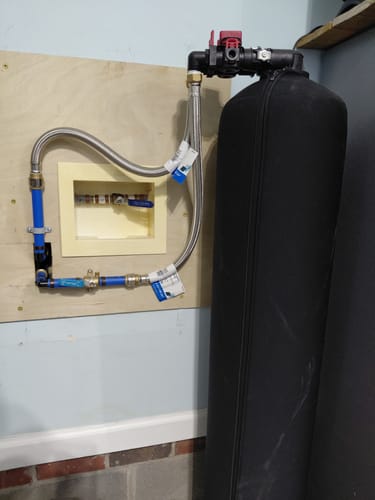
Now that we recognize GPM drives every sizing decision, let's talk about how to actually measure yours. Open a faucet located after your pressure tank, then collect water in a gallon jug while timing how long the pump takes to cycle on and off.
Skip the garden hose—it restricts pressure and skews your results. Have someone listen for the pressure switch clicks so you capture the exact moment the pump restarts.
Once you have your numbers, apply this formula: (Gallons drawn ÷ Seconds until pump restarts) × 60. That gives you your GPM.
Most households need 10–15 GPM for effective iron filtration. Run this test periodically, too—flow rates shift over time, and catching a drop early keeps your filtration system properly matched to your home's peak demand.
How Do You Match Iron Filter Tank Size to Your GPM?
| Peak Flow Rate | Recommended Tank Size |
|---|---|
| Under 10 GPM | Small residential tank |
| 10–15 GPM | Mid-size tank |
| 15–20 GPM | Large tank |
| 20+ GPM | Commercial-grade system |
Backwash performance matters just as much. Your well needs to sustain 5–10 GPM during backwash cycles. A larger tank extends service intervals, reducing maintenance frequency. Test your water regularly—iron levels and flow rates shift, and your sizing strategy should shift with them.
How Iron Concentration Changes the Filter Size You Need
Flow rate tells only half the story—iron concentration tells the other half. The higher your iron levels, the more treatment capacity your filter needs to keep up.
Here's a simple way to think about it: multiply your daily water usage by your iron concentration. A household using 100 gallons per day at 5 mg/l needs a filter handling at least 500 gallons daily. Push that concentration to 10 mg/l, and your sizing requirements double.
Higher concentrations also demand larger tanks and stronger backwash flow rates to prevent media washout—a detail many homeowners overlook until performance drops.
That's why we always recommend regular iron testing. Your concentration changes over time, and your filter sizing should reflect what's actually in your water today, not last year.
What Happens When Your Iron Filter and Flow Rate Don't Match?
Getting the iron concentration right is only part of the equation—your filter still has to keep pace with how fast water moves through it. When flow rate and filter size don't align, problems stack up fast.
Iron concentration alone won't save you—if your filter can't match your flow rate, performance falls apart.
Push too much water through too quickly, and iron slips past the media untreated—you'll notice it in staining and taste. Run too little flow, and backwashing won't generate enough force to clean the media, so it clogs and efficiency drops.
During backwash cycles specifically, excessively high rates can actually flush the media out of the tank entirely.
That's why we recommend regularly reassessing your household's peak usage patterns. If water demand increases, your filter sizing needs to reflect that change—or performance suffers.
Frequently Asked Questions
What Size Iron Filter Do I Need?
To size your iron filter, you'll need to measure your well pump's flow rate and test your iron concentration. We recommend matching a filter that handles your peak demand, ideally supporting 10-15 GPM efficiently.
How to Determine Well Pump Flow Rate?
To measure your well pump's flow rate, we'll time how long it takes the pump to activate after opening a faucet, collect the water used, then divide gallons by seconds and multiply by 60.
How to Calculate Flow Rate Through a Filter?
To calculate flow rate through a filter, we'll divide the gallons collected by the seconds elapsed, then multiply by 60. This gives us our GPM, ensuring we're matching the filter's capacity to our household's peak demand.
Is 12 Gallons per Minute a Good Well?
Yes, 12 GPM's a great well flow rate! It'll handle multiple fixtures simultaneously, support effective iron filter backwashing, and manage up to 10 mg/l of iron concentration—giving you reliable, high-performing water treatment throughout your home.






