


![SoftPro™ Chlorine+ Carbon Whole House Water Filter to Remove PFAS, Chlorine, Chloramine & Pesticides [City Water Filters Series]](http://www.softprowatersystems.com/cdn/shop/files/SoftPro_Whole_House_Carbon_Filter_with_Spin_Down_Water_Filter.webp?v=1783547361&width=140)


 855-683-8488


Iron Filter Startup Sequence: The Correct Order for Flushing, Programming Settings, and First Operation

To start your iron filter correctly, you'll want to follow a specific sequence: verify bypass mode, restore pressure gradually, flush the system, then program your settings. After that, set your regeneration schedule to avoid overlapping with your water softener, and finally run your first backwash. Skipping steps or doing them out of order risks contaminated media and missed leaks. Stick with us, and we'll walk you through every stage so your system runs exactly as it should.
Key Takeaways
- Begin by setting the system to bypass mode, then gradually restore pressure while inspecting all connections for drips or moisture.
- Flush the system before adjusting control valve settings, ensuring the drain line includes an air gap to prevent backflow.
- Program regeneration frequency to every 3 days, setting the cycle time to 1 AM or 4 AM to avoid water softener conflicts.
- Maintain a 3-hour buffer between the iron filter and water softener regeneration cycles to ensure uninterrupted filtered water delivery.
- Initiate the first backwash by holding the Regen button for five seconds, then monitor water flow and inspect connections for leaks.
Check Bypass Mode and Pressure Before Flushing Your Iron Filter

Before we flush the iron filter, let's make sure the system's in bypass mode—this lets water flow through your home while keeping it away from the filter media. Bypassing protects the media bed from uncontrolled pressure during startup.
Next, we're restoring pressure slowly. A sudden surge can stress connections, loosen fittings, and create leaks you won't notice until damage is already done. Gradual restoration gives us control.
Slow pressure restoration keeps fittings secure and leaks from forming before you ever notice a problem.
While pressure builds, inspect every connection visually. We're looking for drips, moisture, or anything that signals a weak joint. Don't skip this—a small leak here can mean contamination or water loss later.
Finally, confirm the bypass valve is functioning correctly. It should carry full household flow without disrupting the flush process running parallel to it.
Flush Your Iron Filter Before Changing Any Settings
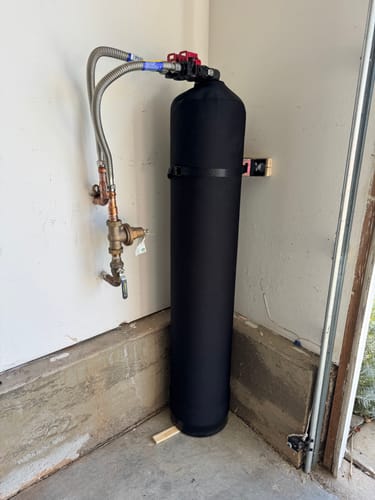
The first thing we'll do is flush the system—and we're doing this before touching any settings on the control valve. Flushing clears debris and sediment from installation, protecting the filter's long-term performance.
Here's what we're managing during this step:
| Flushing Element | Why It Matters |
|---|---|
| Bypass valve | Diverts water away from the filter, preventing contamination |
| Drain line setup | Handles expelled water safely with an air gap to stop backflow |
| Post-flush inspection | Confirms all connections are leak-free before programming begins |
Think of flushing as resetting the slate—it opens pathways, optimizes flow, and guarantees we're programming a clean, fully operational system rather than one compromised by installation residue.
Program Your Iron Filter Backwash Frequency and Regen Day
Now that the system is flushed and clean, let's dial in the regeneration schedule—because getting this right is what keeps your iron filter performing at its finest.
Set your regeneration frequency to every 3 days for ideal iron and sulfur management. Before programming, confirm the Backwash setting shows Off—this prevents unnecessary flow interruptions during setup.
To adjust the Regen Day interval, access the Regen Day setting and use the Down button, watching your display for confirmation as values change.
Next, set your regeneration time to either 1 am or 4 am, ensuring it doesn't conflict with your water softener's schedule.
Finally, note that any power failure lasting 45 minutes or longer requires a manual time reset to keep your regeneration schedule on track.
Set Regen Time to Avoid Overlapping Your Water Softener
Timing is everything when you've got both an iron filter and a water softener running in the same home. Overlapping regeneration cycles creates gaps in filtered water delivery—something no household wants.
Set your iron filter's regen time strategically:
- Choose 1 AM or 4 AM — these windows keep iron filter cycles clear of your softener's schedule.
- Confirm a 3-hour buffer — both systems need downtime between cycles to avoid interference.
- Program regeneration every 3 days — this frequency optimizes iron and sulfur removal without disrupting softener performance.
After programming, check the filter's service mode regularly. The "days remaining" display tells you exactly when the next cycle hits, letting you stay ahead of any scheduling conflicts.
Run Your Iron Filter's First Backwash and Confirm Proper Flow
With the schedule locked in, it's time to run the first backwash and confirm everything is flowing the way it should.
Press the Regen button for five seconds to initiate the cycle—this saturates the filtration media and clears any trapped air or debris.
Watch the water flow closely. It should be steady and uninterrupted, which tells you the control valve and connections are operating correctly.
While it's running, inspect every connection point for leaks. If the fittings and seals aren't secure now, you'll want to catch that before moving forward.
Once backwash finishes, confirm the system shifts into the rinse cycle by checking that water discharges properly through the drain line.
A clean shift here means your system's ready to perform.
Frequently Asked Questions
What Is the Correct Order for Water Treatment?
We'll start by installing the tank correctly, securing all connections, then programming the control valve settings, slowly restoring water pressure while monitoring for leaks, and finally initiating the first backwash cycle to confirm proper operation.
What Is the Sequence of the Water Softener Operation?
We'll walk you through the sequence: regeneration, brining, rinsing, and service. Each stage builds on the last, ensuring your resin beads efficiently remove hardness minerals, delivering perfectly softened water to your home's appliances.
What Order Do I Put My Water Filters In?
We'll start with a sediment filter, then move to an iron filter, followed by a carbon filter. This sequence protects each stage, maximizing performance and extending the life of your entire filtration system.
Do You Have to Flush the Pure Water Filters When You're First Installing Them?
Yes, we'll need to flush our pure water filters after installation! It clears loose resin and debris, settles the filter media, and confirms all connections are leak-free before we begin regular operation.






