


![SoftPro™ Chlorine+ Carbon Whole House Water Filter to Remove PFAS, Chlorine, Chloramine & Pesticides [City Water Filters Series]](http://www.softprowatersystems.com/cdn/shop/files/SoftPro_Whole_House_Carbon_Filter_with_Spin_Down_Water_Filter.webp?v=1783547361&width=140)


 855-683-8488


Iron Filter Tank Leak Near Control Valve: The Most Common Causes and Proven DIY Repair Options

When an iron filter tank leaks near the control valve, worn O-rings, degraded seals, loose hose adapters, or cracked distributor tubes are usually the culprits. Trapped air pressure and mineral buildup can make things worse fast. The good news? Many of these repairs are DIY-friendly — shut off the water, inspect every seal, lubricate with Vaseline, and tighten or replace damaged components. Stick with us, and we'll walk you through everything you need to know.
Key Takeaways
- Worn or degraded O-rings and seals are among the most common causes of leaks near the control valve.
- Cracks in distributor tubes can allow filter media to migrate into the valve, causing blockages and leaks.
- Loose or damaged hose adapters and missed ferrules inside fittings frequently contribute to leaking control valves.
- To fix leaks, shut off water, relieve pressure, then inspect, clean, and lubricate all O-rings before reassembly.
- Consult a professional if leaks persist after DIY repairs, as hidden damage or misalignment may require specialized tools.
Why Iron Filter Tanks Leak Near the Control Valve

When an iron filter tank starts leaking near the control valve, the culprit is almost always one of a handful of familiar suspects — worn seals, damaged o-rings, or cracks in the valve assembly or distributor tube.
But hardware failure isn't the whole story.
But hardware failure tells only part of the story — overlooked maintenance and hidden buildup quietly finish the job.
Mineral buildup and debris quietly choke valve function over time, turning a maintenance-neglected system into a persistent leaker.
Improper installation compounds the problem — replace the piston without its stack, and you've fundamentally guaranteed future trouble.
A malfunctioning air injection system introduces excessive air, lifting media and stressing seals.
Backwash cycles can also drag debris directly into the valve, creating blockages that force leaks.
Understanding these root causes isn't just useful — it's the foundation for every effective repair we'll walk you through.
Warning Signs Your Iron Filter Control Valve Is Failing
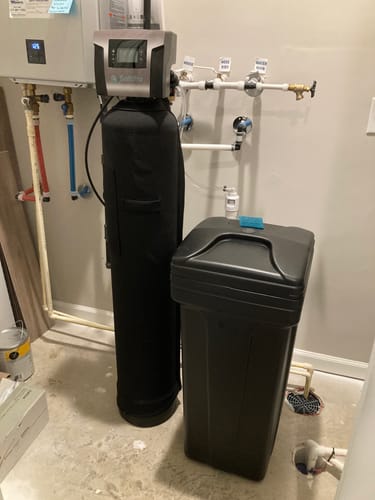
How do you know your iron filter's control valve is waving a white flag before it turns into a full-blown crisis?
Watch for rusty-colored water first — it signals internal corrosion eating away at your valve.
If you're hearing grinding or clunking during regeneration, that's not normal mechanical noise; that's your system begging for inspection.
Can't trigger manual regeneration? That's a critical red flag demanding immediate attention.
Notice water pooling around the unit? Broken seals or cracked components are likely the culprits.
Finally, if your water carries a metallic taste or odd odor, iron particles are bypassing filtration entirely.
These warning signs rarely appear alone — they compound quickly, so catching even one early keeps a manageable repair from becoming an expensive replacement.
What Causes Iron Filter Tank Leaks Near the Valve
Once you've spotted those warning signs, the next logical question is what's actually causing the leak in the first place. Several culprits consistently emerge when we diagnose valve-area leaks:
- Worn seals or O-rings degraded by age or improper installation
- Cracked distributor tubes allowing media migration into your water stream
- Debris or mineral intrusion inside the control valve disrupting backwash cycles
Beyond these, we've seen persistent leaks traced to something surprisingly simple—a missed ferrule inside a hose adapter or undertightened connection fittings.
Sometimes the simplest oversights—a missed ferrule or loose fitting—are behind the most persistent leaks.
Don't overlook air accumulation either. Trapped air creates pressure bubbling that pushes media directly into the valve and drain line, compounding an already frustrating problem.
Identifying the exact source saves you from chasing ghost repairs indefinitely.
How to Fix a Leaking Iron Filter Control Valve
Fixing a leaking iron filter control valve isn't as intimidating as it sounds—start by shutting off your water supply and relieving system pressure before you touch anything. We've seen most leaks traced back to worn seals, loose connections, or a failing ball-cock assembly. Inspect every O-ring, lubricate them with Vaseline, and seat them correctly during reassembly.
| Component | Problem | Fix |
|---|---|---|
| O-rings & Seals | Worn, cracked | Replace and lubricate |
| Hose Adapters | Loose or damaged | Tighten or replace |
| Ball-Cock Assembly | Malfunctioning | Replace entirely |
| Distributor Tube | Cracked | Replace to stop media mixing |
| Compression Rings | Damaged | Inspect and reseat properly |
Check the distributor tube for cracks—they'll contaminate your media bed fast. Clean everything thoroughly before reassembling.
When DIY Isn't Enough: Calling in a Professional
Sometimes, even after you've done everything right, that stubborn leak just won't quit—and that's your iron filter telling you it's time to call a professional.
Sometimes, even your best efforts aren't enough—and that stubborn leak is simply telling you it's time to call a professional.
Hidden valve damage, internal misalignment, and worn seals buried deep within the control valve assembly aren't always visible or accessible to us.
Professionals bring specialized tools and trained eyes that catch what we simply can't.
Watch for these red flags:
- Recurring leaks after multiple repair attempts signal internal valve damage requiring expert diagnosis
- Improper piston or spacer stack alignment that only a technician can correctly recalibrate
- Excessive air bubbles persisting after troubleshooting, indicating potential air injection system failure
Calling in an expert isn't admitting defeat—it's making the smart, strategic choice that protects your system long-term.
Frequently Asked Questions
What Removes Iron From Well Water?
We remove iron from well water using oxidation followed by filtration. Systems like air injection, greensand, and multimedia filters convert dissolved iron into solid particles, then filter them out effectively.
What Is the Lifespan of a Whole House Water Filter?
We've seen whole house water filters last anywhere from 5 to 10 years, but that lifespan hinges on maintenance, water quality, and filter type—sediment filters need replacing sooner, while carbon filters endure longer.
How Do I Stop My Water Filter From Leaking?
We'll tackle that leak by inspecting and replacing worn seals and O-rings, tightening all fittings, repairing any distributor tube cracks, and adjusting backwash pressure to manufacturer specs—restoring your system's integrity fast.
Why Does My Iron Filter Keep Draining?
Your iron filter keeps draining because of worn seals, mineral buildup blocking the valve, or a faulty ball-cock assembly. We've seen air pressure fluctuations cause this too — all issues we can tackle together.






