


![SoftPro™ Chlorine+ Carbon Whole House Water Filter to Remove PFAS, Chlorine, Chloramine & Pesticides [City Water Filters Series]](http://www.softprowatersystems.com/cdn/shop/files/SoftPro_Whole_House_Carbon_Filter_with_Spin_Down_Water_Filter.webp?v=1783547361&width=140)


 855-683-8488


Iron Filter Underperformance in Your Home? Undersized Iron Filter Problems Are Often the Root Cause

When your iron filter's too small for your home's needs, it can't keep iron levels below 0.3 ppm, leaving you with rust stains, discolored water, and that unmistakable metallic taste. You'll also notice pressure drops, frequent breakdowns, and skyrocketing maintenance costs. An undersized filter simply can't keep up with your household's flow rate and iron concentration. Stick with us, and we'll show you exactly how to spot the problem and fix it for good.
Key Takeaways
- An undersized iron filter cannot maintain iron levels below the EPA guideline of 0.3 ppm, causing discolored, metallic-tasting water.
- Rust stains on fixtures and laundry are common red flags indicating your iron filter is struggling to keep up.
- Excessive regeneration cycles from an undersized filter allow untreated iron to bypass into your household water supply.
- Pressure drops and sluggish flow rates during water usage signal that your filter capacity is being overwhelmed.
- Proper sizing requires testing iron concentration and calculating peak flow demand at 2 to 3 gallons per household member.
How an Undersized Iron Filter Fails Your Home's Water

When an iron filter is too small for your home's water demand, it simply can't keep up—and that's when the problems start. An undersized filter lacks the treatment capacity to hold iron levels below the recommended 0.3 ppm threshold, leaving your water discolored and your plumbing vulnerable.
An undersized iron filter can't keep up with demand—leaving your water discolored and your plumbing quietly paying the price.
Here's what makes it worse: smaller filters regenerate too frequently, becoming oversaturated and allowing iron to bypass filtration entirely.
You'll notice reduced water pressure, sluggish flow rates, and eventually, rust stains on your fixtures and laundry—telltale signs the filter is overwhelmed.
The root fix isn't complicated. Proper sizing, based on your water's actual iron concentration and your household's daily usage, is what separates a system that performs from one that quietly fails you.
Warning Signs Your Iron Filter Is Too Small
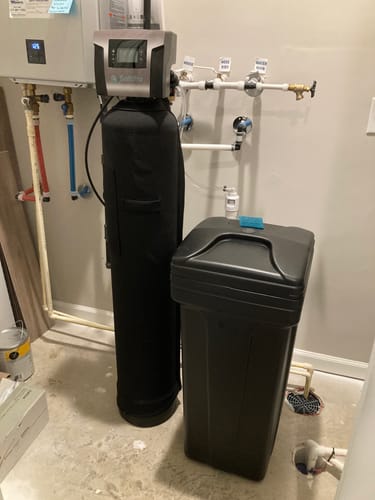
How do you know your iron filter is quietly losing the battle? Watch for discolored water—it's your first red flag that your filter can't keep up with oxidizing and removing iron.
Notice rust stains on fixtures, porcelain, or laundry? That's saturated filter media waving a white flag. A metallic taste or odor means iron's bypassing filtration entirely, slipping straight through an undersized system.
Sudden pressure drops during use signal your filter's restricting flow rather than handling demand.
And if you're replacing media or calling maintenance more than you should, your filter's simply outmatched by your water's iron load.
These signs aren't random inconveniences—they're your home's way of telling you the system protecting your water wasn't built for the job.
Why Iron Levels and Flow Rate Determine Filter Size
Understanding why iron levels and flow rate drive filter sizing isn't just technical trivia—it's the difference between a system that protects your home and one that quietly fails it.
When iron exceeds 0.3 ppm, your filter needs serious capacity—otherwise, it saturates fast and lets untreated iron slip through, staining fixtures and discoloring water.
Iron above 0.3 ppm saturates filters fast—untreated iron slips through, staining fixtures and discoloring your water.
Meanwhile, if your household's flow rate overwhelms the filter, pressure drops and filtration efficiency collapses. Both variables work together.
Get either one wrong, and you're not just dealing with underperformance—you're accelerating system failure.
That's why we always recommend testing your water for both iron concentration and flow rate before choosing a filter.
Proper sizing also guarantees effective backwashing and media regeneration, keeping your system running efficiently for the long haul.
What Happens When You Keep Running an Undersized Iron Filter
Knowing why iron levels and flow rate determine filter size sets the stage for a harder question: what actually happens when you ignore those numbers and keep running an undersized system anyway?
The consequences stack fast. Your water exceeds the EPA's 0.3 mg/L iron guideline, turning discolored and metallic-tasting. Demand overwhelms the system, triggering constant regeneration cycles that bypass untreated iron directly into your supply.
Pressure drops, media clogs, and maintenance calls pile up. Iron bacteria colonize the filter faster than it can handle, leaving slimy deposits that demand additional disinfection.
Worst of all, the media degrades prematurely, cutting the filter's lifespan short and driving up replacement costs.
Running an undersized filter isn't just ineffective—it actively accelerates every problem you were trying to solve.
How to Calculate the Right Iron Filter Size for Your Home
Once we recognize what's going wrong with an undersized filter, we can flip the script and size one correctly from the start.
First, test your water — iron concentration should stay under 0.3 ppm, or you're already behind.
Next, calculate your household's daily consumption and peak demand periods to determine the flow rate you need. A solid rule of thumb: plan for 2 to 3 gallons per minute per household member.
Don't forget backwashing capacity — filters need 5 to 7 gallons per minute for every cubic foot of media to clean effectively.
Finally, if manganese or hydrogen sulfide are present alongside iron, size up. Those additional contaminants demand more robust filtration than standard calculations account for.
Frequently Asked Questions
What Are Common Problems With Iron Filters?
We've seen iron filters struggle with high iron levels bypassing filtration, clogged media reducing pressure, pH drops disrupting oxidation, frequent regeneration cycles signaling undersizing, and iron bacteria creating slimy, system-damaging deposits.
How Long Does a Whole House Iron Filter Last?
We've seen whole house iron filters last 3 to 5 years, but that's only when you're staying on top of backwashing and media rejuvenation. Skip maintenance, and you'll shorten that lifespan considerably.
How Often Should My Iron Filter Regenerate?
Your iron filter should regenerate every 1-3 days when iron levels exceed 0.3 mg/L. We recommend aligning your regeneration cycle with your household's water usage patterns to maximize filtration efficiency and extend your system's lifespan.
Do Iron Filters Really Work?
Yes, they absolutely work! When we properly size and maintain our iron filter, it'll convert dissolved iron into filterable particles, consistently delivering water that meets EPA's 0.3 mg/L standard — protecting our plumbing and water quality.






