


![SoftPro™ Chlorine+ Carbon Whole House Water Filter to Remove PFAS, Chlorine, Chloramine & Pesticides [City Water Filters Series]](http://www.softprowatersystems.com/cdn/shop/files/SoftPro_Whole_House_Carbon_Filter_with_Spin_Down_Water_Filter.webp?v=1783547361&width=140)


 855-683-8488


Iron Filter vs. No Filter: A Cost-Benefit Calculation That May Surprise You

Skipping an iron filter might seem like a smart way to save money upfront, but it can cost you over $6,500 in appliance damage, plumbing repairs, and replacements down the road. Iron quietly destroys water heaters, softeners, and pipes long before you notice the damage. The good news? The right filter pays for itself in just 2-3 years. Stick with us, and we'll show you exactly how the numbers break down.
Key Takeaways
- Skipping an iron filter risks over $6,500 in total damages from appliance breakdowns, plumbing failures, and ongoing replacements.
- Iron filters remove over 95% of contaminants, while regular filters only eliminate 70-80%, making them far more effective long-term.
- Premium iron filters pay for themselves within 2-3 years by preventing thousands in appliance and plumbing repair costs.
- Over ten years, premium systems cost roughly $1,000 total, compared to $1,600 for budget filters with frequent maintenance needs.
- Homes with well water or iron levels above 0.3 mg/L face staining, odors, and costly damage without proper filtration.
The Real Cost of Skipping an Iron Filter

When we skip an iron filter, we're not just risking stained sinks and rust-colored water—we're setting ourselves up for a financial nightmare.
Those stained fixtures aren't merely cosmetic nuisances; they're warning signs of deeper, costlier problems brewing inside our pipes and appliances.
Here's what the numbers tell us: untreated iron buildup can trigger over $1,500 in appliance damage alone.
Factor in plumbing repairs that frequently exceed $3,000, plus ongoing appliance replacements surpassing $2,000, and suddenly we're looking at a staggering financial hit.
That's potentially $6,500 or more—all because we bypassed a single protective investment.
The math is brutally clear. Every dollar we avoid spending on an iron filter today multiplies into considerably larger expenses tomorrow.
Which Homes Actually Need an Iron Filter?
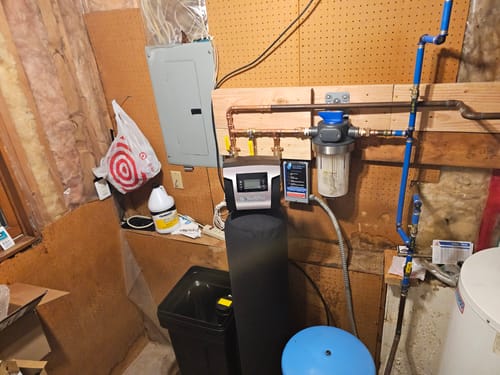
Now that we recognize what iron contamination costs us, the next logical question is: does your home actually need a filter in the first place?
If you're on well water, the answer is likely yes—but let's get specific.
You're a strong candidate for an iron filter if you notice:
- Iron levels exceeding 0.3 mg/L, causing staining, odors, or metallic-tasting water
- Visible rust particles or dissolved iron, since standard filters can't handle either effectively
- Slimy films or musty odors, signaling iron bacteria that demand specialized treatment
Ignoring these warning signs isn't a gamble worth taking.
Appliance repairs alone can hit $1,500, and plumbing damage can climb to $3,000—costs that dwarf any filtration investment.
What Iron Filters Remove That Regular Filters Miss?
There are two types of iron that can infiltrate your water supply—ferrous (dissolved) and ferric (visible rust)—and regular filters can't handle either effectively at high concentrations.
Standard filters typically achieve only 70-80% efficiency, leaving enough iron behind to stain fixtures, degrade appliances, and trigger costly repairs.
Iron filters operate differently. They're engineered to eliminate over 95% of iron contaminants, and they extend that capability to manganese and related contaminants that standard sediment and chlorine filters completely ignore.
Here's what makes the difference tangible: regular filters clog within six months in high-iron water, creating a cycle of constant replacements.
Iron filters last 5-10 years with proper maintenance. That's not just better performance—it's a fundamentally smarter investment in your home's water infrastructure.
Iron Filter Pricing: Budget vs. Premium Systems Compared
Budget iron filters look like a bargain until you do the math. That $1,500-$3,000 upfront price tag quickly loses its appeal once maintenance enters the picture.
Here's where premium systems pull ahead:
- Efficiency: Premium filters remove up to 95% of contaminants; budget models manage only 70-80%.
- Annual maintenance: Budget systems cost $300-$500 yearly versus $40-$100 for premium options.
- Media replacement: Budget filters need replacements every 6-12 months at $200-$600 each; premium systems last 10 years.
Over a decade, budget systems total roughly $1,600 in ownership costs while premium systems land around $1,000.
We often chase the lower sticker price, but the real savings hide inside the long-term numbers.
How Long Before an Iron Filter Pays for Itself?
When does an iron filter actually start saving you money? Sooner than you'd expect. Premium systems typically pay for themselves within 2-3 years by preventing over $4,500 in appliance and plumbing damage.
Premium iron filters pay for themselves in 2-3 years — stopping over $4,500 in appliance and plumbing damage before it starts.
Think about that — water heaters and softeners alone can rack up $2,000 in iron-related repairs.
Here's where it gets compelling: over ten years, a premium filter's total ownership cost runs roughly $1,000, including that modest $40-$100 annual maintenance.
Budget systems? They'll cost you over $1,600 when maintenance and frequent replacements add up.
Premium filters last 5-10 years versus budget models' 3-5, meaning fewer replacement cycles and less financial headache.
The math isn't complicated — investing in quality filtration upfront delivers measurable, compounding returns that budget alternatives simply can't match.
Frequently Asked Questions
What Is the Difference Between Iron Filter and Carbon Filter?
Iron filters target ferrous and ferric iron above 0.3 mg/L, eliminating over 95% of contaminants, while carbon filters tackle chlorine and organics but can't handle high iron—leaving you with stains and costly plumbing damage.
How Many Micron Filters to Remove Iron?
We recommend using a 5-micron filter to effectively remove iron, though a 1-micron filter catches finer particles you'd otherwise miss. Combining micron filtration with oxidation maximizes your iron removal results considerably.
What Is the Function of Iron Filter?
Iron filters remove both dissolved and visible iron from your water, preventing stains, protecting appliances, and eliminating plumbing damage—saving you potentially $4,500 in repairs while delivering cleaner, safer water throughout your home.
How Often Should an Iron Filter Be Changed?
We recommend changing your iron filter's media every 5-10 years, but premium filters can last a full decade. Don't neglect this—skipping replacements risks over $1,000 in costly plumbing repairs.






