


![SoftPro™ Chlorine+ Carbon Whole House Water Filter to Remove PFAS, Chlorine, Chloramine & Pesticides [City Water Filters Series]](http://www.softprowatersystems.com/cdn/shop/files/SoftPro_Whole_House_Carbon_Filter_with_Spin_Down_Water_Filter.webp?v=1783547361&width=140)


 855-683-8488


Iron Filter Water Discoloration After Backwash: What It Means, When to Worry, and When Not To

Brown water after an iron filter backwash isn't automatically a crisis. It usually means your filter is doing its job, flushing out oxidized iron particles it's been collecting. Light discoloration clearing within 30 seconds is completely normal. But deep, persistent brown that won't clear signals something worth investigating — like excessive iron buildup or filtration failure. Understanding what the color actually tells you helps you protect your plumbing and act before small problems become expensive ones.
Key Takeaways
- Brown water after backwash is normal, as the cycle stirs up oxidized iron particles built up in the filter media.
- Water clearing within 30 seconds indicates manageable iron levels and a properly functioning filtration system.
- Persistent brown water beyond 30 seconds signals excessive iron buildup or potential filtration system issues requiring attention.
- Deep, consistent discoloration after thorough rinsing warrants immediate water testing to measure iron concentration levels.
- Extending rinse time, adjusting chlorine levels, and inspecting valves can resolve recurring discoloration after backwash.
Why Does Your Iron Filter Turn Water Brown After Backwash?

When your iron filter kicks into its backwash cycle, it stirs up all those oxidized iron particles that have built up in the filter media — and that's exactly why you're seeing brown water afterward.
Think of it as your filter doing its job, then temporarily wearing the evidence.
Here's what's actually happening: during normal operation, your filter traps oxidized iron.
Backwashing dislodges those deposits, but if they're not fully flushed out, they linger and color your water brown.
Extended flushing typically clears it, which tells us the real issue is incomplete iron removal during the cycle.
Heavy red or dirty water during manual backwash?
That signals a more serious iron buildup — one that deserves a closer look before it compounds into a bigger problem.
What Backwash Water Color Tells You About Your Iron Levels?
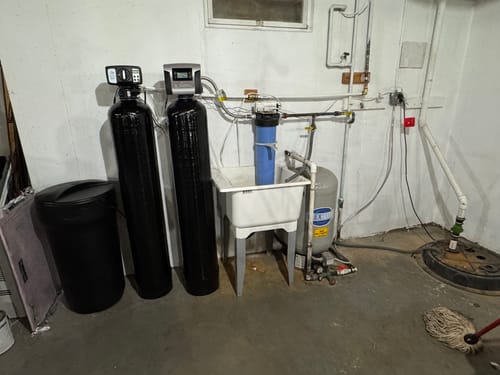
That brown or reddish water you're watching drain away during backwash is actually telling you something useful — if you know how to read it. The color intensity directly reflects your iron concentration. Light tinting suggests manageable iron levels, while deep, persistent brown or red signals you're likely dealing with concentrations exceeding 3 ppm.
Here's what we want you to watch for: if the discoloration stays heavy and doesn't clear during the rinse cycle — typically within 30 seconds past sight glass clarity — your filtration system may be struggling to keep pace with your iron load.
That's your cue to evaluate whether the system is sized and functioning correctly. Color isn't just aesthetic; it's diagnostic data worth paying attention to.
Brown Water After Backwash: Normal Flush or Filter Failure?
Brown water flowing from your system right after a backwash cycle can feel alarming, but there are actually 2 distinct scenarios at play — one completely normal, one worth investigating.
Here's how we distinguish them:
- Normal flush — Brown water clears after 30+ seconds of rinsing, confirming trapped iron and sediment are simply exiting the system.
- Effective self-cleaning — Heavy red or dirty water during manual backwash signals your filter's working exactly as designed.
- Potential failure — Brown water recurring consistently after thorough rinsing suggests deeper system issues requiring investigation.
The key diagnostic tool? Time and observation.
If discoloration dissipates with extended flushing, you're witnessing successful filtration. If it persists repeatedly, don't ignore it — your system's telling you something important.
When Should You Test Your Water After an Iron Filter Backwash?
Knowing exactly when to test your water after an iron filter backwash can mean the difference between catching a problem early and letting it quietly damage your plumbing.
Test immediately after backwash to assess filtration effectiveness and detect dissolved iron that may have slipped through. If discoloration persists beyond a few minutes post-rinse, don't wait—run a thorough test to evaluate iron levels and system performance.
Always test within 24 hours to confirm whether discoloration has truly resolved. Beyond these immediate checks, we recommend monthly testing as your baseline, plus additional testing whenever water appearance changes noticeably.
Brown or rusty water after backwashing signals urgency—acting fast protects your pipes, appliances, and water quality before a manageable issue becomes a costly one.
How to Fix Persistent Iron Filter Discoloration That Won't Clear
Persistent iron filter discoloration that won't clear usually points to a fixable problem—you just need to know where to look.
Start by diagnosing these three common culprits:
- Rinse time too short — Extend rinsing at least 30 seconds beyond sight glass clarity to flush residual iron completely.
- Chlorine levels insufficient — Inadequate free chlorine prevents full iron precipitation, so test and adjust regularly to keep conversion on track.
- Valve or filter performance issues — Brown water returning when the pump restarts signals incomplete filtration, which often requires a valve inspection.
Beyond these fixes, consider installing a retention tank to improve iron conversion and mixing.
You might also reduce backwash frequency to minimize filter disturbances that prolong discoloration.
Frequently Asked Questions
How Often Should I Backwash My Iron Filter?
We recommend backwashing your iron filter every 2-4 weeks for high iron content, or when your pressure gauge rises 8-10 psi above normal operating pressure—whichever comes first—to maintain peak filtration performance.
How Do I Know if I Have Iron Bacteria in My Water?
Look for slimy, reddish-brown buildup in your fixtures, a rotten egg smell, or brownish water after stagnation. If iron levels exceed 0.3 mg/L and regular cleaners can't remove stains, you've likely got iron bacteria.
Why Is My Water Still Brown After Filtering?
Brown water after filtering usually means your iron isn't getting fully removed—often due to insufficient disinfection, low bleach contact time, or filter media that's saturated with iron deposits and needs attention.
What Are Common Problems With Iron Filters?
We've seen iron filters struggle with inadequate disinfection, iron deposit buildup, control valve malfunctions, and inefficient backwash cycles—all letting dissolved iron slip through, discoloring your water and demanding more frequent, frustrating maintenance interventions.






