


![SoftPro™ Chlorine+ Carbon Whole House Water Filter to Remove PFAS, Chlorine, Chloramine & Pesticides [City Water Filters Series]](http://www.softprowatersystems.com/cdn/shop/files/SoftPro_Whole_House_Carbon_Filter_with_Spin_Down_Water_Filter.webp?v=1783547361&width=140)


 855-683-8488


Iron Filter Water Discoloration After Backwash: Understanding the Complete Iron Flush Process

When your iron filter backwashes, it deliberately stirs up trapped iron particles to flush them out — so that burst of rusty, discolored water is usually the system doing its job. Brief murkiness clearing within seconds to a few minutes is completely normal. But persistent discoloration beyond 10-15 minutes can signal something deeper, like saturated media or a clogged drain line. Stick with us, and we'll walk you through everything you need to know.
Key Takeaways
- Brief discoloration after backwash is normal, resembling a snow globe effect, and typically clears within seconds to several minutes.
- The backwash process involves two stages: reversed flow disrupts iron buildup, followed by a rinse cycle lasting 10-20 minutes.
- Discoloration persisting beyond 10-15 minutes signals potential issues like saturated media, clogged drain lines, or insufficient flow rates.
- Malfunctioning control valves or blocked supply lines can cause incomplete flushing, allowing trapped iron particles to re-enter the water supply.
- Running an extended flush, checking pressure gauges, and testing pH levels can help resolve stubborn residual discoloration effectively.
Why Does Iron Filter Water Turn Discolored After Backwash?

When your iron filter finishes a backwash cycle, the last thing you'd expect is murky, discolored water flowing from your taps — yet it happens more often than we'd like.
Here's what's actually happening beneath the surface.
During normal operation, your filter media traps iron particles continuously. Backwashing loosens and expels those accumulated deposits — but only when everything works correctly.
Your filter media silently traps iron particles — until backwashing loosens and expels what's been building up inside.
Insufficient flow rates, shortened cycle times under ten minutes, clogged drain lines, or a malfunctioning control valve can all compromise that flushing process. The result? Stubborn iron particles get partially dislodged but never fully expelled, then push straight into your water supply the moment you turn on a tap.
Understanding these root causes transforms this frustrating mystery into a completely solvable problem.
What Actually Happens Inside Your Iron Filter During Backwash?
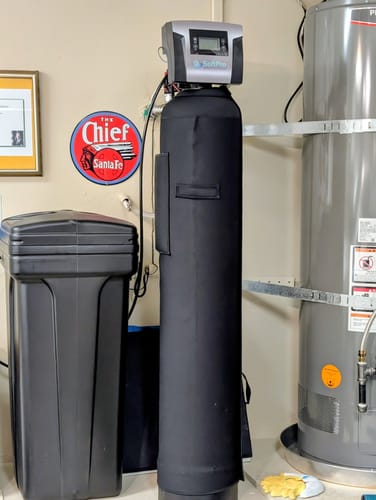
The process runs in two distinct stages. First, reversed flow disturbs and loosens the iron buildup.
Then a rinse cycle clears out residual contaminants. The whole sequence takes 10-20 minutes.
Here's where things get critical: if water flow is insufficient, the flushing stays incomplete. Trapped iron remains behind, and that's exactly what shows up in your tap water afterward.
Watch your pressure gauges — significant drops signal it's time to backwash before problems compound.
Is the Discoloration After Backwash Normal or a Warning Sign?
Seeing brown or red water trickle from your tap right after a backwash cycle can send anyone into a mild panic — but it's not always a crisis. When backwashing stirs up residual iron particles trapped in the media, brief discoloration is completely normal. Think of it like shaking a snow globe — things get murky before they settle.
However, we need to watch for warning signs. If discoloration persists beyond the initial flush, we're likely dealing with saturated filter media, clogged drain lines, or insufficient water flow preventing complete flushing.
Monitoring your pressure gauge consistently tells the real story — repeated pressure drops post-backwash signal deeper mechanical issues. Regular backwashing every four days to two weeks keeps these problems from escalating into full system failures.
How Long Should Discoloration Last After an Iron Filter Backwash?
How long should we actually expect that murky water to stick around after a backwash cycle? Typically, discoloration clears within a few seconds to several minutes — that's our normal window. The efficiency of the flushing process and how much sediment gets released both drive that timeline.
Here's where it gets interesting: if brown or red water persists beyond 10-15 minutes, we've crossed into warning territory. That signals either insufficient flushing, oversaturated filter media, or problematic control valve settings.
Two variables we should always watch are media saturation levels and backwash flow adequacy. Both directly influence how quickly clarity returns.
Our best defense against prolonged discoloration? A thorough rinsing phase immediately after backwashing, ensuring residual iron particles fully exit the system before we resume normal water use.
How to Clear Residual Iron Discoloration After a Backwash Cycle
Clearing residual iron discoloration after a backwash cycle starts with one straightforward move: check the control valve and confirm the supply line isn't obstructed, since restricted flow is often the quiet culprit behind stubborn murky water.
Once flow's restored, run an extended flush — several minutes minimum — to push every liberated iron particle completely out of the system.
From there, we want to monitor pressure gauges closely. A noticeable pressure drop signals media saturation, meaning backwashing wasn't thorough enough.
We should also test pH — anything below 6.8 weakens iron precipitation dramatically. Raise it, and filtration sharpens considerably.
Finally, consider installing a retention tank. Better contact time between water and treatment media means fewer iron particles survive into your distribution line, keeping discoloration episodes rare rather than routine.
Frequently Asked Questions
How Often Should I Backwash My Iron Filter?
We recommend backwashing your iron filter every 4 days to 2 weeks. Watch your pressure gauge closely—a significant drop signals it's time. Each backwash session should run 10 to 20 minutes for ideal results.
Why Is My Water Still Brown After Filtering?
Brown water after filtering usually means your backwash isn't fully purging trapped iron from the media. We'd check for clogged drain lines, low pH below 6.8, or insufficient flush cycles—all common culprits sabotaging your filter's performance.
How to Check Iron Filter System for Clogging?
We'll start by monitoring pressure gauge drops, then visually inspect the media for buildup. Check the drain line for blockages, test water quality for iron and pH imbalances, and run back-to-back regeneration cycles to isolate flow issues.
Should You Rinse Every Time You Backwash?
Yes, we should always rinse after every backwash. It clears residual iron and debris from the filter media, preventing discoloration and foul odors. Skipping this step risks reintroducing contaminants back into your water supply.






