


![SoftPro™ Chlorine+ Carbon Whole House Water Filter to Remove PFAS, Chlorine, Chloramine & Pesticides [City Water Filters Series]](http://www.softprowatersystems.com/cdn/shop/files/SoftPro_Whole_House_Carbon_Filter_with_Spin_Down_Water_Filter.webp?v=1783547361&width=140)


 855-683-8488


Iron Filter Water Pressure Loss in Your Household: Causes, Proven Fixes, and Prevention Tips

Iron filter pressure loss is more common than you'd think, and it's usually caused by clogged filter media, neglected backwashing cycles, or a misaligned bypass valve. A normal pressure drop sits around 2-3 PSI, but anything beyond 10 PSI signals a real problem. We can fix most issues through regular backwashing, cleaning the injector assembly, or replacing aging media every 3-5 years. Stick with us, and we'll walk you through everything you need to know.
Key Takeaways
- A normal iron filter pressure drop is 2–3 PSI; anything exceeding 10 PSI signals clogged media or system failure requiring immediate attention.
- Clogged injector assemblies, misaligned bypass valves, and accumulated oxidized iron particles are common culprits behind significant household water pressure loss.
- Use pressure gauges before and after the filter to diagnose drops, and inspect for rust stains or off-tastes indicating media breakdown.
- Restore pressure by cleaning the injector assembly, performing multiple backwash cycles, aligning bypass valves, and replacing media older than 3–5 years.
- Prevent future pressure issues through monthly water testing, regular backwashing, proper system sizing, and routine inspection of valves and injectors.
Why Your Iron Filter Is Killing Your Water Pressure

When your iron filter's working overtime to pull contaminants out of your water, it's also quietly strangling your water pressure in the process.
Here's the reality: a healthy iron filter creates a 2-3 PSI pressure drop — that's normal, expected, manageable. But when that drop exceeds 10 PSI, something's gone wrong.
The usual culprits? Accumulated iron and sediment clogging your filter media, undersized systems struggling against your household's actual water demands, or neglected backwashing cycles letting trapped solids build up unchecked.
Clogged media, undersized systems, skipped backwash cycles — your pressure problem usually has one of these three names.
Multiple filters compounding resistance only makes things worse.
We've seen homeowners chase pressure problems for months without realizing their injector assembly was clogged or their bypass valve was misaligned.
Your filter isn't just a passive component — it's actively shaping every drop that reaches your tap.
How to Diagnose Your Iron Filter Pressure Problem
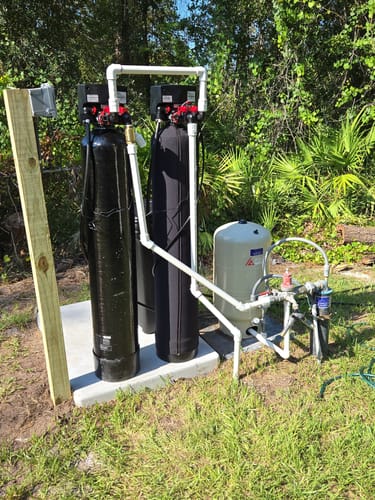
Diagnosing this starts with one simple tool: a pressure gauge. Install one before and after your iron filter, then compare readings. A drop exceeding 2-3 PSI tells you something's wrong—either a clog or failing media.
Next, inspect the injector assembly. Iron deposits love hiding there, quietly strangling your flow.
Don't overlook your water itself—rust-colored stains or off-tastes signal that your media's breaking down, which compounds pressure loss.
We also recommend monthly water testing for iron levels and pH balance; catching drift early prevents the kind of degradation that blindsides you.
If you've run multiple backwash cycles and pressure still won't recover, the media's likely exhausted. At that point, replace it or bring in a professional—don't guess.
The Real Culprits Behind Iron Filter Pressure Loss
Clogged filter media is the usual suspect, and it's more insidious than it sounds. Over time, oxidized iron particles build up inside your filter, strangling water flow until pressure drops noticeably.
If you're seeing a pressure differential exceeding 10 PSI, that's your system screaming for attention—either media replacement or a thorough injector assembly cleaning.
But media clogging isn't the only villain here. Faulty bypass valves and worn seals quietly sabotage your system, causing continuous drainage that compounds pressure loss.
We've seen homeowners chase one problem only to discover another lurking underneath.
That's why monitoring pressure and flow rates consistently matters. Sudden drops don't lie—they're telling you something's wrong before it becomes catastrophic.
Know your numbers, and you'll always stay ahead of failure.
Step-by-Step Fixes to Restore Iron Filter Water Pressure
Restoring iron filter water pressure comes down to four targeted fixes, and we'll walk you through each one.
First, inspect and clean the injector assembly—oxidized iron loves to clog it, strangling your flow.
Second, run multiple backwashing cycles to flush accumulated debris from the filter media; you'll often feel the difference immediately.
Third, check your bypass valve alignment. A misaligned bypass quietly drains pressure without obvious signs, so don't overlook it.
Fourth, replace exhausted filter media if it's been three to five years—worn media simply can't perform.
Throughout this process, watch your pressure gauge closely. A drop of 10 PSI or more signals something needs urgent attention.
Address each fix systematically, and you'll have your pressure restored efficiently.
How to Prevent Iron Filter Pressure Loss
Prevention is always easier than the fix, and with iron filters, a little routine attention keeps pressure loss from sneaking up on you. We've seen systems fail simply because maintenance got postponed. Don't let that be your story.
| Preventive Action | Recommended Frequency |
|---|---|
| Replace or clean filter media | Every 3–5 years |
| Test water for iron levels and pH | Monthly |
| Backwash and regenerate filter | Regularly per manufacturer specs |
Beyond scheduling, make certain your system's sized correctly for your household's demand — undersized filters quietly strangle pressure over time. Also, inspect your injector assembly and bypass valves consistently. Small malfunctions there escalate fast. Treat prevention like an investment, because fixing avoidable pressure loss costs far more than the routine care that stops it.
Frequently Asked Questions
What Are Common Problems With Iron Filters?
We've seen iron filters struggle with clogged media, pH imbalances, iron bacteria growth, and rusty water breakthrough. These issues slash your water pressure and quality, demanding immediate backwashing, sanitization, or media replacement every three-to-five years.
How to Filter Iron From Water at Home?
We'll filter iron effectively by keeping pH between 6.5-8.5, backwashing our filter regularly, investing in high-capacity systems, testing monthly, and replacing filter media every 3-5 years for consistently clean, iron-free water.
Why Is My Water Filter Losing Pressure?
Your filter's losing pressure because it's clogged with debris, it's undersized for your household's demand, or you've got multiple high-resistance filters compounding the drop. We've seen these culprits steal pressure every time.
Can High Iron in Water Cause Lower Water Pressure?
Yes, high iron levels absolutely tank your water pressure. When iron oxidizes, it forms solid particles that clog your pipes and filter media, creating resistance that steadily chokes your flow until you're barely getting a trickle.






