


![SoftPro™ Chlorine+ Carbon Whole House Water Filter to Remove PFAS, Chlorine, Chloramine & Pesticides [City Water Filters Series]](http://www.softprowatersystems.com/cdn/shop/files/SoftPro_Whole_House_Carbon_Filter_with_Spin_Down_Water_Filter.webp?v=1783547361&width=140)


 855-683-8488


Iron Filters and Iron Bacteria in Well Water: Exactly What Your Filter Can and Cannot Do

Iron filters are excellent at removing dissolved iron from well water, but they're built for chemistry—not biology. Iron bacteria are living organisms that produce slimy biofilms, clog your filtration media, and create foul odors that no standard filter can eliminate. Worse, they can set the stage for harmful microorganisms. Understanding the difference between filtering dirty water and fighting a bacterial colony changes everything about how you protect your well.
Key Takeaways
- Iron filters remove dissolved iron from water but cannot kill or eliminate the living iron bacteria that feed on it.
- Biofilms produced by iron bacteria clog filtration media, progressively reducing your filter's effectiveness over time.
- Musty odors and off-putting tastes caused by iron bacteria will persist even with a properly functioning iron filter.
- Shock chlorination, not filtration, is the necessary treatment for actually eliminating iron bacteria from your well.
- Combining physical pipe cleaning, shock chlorination, and ongoing monitoring is required to fully address iron bacteria contamination.
What Iron Bacteria Is (and Why It's Not Just Dirty Water)

Iron bacteria aren't just a sign that your well water is dirty — they're living organisms that actually feed on dissolved iron and manganese in the water.
And they're remarkably good at making themselves at home. They produce a reddish-brown, slimy biofilm that clings to pipes, clogs pumps, and creates musty, sewage-like odors that make your water nearly unusable.
Here's what surprises most people: iron bacteria aren't directly dangerous to your health.
But don't let that reassure you too quickly. Their biofilm creates ideal conditions for other harmful microorganisms to thrive. Think of it as them rolling out the welcome mat for pathogens.
That's why understanding what you're actually dealing with matters — because treating iron bacteria requires a fundamentally different approach than simply filtering dirty water.
What Your Iron Filter Can't Do Against Iron Bacteria
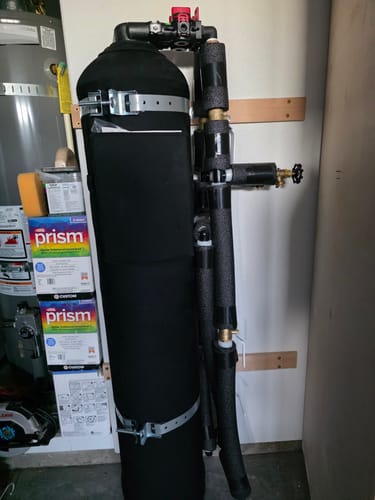
Your iron filter is doing exactly what it was designed to do — and that's precisely the problem.
It targets dissolved iron, not the living organisms feeding on it. Iron bacteria produce protective biofilms that standard filters simply can't penetrate or eliminate.
Worse, those biofilms actively clog your filtration media, degrading performance and shortening equipment lifespan.
Here's what else your filter won't fix: the musty, swampy odors and off-putting tastes iron bacteria generate.
Those aren't iron problems — they're bacterial problems, and filtering dissolved minerals does nothing to address them.
Those aren't iron problems. They're bacterial problems — and no mineral filter on earth will change that.
To actually eliminate iron bacteria, you need shock chlorination.
Filtration is one layer of a solution, not the whole answer. Understanding that distinction is what separates reactive homeowners from proactive ones.
How to Tell If Iron Bacteria Is Living in Your Well
Unlike dissolved iron, which hides in plain sight until it stains your sink, iron bacteria leave behind clues you can actually see, smell, and taste. Here's what to look for:
| What You See | What It Means |
|---|---|
| Orange, brown, or yellow slime on faucet aerators and toilets | Iron bacteria are actively colonizing your plumbing |
| Oily sheen on water surface; reddish stains on laundry, sinks, tubs | Bacterial byproducts are accumulating in your system |
| Greasy, slimy growth inside toilet tank | Confirmed bacterial presence in your water supply |
If you're also detecting odors resembling fuel oil, swampy water, or cucumbers, that's another red flag. Don't guess—test your well yearly to confirm what's actually living in your water.
How to Get Rid of Iron Bacteria in Well Water
Once you've spotted the signs—slime in the toilet tank, that telltale swampy smell, orange streaks creeping across your fixtures—the next question is obvious: how do we get rid of it?
Start with physical cleaning to scrub biofilms from pipes and well surfaces.
Scrubbing biofilms from pipes and well surfaces isn't optional—it's the essential first strike against iron bacteria.
Then shock chlorinate—introducing high concentrations of chlorine to disinfect your entire system.
Fair warning: DIY chlorination demands precision. Too little and the bacteria survive; too much and you've created a different problem.
Here's the critical insight most people miss: elimination isn't a one-time event.
Iron bacteria regrows. That's why ongoing maintenance—scheduled chlorination or UV disinfection—is non-negotiable for long-term control.
Check your toilet tank regularly.
Its slime buildup is your early warning system, telling you exactly when your next treatment is due.
When to Test Your Well and Call a Pro About Iron Bacteria
Even if your water looks and smells fine, we recommend testing your well annually for coliform bacteria and nitrates—it's your baseline defense against problems like iron bacteria taking hold before you notice them.
Know when to act fast:
- Annual testing: coliform bacteria and nitrates, every year
- Immediate testing: reddish-brown stains or musty odors signal iron bacteria
- One-time testing: arsenic and lead, since they co-occur with iron bacteria
- Post-repair monitoring: disturbances to your well system accelerate iron bacteria growth
- Call a pro: excessive iron or biofilm means shock chlorination may be necessary
Don't wait for visible damage. Early detection keeps treatment simple—delay, and you're facing a much costlier, more invasive fix.
Frequently Asked Questions
What Kills Iron Bacteria in Well Water?
We can kill iron bacteria in well water using shock chlorination, UV disinfection, or ozone treatment. Each method effectively destroys bacteria, but we'll need regular maintenance to prevent regrowth from their protective biofilm.
What Are Common Problems With Iron Filters?
We've seen iron filters struggle with biofilm clogging, reduced water flow, and worn-out media. They'll also fail against iron bacteria, organic iron, and tannins—especially when you've chosen the wrong filter for your specific water conditions.
Is It Safe to Drink Well Water With Iron Bacteria?
While iron bacteria aren't directly toxic, we wouldn't recommend drinking that water without testing first. They create conditions where harmful pathogens thrive, making your well water potentially unsafe and unpleasant-tasting until you've confirmed it's clean.
Will an Iron Filter Remove Iron Bacteria?
Iron filters won't remove iron bacteria. They're designed to filter dissolved iron, not microorganisms. Iron bacteria form protective biofilms that bypass standard filtration, so you'll need shock chlorination to effectively eliminate them from your well water.






