


![SoftPro™ Chlorine+ Carbon Whole House Water Filter to Remove PFAS, Chlorine, Chloramine & Pesticides [City Water Filters Series]](http://www.softprowatersystems.com/cdn/shop/files/SoftPro_Whole_House_Carbon_Filter_with_Spin_Down_Water_Filter.webp?v=1783547361&width=140)


 855-683-8488


Iron Filters for Large Well Water Systems: Capacity, Flow Rate, and Key Considerations

When sizing an iron filter for a large well system, we need to match filtration capacity to flow rate—not just iron levels. Most large systems demand 15-20 GPM at peak, while effective iron filtration requires a steady 5-10 GPM. Iron above 0.3 ppm needs a dedicated filter, and concentrations hitting 15-20 ppm need specialized solutions. Getting this balance wrong means pressure drops and compromised water quality. Stick with us—there's a lot more to unpack here.
Key Takeaways
- Large well systems require 15-20 GPM at peak demand, making proper flow rate matching essential for consistent pressure and filtration performance.
- Iron levels above 0.3 ppm require a dedicated filter, with specialized solutions needed for high concentrations reaching 15-20 ppm.
- Filter media selection, including Katalox, Birm, or greensand, should align with your household's specific flow rate and iron concentration levels.
- Households with 2-4 residents need filters handling 8-12 GPM, while systems for 5+ residents require a minimum of 10 GPM.
- Scheduling backwash cycles every 2-3 days during low-demand periods ensures optimal iron removal and prevents filter saturation.
How Much Flow Rate Do Large Well Water Systems Actually Need?

When sizing an iron filter for a large well water system, getting the flow rate right is non-negotiable.
Most large well systems need 15-20 GPM at peak demand to handle simultaneous household activities without pressure drops. But here's what many homeowners overlook: effective iron filtration and backwashing requires a consistent 5-10 GPM, meaning your system must balance both demands intelligently.
Peak demand requires 15-20 GPM, but effective iron filtration needs a steady 5-10 GPM—your system must balance both.
Factor in daily consumption of 50-100 gallons per person, and you'll quickly see why undersized systems fail during high-demand periods—reduced pressure and compromised filtration efficiency are the predictable results.
We recommend conducting a simple 5-gallon bucket test to establish your baseline flow rate. That single measurement gives you the foundation for selecting a system that performs when it matters most.
What Iron Concentration Levels Determine Which Filter You Need?
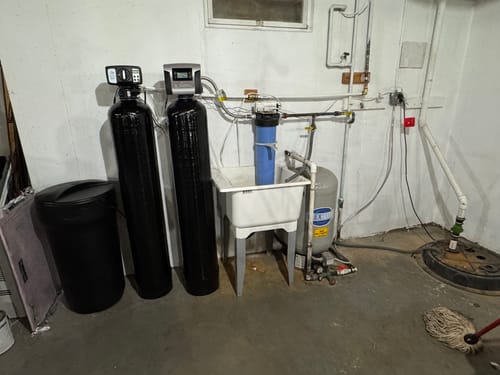
Understanding your iron concentration is the single most important factor in choosing the right filter—get it wrong, and you're either overspending on capacity you don't need or watching a system fail under demand it can't handle.
Start with professional water testing. Once you know your numbers, the path becomes clear: anything above 0.3 ppm demands a dedicated iron filter, not a water softener.
Standard filters reliably handle 7-10 ppm, which covers most households. But if you're hitting 15-20 ppm, you're in specialized territory—hybrid solutions become necessary, not optional.
Here's what separates informed buyers from frustrated ones: they match filtration capacity to actual iron load, not assumptions. Test first, then select. That sequence protects your investment and guarantees performance.
Filter Media Types That Maximize Iron Removal at High Flow Rates
Once you've nailed down your iron concentration, the next decision—filter media—determines whether your system actually keeps up with demand. Each media type behaves differently under pressure, and choosing wrong means sacrificing flow when it matters most.
Once you've identified your iron concentration, your filter media choice determines whether your system can actually keep up with demand.
Here's what we've found works best at high flow rates:
- Katalox and catalytic media handle 10–20 GPM while aggressively removing both iron and manganese—ideal for large systems.
- Birm media delivers lower pressure drops and higher flow rates than traditional sand, making it exceptionally durable for ferrous iron removal.
- Greensand removes iron effectively but requires longer backwash cycles that can disrupt peak-hour performance.
- Manganese dioxide reduces maintenance frequency considerably, keeping sustained high-flow performance without constant media replacement.
Match your media to your demand, not just your iron levels.
Matching Pump Output and Backwash Cycles to Peak Water Demand
Getting your pump output and backwash cycles in sync with peak demand is what separates a system that keeps up from one that leaves you with a trickle mid-shower. For large families pulling 15-20 GPM, your pump must match or exceed the 5-10 GPM iron filters need during backwashing cycles.
Here's what most people miss: scheduling those backwash cycles every 2-3 days matters, but when you schedule them matters just as much. Run a backwash during morning rush hour, and you're inviting pressure drops that compromise both filtration and comfort.
We also recommend regular water testing to track seasonal demand shifts. Pump capacity isn't a set-it-and-forget-it decision — it's an ongoing calibration that protects water quality and keeps maintenance costs from spiraling.
How to Size an Iron Filter for Your Home's Daily Water Volume
Balancing pump output and backwash cycles only gets you so far if your filter isn't sized correctly for your home's actual water volume.
Start by calculating daily usage at 50-100 gallons per person — that baseline drives every sizing decision you'll make.
For 2-4 person households, you'll need a filter handling 8-12 GPM to avoid frustrating pressure drops.
Scale up to 10+ GPM minimum once you hit five or more residents managing simultaneous demand.
Your filter must also remove at least 7-10 ppm of iron reliably before saturation becomes a problem.
Here's what many homeowners overlook: iron concentrations shift seasonally.
We recommend regular water testing to recalibrate your system's capacity accordingly — because a correctly sized filter today might be undersized tomorrow.
Frequently Asked Questions
What Is the Best Filter for Well Water With Iron?
We recommend catalytic media filters, like Katalox, as they're proven to remove 7-10 ppm of ferrous iron efficiently. They'll handle high flow rates of 10-20 GPM, preventing pressure drops during peak usage.
What Are Common Problems With Iron Filters?
We've seen iron filters struggle with pressure drops of 1-3 PSI, clogging from insufficient backwashing, and media saturation when iron exceeds 7-10 ppm—all of which compromise your system's efficiency and longevity.
How Big of an Iron Filter Do I Need?
We'll need to match your filter size to your household's daily usage (50–100 gallons per person) and peak flow rate (8–12 GPM for 2–4 people), while ensuring it handles at least 7–10 ppm of iron.
What Is the Ideal Flow Rate in Water Filters?
We recommend aiming for 15-20 GPM to handle peak household demands without sacrificing performance. This range guarantees your iron filter works efficiently, maintaining strong water pressure even during those high-demand moments everyone experiences.






