


![SoftPro™ Chlorine+ Carbon Whole House Water Filter to Remove PFAS, Chlorine, Chloramine & Pesticides [City Water Filters Series]](http://www.softprowatersystems.com/cdn/shop/files/SoftPro_Whole_House_Carbon_Filter_with_Spin_Down_Water_Filter.webp?v=1783547361&width=140)


 855-683-8488


Iron Fouling of Your Water Softener Resin: Root Causes, Warning Signs, and Long-Term Prevention

Iron fouling happens when iron levels creep above 3 ppm and dissolved ferrous iron oxidizes into rust, coating your resin beads and blocking ion exchange. You'll notice reddish-brown water, rust stains on fixtures, dropping water pressure, and frustratingly frequent regeneration cycles. Testing your water annually helps catch problems early, while pre-filters and monthly resin cleaning keep fouling at bay. Stick with us, and we'll walk you through everything you need to protect your system for the long haul.
Key Takeaways
- Iron levels above 3 ppm cause resin fouling, with dissolved ferrous iron oxidizing into rust when water pH exceeds 7.0.
- Warning signs include reddish-brown water, rust stains on fixtures, declining water pressure, and unusually frequent regeneration cycles.
- Test water using a commercial kit, checking both iron levels and pH at multiple home locations annually.
- Over time, iron accumulates on resin beads, reducing efficiency and potentially causing permanent resin damage or system failure.
- Prevent fouling by maintaining iron below 3 ppm, installing pre-filters, cleaning resin monthly, and using high-quality salt.
What Causes Iron Fouling in Softener Resin?

When iron levels in your water climb above 3 ppm, your softener's resin starts losing the battle.
Here's what's actually happening beneath the surface: dissolved ferrous iron enters the resin bed, and if your water's pH creeps above 7.0, that iron oxidizes into rust particles right inside the tank. Those particles clog the resin beads, blocking the ion exchange process entirely.
Think of it like rust forming inside a lock — the mechanism still looks intact, but nothing works the way it should.
Like rust forming inside a lock — everything looks fine until nothing works the way it should.
Once iron levels exceed 5 ppm, the resin can't recover on its own. The fouling compounds with each cycle, quietly degrading efficiency until your system's regenerating constantly and still delivering hard, iron-laden water.
That's when you know the damage is already done.
Warning Signs Your Resin Bed Is Iron-Fouled
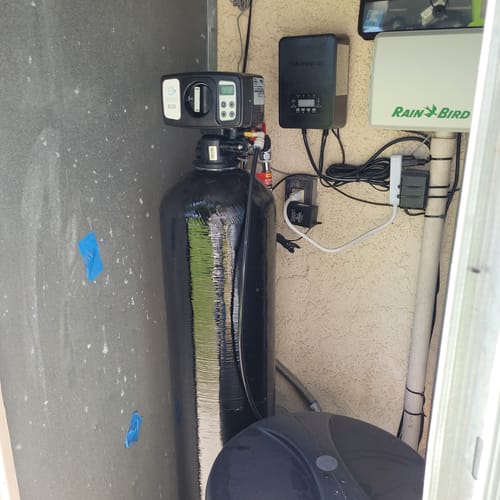
Once iron fouling takes hold, your system starts sending distress signals — you just need to know how to read them. We've seen homeowners dismiss early clues, only to face costly repairs later. Don't make that mistake.
| Warning Sign | What It Tells You |
|---|---|
| Reddish-brown water tint | Iron's infiltrating your supply |
| Rust stains on clothes/fixtures | Iron's bypassing your softener entirely |
| Declining water pressure | Resin bed's clogged with iron deposits |
Two additional red flags worth watching: a slick, oily water texture signals iron-coated beads disrupting softening, and unusually frequent regeneration cycles mean your resin's struggling hard. Each symptom builds a story — and that story ends with a fouled resin bed demanding immediate attention.
How to Test Your Water for Iron Contamination
Catching iron contamination early starts with knowing exactly what's in your water — and that means testing. Grab a commercially available water testing kit that measures both ferrous and ferric iron — they're not the same problem, and they don't respond to the same solutions.
A clear sample points to ferrous iron; a rusty, reddish-brown sample signals ferric iron. Always test at multiple locations and times throughout your home, since iron levels can vary based on plumbing conditions.
Pair those results with pH readings — below 7.0 keeps iron dissolved, while above 7.0 triggers precipitation and accelerates fouling. The recommended threshold to watch is 0.3 mg/L.
Test annually at minimum, more frequently in high-mineral areas, and you'll stay ahead of resin damage before it becomes costly.
What Iron Fouling Does to Your Resin Over Time
Iron doesn't just pass through your softener and disappear — it slowly builds up on your resin beads, layer by layer, until those beads can barely do their job.
Iron doesn't vanish inside your softener — it accumulates on resin beads until those beads can barely function.
Think of it like arterial plaque: gradual, invisible at first, then suddenly consequential. As iron coats the resin, you'll notice your system demanding more frequent regeneration cycles — a clear sign it's working harder for diminishing returns.
Water pressure drops. Reddish-brown tints appear. Fixtures develop rust stains.
The resin's ion-exchange capacity shrinks because iron fundamentally suffocates those beads, blocking them from grabbing hardness minerals.
Left unaddressed, that coating becomes permanent. At that point, you're not dealing with a maintenance issue anymore — you're facing full resin replacement or system failure.
Early action is everything.
How to Prevent Iron Fouling From Returning
Clearing iron fouling from your resin is a win worth protecting, so let's talk about keeping it from coming back.
Prevention starts with knowing your numbers. Test regularly and keep ferrous iron below 3 ppm.
| Action | Threshold/Frequency | Purpose |
|---|---|---|
| Water testing | Monthly | Monitor iron and pH levels |
| Iron pre-filter | Install when iron exceeds 5 ppm | Protect resin bed from fouling |
| Resin cleaning | Monthly | Prevent iron accumulation |
If iron exceeds 5 ppm, install a dedicated pre-filter before your softener. Recalibrate settings to match actual hardness and iron readings—excessive regeneration accelerates fouling. Watch for discoloration or metallic tastes; they're early warnings demanding immediate action. High-quality salt and consistent maintenance aren't optional extras—they're your long-term defense.
Frequently Asked Questions
Is There Supposed to Be Iron Discharge From a Water Softener?
No, there shouldn't be iron discharge from your water softener. When we see it happening, it means the resin's fouled and overwhelmed—iron's bypassing the bed entirely, signaling you need immediate maintenance or pre-treatment filtration.
Is Water Softener Resin Toxic to Humans?
Water softener resin isn't toxic to humans under normal conditions. However, if it's heavily fouled with iron, bacteria, or chemicals, it can introduce harmful contaminants into your softened water, making regular maintenance essential.
How Much Does It Cost to Replace a Resin Bed in a Water Softener?
Replacing a resin bed typically costs $400–$800, including $300–$600 for materials and $100–$200 for labor. If you're handy, DIY replacement cuts costs considerably, with resin bags running just $40–$150.
Why Are States Banning Water Softeners?
States are banning water softeners because they discharge high levels of salt into wastewater, harming local ecosystems and contaminating drinking water supplies. That's pushing legislators toward salt-free systems and advanced filtration as safer alternatives.






