


![SoftPro™ Chlorine+ Carbon Whole House Water Filter to Remove PFAS, Chlorine, Chloramine & Pesticides [City Water Filters Series]](http://www.softprowatersystems.com/cdn/shop/files/SoftPro_Whole_House_Carbon_Filter_with_Spin_Down_Water_Filter.webp?v=1783547361&width=140)


 855-683-8488


Iron in Drinking Water Health Risks: What Current Science Actually Says About High Iron Consumption

High iron in drinking water isn't just a nuisance — it's a genuine health concern we shouldn't ignore. Short-term exposure can cause nausea, vomiting, and diarrhea, while long-term consumption may damage your liver, heart, and endocrine glands. Vulnerable groups like diabetics and those with hemochromatosis face even greater risks. The WHO flags anything above 0.3 mg/L as a threshold worth watching. There's much more the current science reveals about protecting yourself and your family.
Key Takeaways
- High iron in drinking water causes immediate gastrointestinal distress, including nausea, vomiting, and diarrhea, even at short-term exposure levels.
- Long-term iron consumption damages vital organs, particularly the liver, heart, and endocrine glands, increasing disease risk significantly.
- WHO and U.S. EPA set 0.3 mg/L as the safe aesthetic threshold; exceeding it causes metallic taste and staining.
- Adults face higher health risks than children, with vulnerable groups like diabetics and hemochromatosis patients at greatest danger.
- Effective treatment options include aeration, filtration, and reverse osmosis, with private well testing recommended every five years.
What High Iron Levels Do to Your Body

When iron levels in drinking water get too high, our bodies start to pay the price. The immediate effects hit the digestive system first — nausea, vomiting, and diarrhea emerge once concentrations exceed safe thresholds.
But here's what concerns researchers most: prolonged exposure doesn't stop there.
Excessive iron accumulates over time, quietly damaging the liver and heart. We're talking about real structural harm — elevated liver disease risk and cardiovascular complications that develop gradually.
For individuals already managing hemochromatosis or diabetes, this compounding effect becomes particularly dangerous, since their bodies already absorb iron inefficiently.
Interestingly, adults actually face higher hazard quotients than children for these non-cancer risks — a counterintuitive finding that underscores why monitoring our drinking water's iron content matters for everyone.
Short-Term vs. Long-Term Health Effects of Iron in Water
The distinction between short-term and long-term iron exposure matters more than most people realize. Brief encounters with high iron trigger immediate gastrointestinal distress—nausea, vomiting, diarrhea—particularly in sensitive individuals. But chronic exposure tells a darker story.
| Exposure Type | Primary Health Impact |
|---|---|
| Short-Term | Gastrointestinal distress (nausea, vomiting, diarrhea) |
| Long-Term | Organ damage to liver, heart, and endocrine glands |
| Chronic | Hemochromatosis and iron overload complications |
We should understand that long-term consumption doesn't just accumulate discomfort—it accumulates iron itself. The body loses its ability to regulate absorption, potentially triggering hemochromatosis. Adults face measurably higher risks than children, with 8% of tubewells exceeding safe hazard quotient thresholds for adults specifically.
How Much Iron in Water Is Actually Unsafe?
Pinning down an exact "unsafe" threshold for iron in drinking water isn't as straightforward as we'd hope. The WHO and U.S. EPA both flag 0.3 mg/L as the point where water becomes aesthetically objectionable—think metallic taste and reddish staining.
But here's the nuance: that's not a hard health limit. Short-term exposure above 0.3 mg/L rarely triggers serious harm. The real concern emerges with prolonged consumption at elevated concentrations, where research links high iron intake to stomach distress and, more seriously, potential liver damage over time.
Bangladesh offers a sobering real-world example—73% of tested tubewells exceeded local iron limits, illustrating how widespread this exposure actually is.
Who Is Most at Risk From Iron in Drinking Water?
Not everyone faces the same level of danger from iron-laced water—and understanding who's most vulnerable can make a real difference.
Adults consistently show higher hazard quotient values than children, meaning they're absorbing more risk with every glass.
But certain groups face compounded danger. People living with diabetes, liver disease, or hemochromatosis—a genetic condition accelerating iron absorption—can experience iron overload far more rapidly than the general population.
For them, elevated iron isn't just an inconvenience; it triggers serious metabolic and organ-level consequences.
Geography also matters. In Bangladesh, over 70% of tubewell samples exceed safe iron limits, putting entire communities at daily risk.
If you belong to any of these vulnerable categories, your exposure calculus is fundamentally different from the average person's.
How Do You Test and Treat Iron in Your Water?
Once we recognize iron could be lurking in our water, the next logical question is: what do we do about it? Start by testing every five years—especially with private wells—targeting iron concentration, pH, alkalinity, and iron bacteria.
| Treatment Method | Best For | Effectiveness |
|---|---|---|
| Aeration & Filtration | Dissolved iron | High |
| Water Softeners | Low-level iron | Moderate |
| Reverse Osmosis | Point-of-use needs | High |
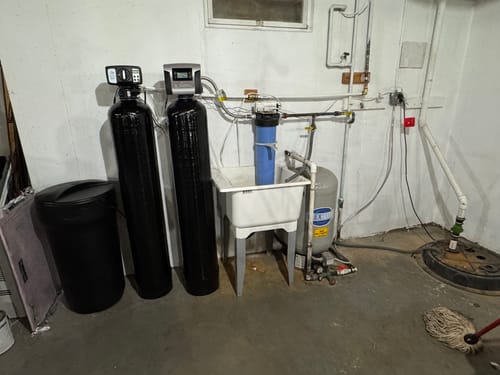
Lab analysis gives us precise data, helping us match the right solution to our specific iron type. If staining or taste issues persist, licensed water treatment specialists can design tailored systems. We shouldn't stop there—regular maintenance and periodic retesting keep our treatment systems performing and our water consistently safe.
Frequently Asked Questions
Is High Iron in Drinking Water Bad for You?
Yes, high iron in drinking water can harm us. We're looking at gastrointestinal issues, liver damage, and long-term health risks—especially if we're consuming levels above the 0.30 mg/L aesthetic standard regularly.
How Much Iron in Water Is Safe to Drink?
We recommend keeping iron levels at or below 0.30 mg/L in your drinking water. While that's the aesthetic standard, concentrations below this limit don't typically pose significant health risks since iron's essential to our bodies.
Can Iron in Water Cause Hemochromatosis?
Iron in water doesn't directly cause hemochromatosis—it's a genetic condition. However, if you're genetically predisposed, consistently drinking high-iron water can worsen iron overload, accelerating organ damage. We'd recommend monitoring your iron intake carefully.






