


![SoftPro™ Chlorine+ Carbon Whole House Water Filter to Remove PFAS, Chlorine, Chloramine & Pesticides [City Water Filters Series]](http://www.softprowatersystems.com/cdn/shop/files/SoftPro_Whole_House_Carbon_Filter_with_Spin_Down_Water_Filter.webp?v=1783547361&width=140)


 855-683-8488


Iron in Water vs. Water Heater Longevity: What the Data Shows

Iron in your water is quietly working against your water heater every single day. It builds up on heating elements, clogs pipes, and forces your system to work harder than it should. The data shows that iron levels above just 0.3 mg/L start reducing your heater's lifespan, and levels above 5.0 mg/L can cause severe failure. We've broken down exactly what's happening inside your tank and what you can do to stop it.
Key Takeaways
- Iron levels above 2.5 mg/L can shorten a water heater's lifespan by 3–5 years through accelerated corrosion and element wear.
- Levels below 0.3 mg/L have minimal impact on water heater longevity and cause no measurable energy cost increase.
- Iron concentrations between 1.0–3.0 mg/L can reduce water heater lifespan by 2–4 years due to sediment buildup.
- Iron exceeding 5.0 mg/L causes severe heater failure and raises energy costs by over 30%.
- Annual flushing removes iron sediment, preventing buildup that can otherwise shorten heater lifespan by 3–5 years.
How Iron Gets Into Your Water Heater

When water travels through the ground, it dissolves iron from rocks and minerals before it ever reaches your home — and that iron doesn't disappear once it hits your pipes.
It moves directly into your water heater, where heat accelerates its effects.
Iron exists in two forms you need to understand: ferrous iron, which stays dissolved and invisible, and ferric iron, which oxidizes into the rust deposits you can actually see.
Both enter your system the same way — through your supply line — but they behave differently once inside your heater.
Recognizing which type you're dealing with determines how you'll treat it and, ultimately, how well you'll protect your equipment from premature wear.
How Iron Corrodes and Clogs Your Water Heater
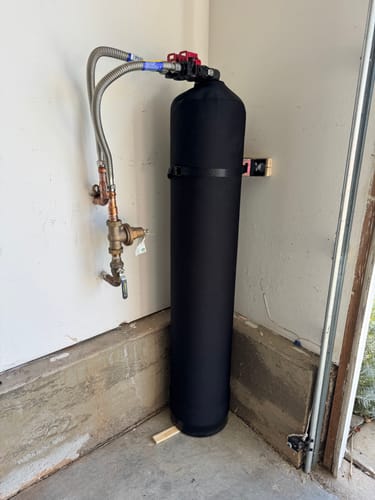
Once iron enters your water heater, it doesn't just sit there harmlessly — it gets to work breaking things down. Iron deposits accumulate on heating elements, forcing them to work harder and consume more energy just to reach your target temperature. That extra strain accelerates wear considerably.
Iron doesn't sit idle in your water heater — it actively breaks things down, draining energy and accelerating wear.
Meanwhile, rust particles migrate into pipes and valves, restricting water flow and quietly degrading appliance performance. You'll often notice the warning signs first on your dishes and laundry — those reddish-brown stains signal internal corrosion already underway.
Here's the number worth remembering: concentrations above 2.5 mg/L can shorten your water heater's lifespan by 3–5 years. That's not gradual inconvenience — that's measurable, preventable loss.
Understanding this mechanism is the first step toward protecting your investment.
What Warning Signs Indicate an Iron Problem in Your Water Heater?
Catching an iron problem early can mean the difference between a quick fix and an early replacement — so let's look at what your water heater is actually telling you.
Reddish-brown discoloration in your water or on fixtures is one of the clearest red flags. Stains on dishes and laundry often point to internal corrosion already underway.
Reduced water pressure or flow suggests rust deposits are restricting your system, forcing it to work harder and consume more energy. If iron levels exceed 0.3 mg/L, your heating elements are under stress — potentially shaving 3-5 years off your unit's lifespan.
Scheduling regular inspections lets us catch these issues before they escalate, turning a manageable problem into a costly replacement.
How Much Lifespan Does Iron Actually Take Off Your Water Heater?
How much damage are we really talking about? Iron levels above just 0.3 mg/L can strip 3–5 years from your water heater's lifespan. That's significant when you consider most units last 8–12 years.
| Iron Level (mg/L) | Estimated Lifespan Loss | Energy Cost Increase |
|---|---|---|
| Below 0.3 | Minimal impact | 0% |
| 0.3–1.0 | 1–2 years | 5–15% |
| 1.0–3.0 | 2–4 years | 15–25% |
| 3.0–5.0 | 3–5 years | 25–30% |
| Above 5.0 | Severe/premature failure | 30%+ |
Rust deposits restrict flow, stress heating elements, and quietly drive up your energy bills by 15–30%. We're not just losing equipment years—we're hemorrhaging money monthly. The data makes the cost of inaction undeniable.
How to Flush Iron Sediment and Protect Your Water Heater
Knowing the damage iron can do is one thing—stopping it's another. Flushing your water heater annually is the single most effective defense we have.
Here's how to do it right:
- Drain the tank completely using a hose until the water runs clear—that's your confirmation iron sediment's gone.
- Inspect the anode rod during each flush to catch early corrosion before it escalates into costly damage.
- Stick to a yearly schedule to prevent sediment accumulation that silently drives energy costs up 15–30%.
Skipping this maintenance doesn't just risk efficiency—it shortens your water heater's lifespan by 3–5 years.
Neglecting your water heater doesn't just hurt efficiency—it quietly steals years from its lifespan.
We're talking about a simple habit that protects a significant investment. Don't wait until the damage is already done.
Frequently Asked Questions
Can a Water Heater Last 20 Years?
Yes, a water heater can last 20 years! We've seen tankless models regularly hit that milestone, while tank heaters achieve it through diligent maintenance—think anode rod checks and regular sediment draining.
What's the Average Lifespan of a 50 Gallon Water Heater?
We're looking at 8 to 12 years on average, but don't let that discourage you. With proper maintenance and good water quality, you can push well beyond that range.
Is a 15 Year Old Water Heater Old?
Yes, a 15-year-old water heater is old. We're well past the typical 8-12 year lifespan, so we're likely facing higher energy costs, reduced efficiency, and an increased risk of failure.
Should I Flush a 7 Year Old Water Heater?
Yes, we'd absolutely recommend flushing your 7-year-old water heater! It removes sediment buildup that quietly steals efficiency and accelerates wear. Regular flushing now can meaningfully extend its lifespan, keeping energy bills lower and hot water flowing reliably longer.






