


![SoftPro™ Chlorine+ Carbon Whole House Water Filter to Remove PFAS, Chlorine, Chloramine & Pesticides [City Water Filters Series]](http://www.softprowatersystems.com/cdn/shop/files/SoftPro_Whole_House_Carbon_Filter_with_Spin_Down_Water_Filter.webp?v=1783547361&width=140)


 855-683-8488


Iron in Your Well Water and Skin Problems: What the Latest Evidence and Studies Actually Say

Iron in your well water can seriously damage your skin, and the latest evidence backs this up. When iron levels exceed 0.3 mg/L, it disrupts your skin's moisture barrier, triggers oxidative stress, and accelerates premature aging—think persistent dryness, irritation, and wrinkles. Iron bacteria make things worse by forming biofilms that harbor harmful pathogens. If your skin has changed since using well water, there's a reason why—and what we've uncovered goes much deeper than most people realize.
Key Takeaways
- Iron levels above 0.3 mg/L in well water disrupt the skin's moisture barrier, causing dryness, irritation, and increased sensitivity.
- Studies confirm chronic iron exposure generates oxidative stress, accelerating cellular aging and causing visible wrinkles and persistent dryness.
- Iron bacteria form biofilms in plumbing, harboring pathogens that increase infection risk, especially through contact with compromised skin.
- Elevated iron alters water chemistry, reducing soap and cleanser effectiveness, ultimately diminishing overall skincare efficacy.
- Regular well water testing and appropriate treatment methods, including oxidizing filters and softeners, are essential for protecting skin health.
Does Iron in Well Water Actually Harm Your Skin?

How often do we stop to think about what's actually in our well water—and what it might be doing to our skin? The short answer is yes, iron can genuinely harm it. When iron levels exceed the EPA's recommended maximum of 0.3 mg/L, we're looking at real consequences: dryness, irritation, and visible discoloration.
But it doesn't stop there. Iron bacteria produce biofilms that can harbor harmful microorganisms, creating conditions ripe for infections. High iron concentrations also trigger oxidative stress, accelerating skin aging at the cellular level.
Even our soaps and cleansers take a hit—iron alters their chemistry, reducing their effectiveness. What seems like a simple water quality issue is actually a multi-layered skin health problem worth taking seriously.
How High Iron Levels in Well Water Cause Dryness, Discoloration, and Wrinkles
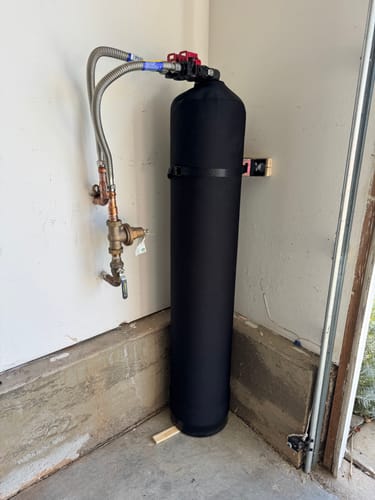
When iron-rich well water consistently touches our skin, it sets off a chain reaction that goes far deeper than surface-level staining. Iron disrupts our skin's moisture barrier, accelerates oxidative stress, and invites bacterial biofilms that compound the damage.
| Effect | Mechanism |
|---|---|
| Dryness & Irritation | Disrupted moisture barrier |
| Hair Discoloration | Mineral deposit accumulation |
| Premature Wrinkles | Iron-driven oxidative stress |
| Biofilm Formation | Iron bacteria colonization |
| Dull, Uneven Complexion | Interference with cell turnover |
Each consequence feeds the next. Oxidative stress degrades collagen, slowing healthy cell renewal, which then deepens discoloration and dullness. Iron bacteria further complicate healing by sheltering harmful organisms directly against our skin. Understanding this cascade is what separates reactive skincare from genuinely informed water management.
What Research Reveals About Well Water Iron and Skin Damage
Research confirms what many well water users experience firsthand: iron damages skin in measurable, documented ways.
Studies show that chronic iron exposure compromises the skin's barrier function, making it increasingly vulnerable to irritants. That's not a minor inconvenience — it's a structural failure unfolding slowly with every shower.
When iron levels exceed 0.3 mg/L, the oxidative stress it generates accelerates cellular aging, visibly manifesting as wrinkles and dryness.
Even minimal iron exposure triggers oxidative stress that visibly ages skin through accelerated wrinkling and chronic dryness.
Even more concerning, iron bacteria produce biofilms that shelter harmful microorganisms, creating direct pathways to skin infections upon contact.
We're not talking about speculation here. The evidence connects elevated iron to compromised integrity, inflammation triggers, and accelerated aging markers.
Understanding this research changes how seriously we should treat well water quality.
Iron Bacteria: The Hidden Skin Threat Lurking in Your Well
Beyond the iron itself, there's another layer to this problem — one that lives, grows, and spreads inside your well and pipes. Iron bacteria thrive where iron levels exceed 0.3 mg/L, forming slimy biofilms that become incubators for dangerous pathogens.
| Iron Bacteria Risk Factor | Skin Health Impact |
|---|---|
| Biofilm formation in pipes | Harbors infection-causing pathogens |
| Slimy deposits on surfaces | Triggers skin irritations |
| Elevated iron concentration | Accelerates bacterial proliferation |
| Open wounds or compromised skin | Dramatically increases infection risk |
These aren't passive contaminants — they're active colonizers. If you've got cuts, eczema, or thinning skin, contact with this bacteria-laden water creates a direct pathway for infection and accelerated skin degradation. Regular testing isn't optional; it's essential defense.
How to Test and Treat Iron in Your Well Water
Watch for these telltale signs before you even test:
- Yellow or red-colored water flowing from your tap
- A sharp metallic taste that lingers
- Reddish-brown stains ghosting your sinks and fixtures
- Slimy biofilm buildup suggesting iron bacteria
- Skin irritation that worsens after showering
Treatment depends entirely on iron type — ferrous, ferric, or organic.
Chemical oxidation, oxidizing filters, and water softeners each serve different scenarios.
Regular maintenance isn't optional; it's what protects your plumbing, your skin, and ultimately your health.
Frequently Asked Questions
Can Iron in Water Cause Skin Problems?
Yes, iron in water can cause skin problems! We've found it disrupts your skin's natural barrier, triggers dryness, irritation, and rashes, and even lets harmful bacteria thrive—worsening conditions you're already managing.
Can Iron in Your Well Water Make You Sick?
While iron in well water isn't typically linked to serious illness, excessive levels can cause gastrointestinal discomfort, and iron bacteria can harbor dangerous pathogens, potentially making vulnerable individuals genuinely sick.
How to Remove Iron From Well Water Naturally?
We can naturally remove iron from well water by using oxidizing filters, aerating water to precipitate iron, or running it through sand and gravel filters—let's also test regularly to guarantee effectiveness.
How to Tell if You Have Iron in Your Well Water?
We can spot iron in our well water by looking for yellow or red discoloration, noticing a metallic taste, finding stains on laundry, or seeing a rainbow sheen in our beverages.






