


![SoftPro™ Chlorine+ Carbon Whole House Water Filter to Remove PFAS, Chlorine, Chloramine & Pesticides [City Water Filters Series]](http://www.softprowatersystems.com/cdn/shop/files/SoftPro_Whole_House_Carbon_Filter_with_Spin_Down_Water_Filter.webp?v=1783547361&width=140)


 855-683-8488


Iron in Well Water and Water Softener Resin: Why High Iron Levels Are Causing Serious Hidden Damage

High iron levels in well water aren't just an eyesore—they're silently wrecking your water softener resin, clogging your pipes, and driving up your costs before you even notice. Iron sneaks in through dissolved minerals and corroded pipes, causing resin clumping, reduced water pressure, metallic-tasting water, and stubborn rust stains. Once iron damage takes hold, it's expensive to reverse. Stick with us, and we'll show you exactly what's happening and how to stop it.
Key Takeaways
- High iron levels cause resin clumping in water softeners, disrupting ion exchange efficiency and gradually degrading system performance over time.
- Iron accumulation forces increased regeneration cycles, raising operational costs and significantly shortening the overall lifespan of water softeners.
- Oxidative discoloration from iron exposure causes permanent color changes in resin, indicating irreversible damage to the softening media.
- Iron damage develops gradually, making it difficult to detect until costly repairs or full system replacements become necessary.
- Regular professional water testing is critical, as iron levels exceeding 0.3 mg/L require immediate treatment intervention.
How Iron Gets Into Well Water (And Why It's Hard to Avoid)?

Iron sneaks into well water through a surprisingly simple process: as rainwater and snowmelt seep through soil and rock, they dissolve iron-bearing minerals within the aquifer below.
It's a natural, ongoing process that's nearly impossible to prevent entirely.
But geology isn't your only concern. Corroded iron pipes actively contribute to elevated iron levels, compounding what nature already delivers to your well.
Here's what catches most homeowners off guard: iron typically enters your water as dissolved ferrous iron, which appears completely clear.
You won't see it until it hits oxygen and transforms into reddish ferric iron, leaving those familiar rust stains behind.
And don't forget manganese, which frequently travels alongside iron, quietly complicating your treatment strategy before you've even identified the full problem.
Warning Signs Iron Is Already Damaging Your Plumbing or Softener
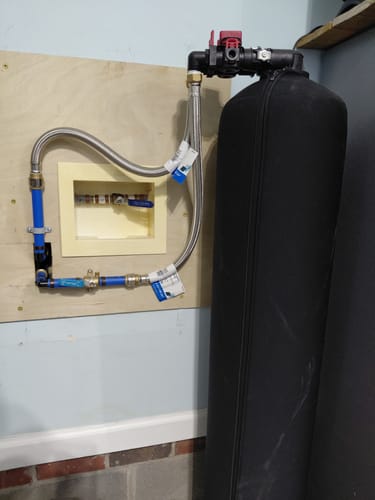
Knowing how iron enters your well water is one thing—recognizing what it's already doing to your plumbing and appliances is another.
Watch for rust-colored stains on laundry, dishes, and fixtures—that's iron actively degrading your system. Notice reduced water pressure or sluggish drains? Iron buildup may be narrowing your pipes toward a costly blockage. A metallic taste signals iron levels exceeding the EPA's 0.3 mg/L threshold, compromising both water quality and infrastructure.
Rust stains, low pressure, metallic taste—iron isn't just in your water. It's already damaging your home.
Your water heater running less efficiently than usual? Iron accumulation reduces appliance lifespan and spikes energy costs. Perhaps most alarming: black, slimy buildup around faucets indicates iron bacteria growth, compounding your plumbing problems.
Each of these signs means damage is already happening—and waiting only makes it worse.
What Iron Does to Your Water Softener Resin Over Time
While your water softener works hard to protect your home, iron is quietly waging war on its most critical component—the resin.
Over time, iron accumulation creates compounding damage that's difficult to reverse:
- Resin clumping disrupts ion exchange efficiency, delivering progressively softer—but less effective—treated water.
- Oxidative discoloration transforms resin from clear to reddish-brown, signaling irreversible degradation at the molecular level.
- Accelerated regeneration cycles spike operational costs while shortening your system's functional lifespan.
We can't overstate this: iron doesn't damage resin dramatically overnight—it erodes performance gradually, making the problem easy to ignore until it's expensive.
Regular iron-level testing isn't optional maintenance; it's the difference between a system that performs and one that fails prematurely.
What Iron Sediment Does to Your Pipes and Fixtures
Your pipes and fixtures face 5 distinct threats when iron sediment enters the picture—and each one compounds the others.
| Threat | Mechanism | Consequence |
|---|---|---|
| Pipe Clogs | Rust particle buildup | Reduced flow and pressure |
| Corrosion | High iron weakens pipes | Leaks and structural failure |
| Staining | Rust deposits on surfaces | Permanent discoloration |
| Appliance Damage | Iron accumulates internally | Costly repairs or replacements |
| Iron Bacteria | Thrives in iron-rich water | Slimy faucet and fixture buildup |
We're not talking about isolated problems—we're talking about a cascade. Clogs reduce pressure, corrosion creates leaks, staining ruins aesthetics, appliances fail prematurely, and bacteria accelerate everything. Each threat feeds the next. Understanding this chain reaction is exactly what separates homeowners who react too late from those who protect their systems proactively.
The Right Way to Treat High Iron in Well Water
Now that you know what iron sediment does to your pipes and fixtures, the next logical question is: what do you actually do about it?
Treatment depends entirely on the type of iron you're dealing with:
- Ferrous iron (dissolved, invisible) responds well to oxidation and filtration, or ion exchange via a water softener for concentrations under 10 mg/L.
- Ferric iron (visible, particulate) is more straightforward—it filters out more easily.
- High concentrations demand a layered approach: an air injection oxidation (AIO) filter paired with a water softener and acid neutralizer.
Start with professional water testing. Anything above 0.3 mg/L requires action.
Knowing your exact iron type and concentration lets you build a system that actually solves the problem permanently.
Frequently Asked Questions
How to Fix High Iron in Well Water?
We recommend testing your water first, then installing an AIO filter with Katalox Light media. It'll remove iron and manganese without chemicals. Also, maintain your system regularly and monitor pH levels for best results.
What Can Falsely Elevate Iron Levels?
Several things can falsely elevate iron levels: iron bacteria, rusting pipes, dissolved oxygen oxidizing ferrous iron, poorly maintained water softeners, and chemical treatments like chlorine. Each distorts readings, making it harder to pinpoint your water's true iron content.
What Diseases Are Caused by Iron in Water?
Excessive iron in water doesn't directly cause diseases, but it can trigger gastrointestinal distress, worsen skin conditions like acne, and mimic hemochromatosis symptoms—fatigue and joint pain—especially in vulnerable populations like pregnant women and children.
What Are the Symptoms of Too Much Iron in Well Water?
When there's too much iron in your well water, you'll notice metallic-tasting water, rust-colored stains on laundry and fixtures, skin issues, gastrointestinal distress, and reduced water pressure from clogged pipes.






