


![SoftPro™ Chlorine+ Carbon Whole House Water Filter to Remove PFAS, Chlorine, Chloramine & Pesticides [City Water Filters Series]](http://www.softprowatersystems.com/cdn/shop/files/SoftPro_Whole_House_Carbon_Filter_with_Spin_Down_Water_Filter.webp?v=1783547361&width=140)


 855-683-8488


Iron Levels Testing in Well Water at Home: Understanding PPM, mg/L, and What to Do With Your Results

When you test your well water for iron, your result in PPM and mg/L means the exact same thing — they're interchangeable. The EPA's safety threshold sits at 0.3 mg/L, and anything above that causes orange staining, metallic taste, and real damage to your plumbing and appliances. Knowing your number tells you whether you need to act fast or simply monitor. Stick with us, and we'll walk you through everything that number is trying to tell you.
Key Takeaways
- PPM and mg/L are equivalent measurements, meaning 1 PPM equals 1 mg/L, so no conversion is needed when comparing test results.
- Use an iron-specific test kit, collect water directly from your well tap, and compare the colorimetric result to a reference chart.
- The EPA's aesthetic threshold for iron is 0.3 mg/L; levels below this indicate safe water conditions.
- Iron levels exceeding 0.3 mg/L cause orange staining, metallic taste, appliance buildup, and plumbing corrosion if left untreated.
- If results exceed 0.3 mg/L, install an appropriate filtration system, such as the Fleck 2510AIO Katalox Light, rated for up to 30 mg/L.
What Do PPM and mg/L Actually Mean for Iron?

When testing iron in well water, you'll come across two measurements constantly: PPM (parts per million) and mg/L (milligrams per liter).
Testing iron in well water means encountering two measurements repeatedly: PPM (parts per million) and mg/L (milligrams per liter).
Here's what's useful to know: they're actually equivalent. A reading of 1 PPM equals 1 mg/L, so you'll never need to convert between them.
What matters more is understanding what those numbers mean practically. The EPA recommends keeping iron below 0.3 mg/L for safe, stain-free drinking water. Exceed that threshold, and you'll start noticing orange staining on fixtures, laundry, and plumbing — the telltale signs of an iron problem.
We find that knowing this equivalency eliminates confusion when comparing test results from different sources, helping you make faster, more confident decisions about your water treatment needs.
How Do You Test Iron in Well Water at Home?
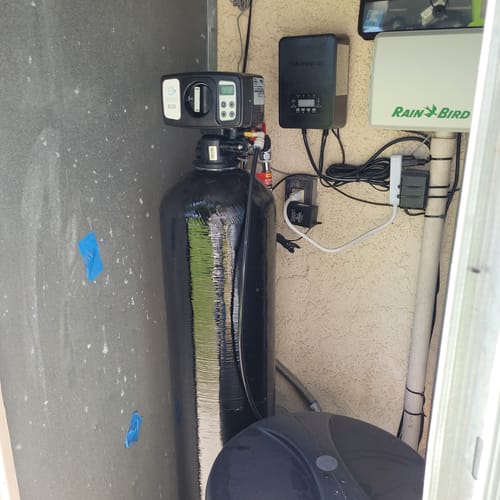
Now that you know what you're measuring, let's talk about how to actually get those numbers. Home testing is straightforward when you use a kit designed specifically for iron detection.
Here's how it works:
- Collect your sample – Draw water directly from your well tap into the provided test vial.
- Apply the reagent – Add the included chemical solution, which triggers a colorimetric reaction, shifting the water's color based on iron concentration.
- Match the color – Compare your sample against the reference chart to read your result in mg/L or ppm.
If your reading exceeds 0.3 mg/L, you've got an actionable problem. That number tells you exactly what treatment your water needs next.
Is Your Iron Level Safe or a Problem?
So what does your iron reading actually mean for your water? The EPA sets the aesthetic threshold at 0.3 mg/L—that's 0.3 ppm. Below that, you're in good shape.
Above it, you'll likely notice orange-brown stains on fixtures, sinks, and laundry. It's not just cosmetic frustration; it signals your water chemistry needs attention.
Here's the good news: elevated iron is treatable. If your levels climb toward 30 mg/L, a system like the Fleck 2510AIO Katalox Light filter can handle that load effectively.
But don't guess at solutions—consult a water treatment professional who can match the right system to your specific results.
Regular testing keeps you ahead of the problem before staining and corrosion become costly headaches.
What High Iron Levels Damage in Your Home
High iron levels don't just stain your sink—they quietly work through your entire home, degrading fixtures, appliances, and plumbing over time. Understanding exactly what's at risk helps you prioritize treatment before damage compounds.
Here's what excessive iron systematically destroys:
- Fixtures and laundry – Orange staining embeds into sinks, tubs, and fabrics, demanding aggressive cleaning that accelerates surface wear.
- Appliances – Dishwashers and water heaters accumulate mineral buildup, reducing efficiency and triggering premature failure.
- Plumbing systems – Iron deposits clog pipes and promote corrosion, shortening your plumbing's lifespan considerably.
Beyond structural damage, high iron produces a metallic taste that discourages drinking your water altogether.
Every problem compounds quietly—which is precisely why testing and acting early protects both your home and your investment.
Which Filter Removes High Iron From Your Well Water?
Once you know iron is damaging your home, the next logical step is stopping it at the source—and the right filter makes all the difference.
We recommend looking closely at the Fleck 2510AIO Katalox Light filter system, which handles iron concentrations up to 30 mg/L—well beyond the 0.3 mg/L threshold where problems begin.
That's serious removal capacity, and it means you're not just masking the issue—you're eliminating it. No more orange stains on fixtures or ruined laundry.
Before purchasing, though, test your water first. Knowing your exact iron levels helps you size the system correctly.
We'd also suggest contacting a filtration professional—proper sizing guarantees your chosen system actually meets your well's specific demands, not just average ones.
Frequently Asked Questions
What Should Iron Levels Be in Well Water?
We recommend keeping iron levels in your well water at or below 0.3 mg/L. Anything higher causes orange staining on fixtures and laundry, and it'll noticeably affect your water's taste and quality.
What Is Considered High Iron in Water in Ppm?
We consider iron levels above 0.3 ppm high in water. Since 1 mg/L equals 1 ppm, that's your threshold. Exceed it, and you'll likely notice orange staining on fixtures and laundry.
How to Tell if You Have Iron in Your Well Water?
We'll notice orange staining on fixtures, laundry, or a metallic taste in the water. These are telltale signs. To confirm iron levels precisely, we recommend using a home water testing kit for accurate results.
Can You Get Too Much Iron From Well Water?
Yes, we can get too much iron from well water. When levels exceed 1 mg/L, it can interfere with our body's absorption of other essential minerals, potentially causing nutritional imbalances we'd want to avoid.






