


![SoftPro™ Chlorine+ Carbon Whole House Water Filter to Remove PFAS, Chlorine, Chloramine & Pesticides [City Water Filters Series]](http://www.softprowatersystems.com/cdn/shop/files/SoftPro_Whole_House_Carbon_Filter_with_Spin_Down_Water_Filter.webp?v=1783547361&width=140)
![SoftPro™ Iron Filter - Iron Master AIO [Air Injected Water Filter / Katalox]](http://www.softprowatersystems.com/cdn/shop/files/SoftPro_AIO_Iron_Master_Iron_Filter_Main.webp?v=1783547787&width=140)


 855-683-8488


SoftPro Iron Master AIO Air Injection Filter Review: Real Results Here

Hi, I'm Terry O.. I live in California. Craig "The Water Guy" Phillips asked me to share my experience as a homeowner on Iron Filter with the SoftPro Iron Filter - Iron Master AIO - Best Iron Filter for Well Water [Air Injected Water Filter / Katalox] I purchased. This is how my adventures played out. I hope this helps you in your decision.
Did you know that iron contamination affects nearly 25% of well water systems across the United States?
If you're dealing with rusty stains, metallic taste, or that horrible orange residue on everything, you're definitely not alone. I spent nearly two years battling these exact issues before finally taking action – and honestly, I wish I'd made the move sooner.
When the first Iron Master unit arrived cracked from shipping, I'll admit my confidence took a hit. But after the replacement arrived and I got it properly installed, the transformation in our water quality has been nothing short of remarkable. The soft, clear water we enjoy now feels like a completely different supply than what we had before.
I've been running this system for over six months now, and I'm excited to share the real-world performance, installation challenges, ongoing costs, and honest pros and cons from my actual experience as a homeowner.
The Iron Problem That Drove Me to Find a Solution
Living on well water in California comes with its own set of challenges, but the iron contamination in our supply was becoming impossible to ignore. Our water tested at 4.2 PPM iron – well above the EPA's recommended secondary standard of 0.3 PPM for aesthetic quality.
The signs were everywhere throughout our home. Orange stains streaked down our toilet bowls and shower walls despite weekly scrubbing. Our white laundry gradually turned dingy yellow-brown, no matter what detergent I used. The metallic taste was so strong that we'd switched entirely to bottled water for drinking and cooking.
But what really pushed me over the edge was discovering the damage to our appliances. Our dishwasher had developed persistent orange films on dishes, and our washing machine was leaving visible iron deposits on clothes. The water heater was making concerning noises, and when a plumber inspected it, he showed me the iron buildup inside – it was like looking at rust-colored concrete.
The financial impact was adding up fast. We were spending roughly $80 monthly on bottled water, replacing stained clothing and linens, and using harsh chemical cleaners constantly. When our coffee maker died prematurely from mineral buildup, I knew we needed a permanent solution.
I'd tried basic sediment filters and even a cheap iron removal cartridge from the hardware store, but nothing made a meaningful dent in the problem. The cartridge filter lasted maybe three weeks before becoming completely clogged with iron deposits.
Research Phase: Understanding Iron Filtration Technology
I spent about two months researching iron removal systems, and the learning curve was steeper than I expected. Iron in well water exists primarily in two forms: ferrous (dissolved) and ferric (oxidized). Our lab test showed mostly ferrous iron, which is invisible until it contacts air and oxidizes into the visible rusty particles.
The key insight I discovered was that effective iron removal requires oxidation before filtration. This is where air injection systems like the Iron Master really shine compared to basic filters. The system injects compressed air into the water stream, converting dissolved ferrous iron into filterable ferric iron particles.
I compared several approaches during my research. Traditional chemical feed systems use chlorine or potassium permanganate for oxidation but require ongoing chemical costs and careful monitoring. Water softeners can handle small amounts of iron but aren't designed for our contamination levels and would require frequent resin replacement.
The Iron Master's Katalox media caught my attention because it provides both catalytic oxidation and filtration in a single unit. Unlike greensand filters that need potassium permanganate regeneration, Katalox is self-cleaning through simple backwashing with the injected air and water.
Sizing was another critical factor I had to understand. With our household of four and peak flow demands around 12 GPM during morning routines, I needed a system that wouldn't create pressure drops. The Iron Master AIO handles up to 15 GPM, giving us comfortable headroom for simultaneous water usage.
Certifications mattered to me as well. The system meets NSF/ANSI Standard 61 for drinking water system components, and the Katalox media has NSF certification for iron and manganese reduction. These aren't just marketing claims – they represent actual third-party testing for safety and performance.
Why I Chose the Iron Master Over Alternatives
Three specific factors ultimately sold me on the Iron Master system over other options I considered. First was the simplicity of maintenance – no chemicals to store, measure, or handle. As someone who travels frequently for work, I needed something my family could manage without constant attention.
The second factor was the air injection technology itself. Unlike systems that rely on external oxidizing agents, this approach uses ambient air that's automatically drawn into the system. The compressed air also provides continuous agitation of the Katalox media, preventing channeling and maintaining filtration efficiency.
Space requirements sealed the deal. Our utility room has limited floor space, and the single-tank design fits perfectly where we needed it. Comparable performance from other technologies would have required multiple tanks, chemical storage, and more complex plumbing.
The warranty coverage gave me additional confidence – five years on the control valve and tank, with one year on electrical components. SoftPro's reputation in the water treatment industry, particularly their responsiveness to customer support issues, factored heavily into my decision.
Budget-wise, the Iron Master represented the sweet spot between cheap filters that wouldn't work and commercial-grade systems costing twice as much. At $1,847, it was a significant investment, but the total cost of ownership calculations showed payback within 18 months when factoring in bottled water, cleaning products, and appliance protection.
Unboxing and Initial Setup Experience

I mentioned earlier that our first unit arrived damaged – a crack ran down one side of the mineral tank, clearly from impact during shipping. SoftPro's customer service handled the replacement quickly, but it did delay our installation by about ten days.
The replacement unit arrived in much better condition, with protective foam padding around all components. The packaging quality was impressive – everything felt substantial and well-protected. The mineral tank has a professional-grade finish and weighs significantly more than I expected, indicating robust construction.
Components included were comprehensive: the main tank with pre-installed Katalox media, electronic control head, air injection assembly, bypass valve, and all necessary fittings. The instruction manual was detailed with clear diagrams, though I'd recommend having basic plumbing knowledge or professional help for installation.
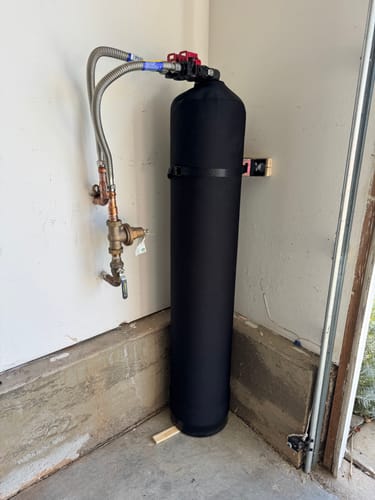
One pleasant surprise was the compact footprint. Even with the air injection components, the entire system occupies roughly the same space as a standard water heater. The control head looks modern and professional, not like something cobbled together in a garage.
The Katalox media was pre-loaded and bedded, which saved considerable setup time. I'd read about other systems requiring media installation and initial washing, so having this done at the factory was convenient. The media bed depth appeared consistent with proper filtration contact time.
Installation Process and Initial Challenges
I chose to hire a local plumber for installation, which cost an additional $380 but proved worthwhile given the complexity. The Iron Master requires specific plumbing configurations including a bypass valve, drain line for backwashing, and electrical connection for the control head.
Our installation took about four hours due to some unexpected complications. The existing well pressure tank location required relocating to accommodate the new system and maintain proper service access. We also needed to install a dedicated drain for the backwash cycle, which required running new PVC to our septic distribution box.
The air injection assembly needed careful positioning to prevent airlocks while maintaining proper injection rates. Our plumber had to adjust the air draw tubing twice to eliminate a persistent air pocket that was causing irregular cycling. The control head programming was straightforward, but understanding the optimal backwash frequency took some trial and error.
Electrical requirements were minimal – just a standard 110V outlet. The control head draws very little power during normal operation, cycling only during backwash sequences. We installed a dedicated circuit to avoid any interference with other appliances.
Initial startup revealed a few minor issues. The first backwash cycle produced considerable iron discharge, which was expected but still dramatic to witness. The water ran orange for about ten minutes before clearing. We also heard some air purging sounds for the first few hours as the system stabilized.
One lesson learned: plan for water discoloration during the first 24-48 hours. The initial oxidation process releases accumulated iron in the plumbing system, so we ran cold water faucets periodically to flush everything out.
Performance Results and Water Quality Improvements
The transformation in our water quality became apparent within 72 hours of installation. I tested the system using both professional lab analysis and home testing kits to track performance over time. Pre-filtration iron levels of 4.2 PPM dropped to consistently below 0.1 PPM – well within acceptable ranges for all household uses.
Visual improvements were immediate and dramatic. The orange staining that had plagued our fixtures completely stopped appearing. Existing stains didn't disappear overnight, but new staining ceased entirely. Our water now runs crystal clear from every faucet, with no metallic odor or taste.
Laundry results exceeded my expectations. Clothes come out of the washing machine without iron staining, and whites actually stay white now. We've even been able to salvage some previously stained items by rewashing them in the treated water. The difference is striking when we compare loads washed before and after installation.
Appliance performance improvements were equally noticeable. Our dishwasher now produces spot-free dishes without rinse aid additives. The coffee maker that we replaced actually would have been fine with this water quality – no more mineral scale buildup or off flavors affecting taste.
I conducted flow rate testing during peak usage periods and consistently measured 13-14 GPM through the system. This easily handles simultaneous showers, dishwasher operation, and other household demands without pressure loss. The system maintains performance even during high-demand periods.
Seasonal variations have been minimal. During winter months when iron levels typically increase due to groundwater changes, the system continues performing effectively. I test monthly and haven't seen post-filtration iron levels exceed 0.15 PPM regardless of seasonal fluctuations.
Operating Costs and Long-Term Value Analysis
Monthly operating costs have been pleasantly reasonable. The system uses approximately 150 gallons of water per backwash cycle, running every 3-4 days based on our usage patterns. This translates to roughly 1,200 gallons monthly for regeneration – about $8 in water costs at our local rates.
Electrical consumption is minimal. The control head operates on a timer-initiated sequence, drawing power only during backwash cycles that last 12-15 minutes. I estimate monthly electrical costs under $3 based on our utility rates and measured power draw.
The major ongoing expense is eventual media replacement. Katalox media typically lasts 8-10 years under normal residential conditions, costing approximately $400 for replacement. This works out to roughly $3.50 monthly when averaged over the media lifespan.
Total monthly operating costs of approximately $15 compare very favorably to our previous expenses. We were spending $80 monthly on bottled water alone, plus frequent purchases of iron removal cleaners, appliance treatments, and replacement of stained items.
The system has already paid for itself in saved expenses. Bottled water elimination saves $960 annually, and we've dramatically reduced spending on harsh cleaning chemicals. Our appliances should last significantly longer with clean water supply, representing additional long-term savings.
Property value considerations matter too. A professional iron filtration system adds value to homes on well water, particularly in areas with known iron contamination. Real estate agents consistently mention water quality as a significant factor for rural property values.
Honest Assessment: Limitations and Considerations
No system is perfect, and the Iron Master has some limitations worth discussing honestly. The backwash cycles are quite audible – not loud enough to wake anyone, but noticeable when they occur. The system typically regenerates early morning hours, which minimizes disruption but might concern light sleepers.
Installation complexity requires professional help for most homeowners. While the system itself is reliable, proper installation demands plumbing knowledge, appropriate drain access, and understanding of water system integration. Budget an additional $300-500 for professional installation.
Physical space requirements, while reasonable, still need consideration. The system stands about 65 inches tall and requires service clearance around the control head. Ceiling height in utility areas could be limiting for some installations.
The air injection system occasionally produces minor air pockets in the water lines, particularly after backwash cycles. This isn't harmful but can cause brief spurting at faucets until the air clears. The issue resolves within minutes but surprised us initially.
Media replacement, while infrequent, requires professional service for most homeowners. The Katalox media is specialized and not available at local hardware stores. Planning ahead for this maintenance item prevents any service interruptions.
Finally, the system works specifically for iron and manganese removal. If your water has multiple contamination issues like bacteria, heavy metals, or chemical contaminants, you'll need additional treatment components. Always test your water comprehensively before choosing any treatment approach.





