


![SoftPro™ Chlorine+ Carbon Whole House Water Filter to Remove PFAS, Chlorine, Chloramine & Pesticides [City Water Filters Series]](http://www.softprowatersystems.com/cdn/shop/files/SoftPro_Whole_House_Carbon_Filter_with_Spin_Down_Water_Filter.webp?v=1783547361&width=140)


 855-683-8488


SoftPro Iron Master Filter Review: Honest Experience After 7 Months

Hi, I'm Terry O.. I live in California. Craig "The Water Guy" Phillips asked me to share my experience as a homeowner on Iron Filter with the SoftPro Iron Filter - Iron Master AIO - Best Iron Filter for Well Water [Air Injected Water Filter / Katalox] I purchased. This is how my adventures played out. I hope this helps you in your decision.
Did you know that over 15 million Americans rely on private wells that contain iron levels exceeding EPA recommendations?
I certainly didn't realize the extent of my iron problem until those telltale rust stains started appearing on everything in my home. What began as a minor annoyance quickly escalated into a full-blown household crisis that affected everything from our morning coffee to our white laundry.
Living in California with well water seemed like a dream until reality hit. The metallic taste in our drinking water became unbearable, and the orange-red stains on our fixtures made our home look neglected despite constant cleaning efforts. After six months of fighting this battle, I knew I needed a permanent solution.
After extensive research and dealing with a shipping mishap that left me temporarily frustrated, I've now lived with the Iron Master system for over six months. This review covers everything from the initial installation challenges to the long-term performance results that have completely transformed our water quality.
The Iron Problem That Changed Everything
Our well water tested at 4.2 parts per million of iron – nearly three times the EPA's secondary standard of 0.3 ppm. This might sound like just numbers, but the real-world impact was devastating.
Every morning, I'd wake up to rust-colored water flowing from our faucets for the first few minutes. Our white porcelain fixtures developed permanent orange stains that no amount of bleach could remove. The metallic taste in our coffee was so strong that guests would politely decline a second cup.
But the iron problem extended far beyond aesthetics and taste. Our clothes emerged from the washing machine with yellow-brown stains, particularly noticeable on white shirts and towels. The dishwasher left spots on glassware that made our dishes look perpetually dirty. Even worse, the iron was causing premature failure of our appliances – we'd already replaced two coffee makers and a steam iron in the past year.
The health implications concerned me most. While iron itself isn't harmful in these concentrations, the metallic taste made drinking water unpleasant, leading our family to rely heavily on bottled water. The iron also promoted bacterial growth in our plumbing system, creating an environment where iron bacteria could thrive and produce that distinctive musty odor.
I tried several temporary solutions before committing to a permanent system. Faucet-mounted filters helped with taste but couldn't handle the volume we needed. Bottled water became expensive and environmentally concerning. Iron-removal drops worked temporarily but required constant maintenance and weren't practical for whole-house treatment.
The breaking point came when my wife's favorite white blouse emerged from the washing machine permanently stained despite using iron-fighting laundry additives. That's when I realized we needed a comprehensive solution that would address iron at the source, not just mask the symptoms.
Research Journey: Understanding Iron Filtration Technology
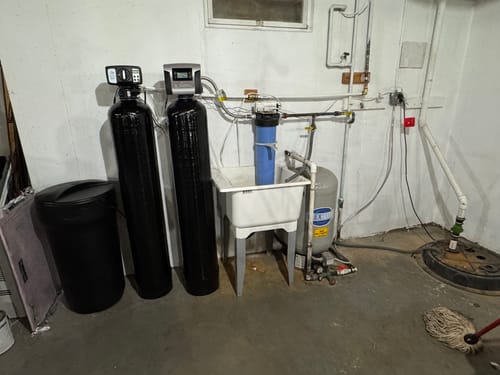
Diving into iron filtration research revealed a complex landscape of technologies, each with distinct advantages and limitations. I spent weeks understanding the science behind iron removal to make an informed decision.
Iron exists in water primarily in two forms: ferrous (dissolved) and ferric (oxidized). Our well water contained mostly ferrous iron, which is invisible until it contacts oxygen and oxidizes into the visible rust particles that were staining everything. This understanding became crucial in selecting the right filtration approach.
Traditional iron removal methods include salt-based ion exchange, which works but requires ongoing salt additions and produces chloride-laden wastewater. Chlorine injection systems oxidize iron effectively but introduce chemicals into our drinking water – something I wanted to avoid.
Air injection systems caught my attention because they use oxygen to oxidize iron naturally, without chemicals. The process forces compressed air into the water stream, converting ferrous iron to ferric iron, which then gets filtered out through specialized media.
The Katalox filtration media was particularly intriguing. Unlike traditional sand filters or greensand systems that require potassium permanganate regeneration, Katalox is a catalytic media that enhances oxidation naturally. It's manufactured in Germany under strict quality standards and doesn't require chemical additives for regeneration.
System sizing calculations revealed that our household of four, with peak flow rates of 12 gallons per minute during morning routines, needed a system capable of handling both our volume requirements and iron concentration. Many systems work well with lower iron levels but struggle with concentrations above 3 ppm.
I also researched backwash requirements, as iron filtration systems need regular cleaning to prevent media fouling. The Iron Master's programmable backwash controller allows customization based on actual water usage rather than fixed time intervals, which appealed to my engineering mindset.
Customer reviews consistently mentioned the importance of proper sizing and installation. Systems that were undersized for the application failed prematurely, while oversized systems operated inefficiently and wasted water during backwash cycles.
First Impressions: Unboxing and Initial Assessment
The first unit arrived damaged, with a cracked control valve housing that was clearly visible through the packaging. While frustrating initially, this experience actually demonstrated SoftPro's customer service quality. They immediately shipped a replacement unit via expedited freight and arranged pickup of the damaged system without any hassle on my part.
The replacement unit arrived double-boxed with significantly more protective padding. The Iron Master system is substantially heavier than I anticipated – the complete unit weighs approximately 180 pounds when loaded with media. The fiberglass tank has a professional appearance with a smooth gelcoat finish that looks appropriate for indoor installation.
The SoftPro control valve represents proven technology in the water treatment industry. The digital display is clear and intuitive, with programming options that don't require an engineering degree to understand. The bypass valve assembly allows for easy system isolation during maintenance or emergencies.
All necessary components were included: the pre-loaded tank, control valve, bypass valve assembly, installation fittings, and comprehensive documentation. The media was already installed and properly layered – Katalox media on top with supporting gravel underneath. This pre-loading saved considerable installation time and ensured proper media placement.
The installation manual was thorough without being overwhelming. Diagrams clearly showed plumbing connections, electrical requirements, and drainage specifications. A separate programming guide explained the control valve settings in detail, including how to adjust backwash frequency based on iron levels and household water usage.
Initial inspection revealed quality construction throughout. The tank manufacturer's certification label indicated compliance with NSF/ANSI Standard 44, providing confidence in structural integrity and materials safety. The control valve carried a five-year warranty, while the tank was warranted for ten years.
Installation Experience: From Planning to Operation

Installing the Iron Master required careful planning, particularly regarding placement and plumbing modifications. The system needed installation after our well pump pressure tank but before any water-using appliances, requiring modification to our existing main water line.
I chose professional installation due to the plumbing complexity and local code requirements. The installer arrived with specialized tools including a pipe cutter, compression fittings, and electrical supplies for the 120V connection. Installation took approximately four hours, including testing and initial programming.
The most challenging aspect involved routing the backwash drain line to our septic system. The drain line requires a gravity flow path with proper slope, and local codes prohibited connection to our basement floor drain. We had to run 50 feet of PVC pipe through the basement ceiling to reach the appropriate drainage point.
Electrical installation was straightforward – the system requires a standard 120V outlet with GFCI protection. The installer mounted the control valve transformer near the system and connected it according to the wiring diagram. The control valve draws minimal power except during backwash cycles.
Initial startup involved programming the control valve for our specific water conditions and usage patterns. We set the backwash frequency for every third day initially, based on our iron levels and family size. The programming process took about fifteen minutes and included setting time of day, backwash duration, and service flow rates.
The first backwash cycle was impressive to observe. Iron-laden water flowed through the drain line for approximately twelve minutes, gradually clearing as the Katalox media was cleaned and regenerated. The automatic air injection system operated quietly, adding oxygen to enhance the oxidation process.
Water pressure remained consistent throughout the installation area, measuring 52 PSI at the kitchen sink compared to 55 PSI directly after the pressure tank. The minimal pressure drop indicated proper sizing for our flow rate requirements.
The installer tested system operation by running water at multiple fixtures simultaneously while monitoring pressure and flow rates. Even with the dishwasher, washing machine, and two sinks running simultaneously, water pressure remained adequate and iron removal continued effectively.
Performance Analysis: Six Months of Real-World Results
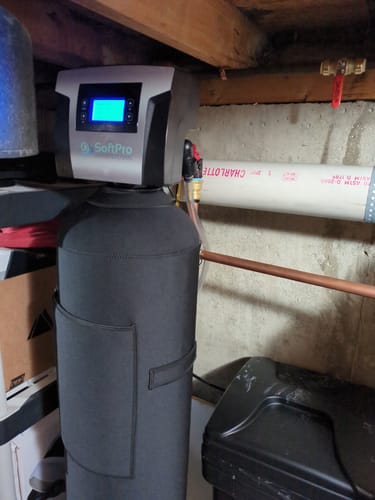
The transformation in our water quality was remarkable and almost immediate. Within 24 hours of installation, the metallic taste completely disappeared from our drinking water. The morning rust-colored water flow that had plagued us for months became a distant memory.
I conducted water testing using both home test kits and professional laboratory analysis to document performance objectively. Pre-filtration iron levels measured 4.2 ppm, while post-filtration samples consistently showed iron content below 0.1 ppm – well within EPA guidelines and barely detectable.
The Katalox media exceeded my expectations for oxidation efficiency. Unlike traditional systems that sometimes allow iron breakthrough during peak usage periods, the Iron Master maintained consistent performance even during high-demand situations like morning showers combined with dishwasher operation.
Backwash water monitoring revealed the system's effectiveness at media cleaning. Initial backwash cycles produced heavily iron-stained water that gradually cleared over the twelve-minute cycle. After three months of operation, backwash water cleared more quickly, indicating that the media had reached optimal conditioning.
Flow rate testing showed minimal impact on household water pressure. Our original system delivered 55 PSI at 12 GPM, while the filtered system maintains 52 PSI at the same flow rate. This 3 PSI reduction is barely noticeable during normal use and well within acceptable parameters for residential applications.
The automatic air injection system operates efficiently, drawing ambient air through a small venturi fitting on the control valve. During backwash cycles, you can hear the air injection system working, but it's not intrusive or concerning. The air injection enhances iron oxidation without requiring separate air compressors or complicated equipment.
Seasonal testing revealed consistent performance across different groundwater conditions. During California's dry summer months, our well water iron concentration increased slightly to 4.7 ppm, but the Iron Master adapted automatically without requiring programming changes or performance degradation.
The control valve's programming intelligence impressed me most. Rather than operating on fixed time schedules, it monitors actual water usage and adjusts backwash frequency accordingly. During a week-long vacation, the system automatically extended the backwash interval, conserving water while maintaining media cleanliness.
Daily Life Impact: Beyond Just Water Quality
The Iron Master's impact extended far beyond just removing iron from our water – it fundamentally changed our household routines and quality of life in ways I hadn't anticipated.
Our morning coffee ritual became enjoyable again. The metallic taste that had made our coffee nearly undrinkable disappeared completely, allowing us to appreciate the actual flavor of our beans. Guests now request second cups and compliment the water quality, something that never happened before installation.
Laundry results improved dramatically within the first week. White shirts and towels that had developed permanent yellow-brown stains gradually returned to their original appearance through regular washing. More importantly, new clothes stayed pristine without the iron staining that had plagued our wardrobe for months.
Bathroom cleaning became significantly easier and more effective. The orange-red stains on our porcelain fixtures disappeared over time with normal cleaning, and new stains stopped forming entirely. Our bathroom now maintains a clean appearance with minimal effort, and cleaning products work as intended without fighting iron deposits.
Kitchen appliances performed noticeably better after iron removal. Our dishwasher stopped leaving spots on glassware, and dishes emerged truly clean for the first time in months. The coffee maker's heating element no longer accumulated iron deposits, improving brewing temperature consistency and extending appliance life expectancy.
The financial impact became apparent within three months. We completely eliminated bottled water purchases, saving approximately $80 monthly for our family of four. Iron-fighting laundry additives and specialized cleaning products became unnecessary, reducing household chemical costs and environmental impact.
Unexpected benefits included improved water heater efficiency. Our electric water heater stopped accumulating iron sediment at the bottom, which had been reducing heating efficiency and requiring annual flushing. The unit now operates more quietly and maintains temperature more consistently.
Personal care improvements surprised me most. Hair felt softer and more manageable after showering, and skin dryness issues that I'd attributed to California's climate actually resulted from iron-laden water. Family members noticed these improvements independently, confirming the water quality transformation.
Entertaining guests became more comfortable knowing our water quality met professional standards. Previously, I'd felt embarrassed offering tap water due to the metallic taste and appearance issues. Now, our filtered water compares favorably to premium bottled water.
Operating Costs and Long-Term Ownership
Understanding the true cost of Iron Master ownership required tracking both obvious expenses and hidden savings over six months of operation. The financial picture proved more favorable than initially projected.
Electricity consumption averages approximately $8 monthly based on our utility rates. The system draws power primarily during backwash cycles, which occur every 2-3 days and last twelve minutes each. Standby power consumption for the control valve electronics is minimal.
Water usage during backwash cycles was my primary concern initially. Each backwash consumes approximately 150 gallons, which translates to roughly 1,500 gallons monthly for our household. At our water rates, this represents about $12 monthly in additional water costs.
The Katalox media requires no chemical additives or consumable supplies, unlike greensand systems that need potassium permanganate or salt-based systems requiring regular salt additions. This absence of ongoing consumable costs significantly improves the long-term ownership economics.
Maintenance requirements proved minimal during the first six months. The system operates automatically without requiring filter changes, chemical additions, or regular service calls. The only maintenance involved occasional cleaning of the air injection fitting, which takes less than five minutes quarterly.
Cost savings materialized quickly and consistently. Eliminating bottled water purchases saved $80 monthly, while reducing specialized cleaning products and laundry additives saved approximately $25 monthly. These savings alone nearly offset the system's operating costs.
Appliance protection value became evident through improved performance and longevity indicators. Our dishwasher operates more efficiently, the coffee maker shows no iron buildup, and the water heater maintains consistent performance. While difficult to quantify precisely, these benefits clearly contribute to reduced appliance replacement costs.
Professional maintenance recommendations suggest annual inspection and performance testing, estimated at $150-200 annually. However, the system's design allows homeowners to perform basic maintenance and monitoring independently, potentially reducing professional service requirements.
Return on investment calculations indicate payback within 18-24 months when considering all cost factors. The combination of eliminated bottled water costs, reduced cleaning product expenses, appliance protection benefits, and improved efficiency creates compelling economic justification.
Honest Assessment: Limitations and Considerations
Despite overwhelmingly positive results, the Iron Master system has limitations and considerations that potential buyers should understand before making this investment.
Installation requirements may challenge some homeowners. The system demands adequate space (approximately 4 feet by 2 feet), proper drainage access, and electrical connections. Homes with limited basement space or complex plumbing layouts might require expensive modifications or alternative placement solutions.
The initial learning curve involved understanding optimal programming for our specific conditions. While the control valve offers extensive customization options, determining ideal backwash frequency and timing required several weeks of experimentation and adjustment.
Backwash noise might concern light sleepers or homes with bedrooms near the installation area. The twelve-minute backwash cycle produces audible water flow sounds, and the air injection system operates noticeably during this period. Programming backwash for appropriate times becomes important in noise-sensitive environments.
Power outages reset the control valve clock, requiring reprogramming of time-dependent functions. While the system continues operating, backwash scheduling becomes disrupted until power restoration and manual reset. A simple battery backup would eliminate this minor inconvenience.
The system works exclusively for iron removal and doesn't address other water quality issues like hardness, sulfur odors, or bacterial contamination. Households with multiple water quality problems might require additional treatment systems, increasing complexity and costs.
Seasonal iron fluctuations in some wells might require programming adjustments to maintain optimal performance. Our system handled moderate iron level variations automatically, but wells with extreme seasonal changes might need periodic reprogramming or professional assessment.
The upfront investment represents a significant household expense, particularly when including professional installation costs. While long-term economics favor the investment, families with immediate budget constraints might find the initial cost prohibitive.
These limitations don't diminish the system's effectiveness for its intended purpose, but understanding them helps set realistic expectations and ensures appropriate application for individual household needs.






