


![SoftPro™ Chlorine+ Carbon Whole House Water Filter to Remove PFAS, Chlorine, Chloramine & Pesticides [City Water Filters Series]](http://www.softprowatersystems.com/cdn/shop/files/SoftPro_Whole_House_Carbon_Filter_with_Spin_Down_Water_Filter.webp?v=1783547361&width=140)


 855-683-8488


Iron Master Filter Review: Real Results for Well Water Issues

Hi, I'm Terry O.. I live in California. Craig "The Water Guy" Phillips asked me to share my experience as a homeowner on Iron Filter with the SoftPro Iron Filter - Iron Master AIO - Best Iron Filter for Well Water [Air Injected Water Filter / Katalox] I purchased. This is how my adventures played out. I hope this helps you in your decision.
When I first turned on my kitchen faucet three years ago in our new home, I couldn't believe the rusty, metallic-tasting water that came out. The iron staining was immediate and relentless - orange streaks down my white porcelain sink, rust-colored rings in the toilet bowls, and a metallic taste that made our morning coffee nearly undrinkable. As someone who'd always lived in the city with treated municipal water, I had no idea that well water could present such challenges.
After months of scrubbing iron stains and buying bottled water for drinking, I knew I needed a permanent solution. My research led me to the Iron Master filter system, and after six months of use, I'm sharing my complete experience - including the shipping mishap that started our journey on a frustrating note.
The Iron Problem That Changed Everything
Our well water tested at 4.2 PPM (parts per million) of iron content - nearly three times the EPA's recommended maximum of 1.5 PPM for aesthetic quality. This ferrous iron was wreaking havoc throughout our home in ways I never anticipated.
The most obvious problem was the staining. Within days of moving in, every white surface that contacted our water developed those telltale orange-brown stains. My beautiful farmhouse sink looked like it hadn't been cleaned in months, despite daily scrubbing with bleach-based cleaners. The toilet bowls required weekly treatments with iron removal products that cost $12 per bottle.
But the real wake-up call came when our six-month-old dishwasher started leaving rust spots on our glassware. I called a repair technician, thinking something was wrong with the appliance. He took one look at the water spots and asked about our iron levels. "You're going to destroy every water-using appliance in this house," he warned, explaining how iron buildup clogs spray arms, damages heating elements, and reduces efficiency.
The health implications concerned me too. While iron at these levels isn't dangerous, the metallic taste was so strong that my kids refused to drink tap water. We were spending $40 per week on bottled water for a family of four - an expense that would pay for a filtration system within a year.
Most frustrating was the unpredictability. Some days the water ran relatively clear, especially first thing in the morning. But by afternoon, particularly after heavy usage, the iron concentration would spike, leaving us with water that looked like weak tea. I learned this happens because ferrous iron oxidizes when exposed to air, turning from clear dissolved iron to the rusty ferric iron that causes visible staining.
Research Journey: Finding the Right Solution
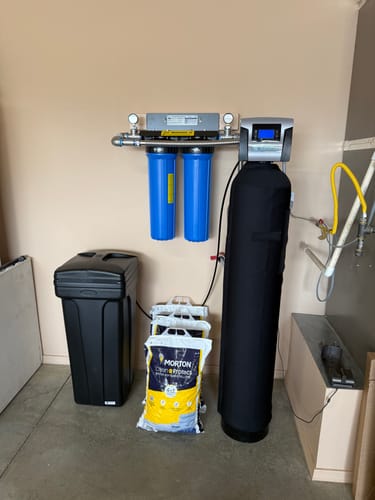
My initial instinct was to buy a basic sediment filter from the hardware store. After all, how complicated could filtering iron be? One conversation with a water treatment specialist quickly corrected that assumption. Iron filtration, I learned, requires specific technologies designed to handle dissolved metals - something standard carbon filters can't touch.
I discovered three main approaches to iron removal: oxidation followed by filtration, ion exchange systems, and catalytic media filters. Each technology targets iron differently, and the best choice depends on your specific water chemistry, iron levels, and household needs.
Oxidation systems work by converting dissolved ferrous iron into particles that can be filtered out. These systems use air injection or chemical oxidants like chlorine to facilitate the conversion process. The advantage is their effectiveness with high iron levels, but they typically require more maintenance and monitoring.
Ion exchange systems, commonly called water softeners, remove iron by trading iron ions for sodium ions. While effective for low iron levels (under 3 PPM), they can become overwhelmed by higher concentrations and require frequent regeneration cycles that waste significant amounts of water.
Catalytic media filters use specialized materials that promote iron oxidation and filtration in a single tank. The Katalox media in the Iron Master system caught my attention because it combines oxidation and filtration without requiring chemicals or salt. The media has a lifespan of 10-15 years with proper maintenance, making it cost-effective long-term.
After comparing flow rates, maintenance requirements, and operating costs, the Iron Master's air injection system with Katalox media offered the best balance for our situation. The 1.5 cubic foot system could handle our household's 8 GPM demand while treating iron levels up to 15 PPM - providing plenty of capacity for our 4.2 PPM well water.
First Impressions: A Rocky Start
The excitement of finally solving our iron problem quickly turned to frustration when the delivery truck arrived. The Iron Master system came in a sturdy wooden crate, but I could hear something rattling inside before we even opened it. Sure enough, the main control valve housing had a significant crack running along one side - clearly damage from a shipping impact.
The packaging itself was impressive: dense foam inserts, plastic wrap around sensitive components, and detailed unpacking instructions. Everything else appeared perfect - the Katalox media tank, air injection components, bypass valves, and installation hardware all arrived in excellent condition. But that cracked control valve meant we couldn't proceed with installation.
Documenting the damage became my first priority. I took photos from multiple angles, noted the serial numbers, and called SoftPro's customer service within hours of delivery. Their response impressed me - no lengthy warranty claims process or blame-shifting about shipping damage. They immediately arranged for a replacement unit and provided a prepaid shipping label for the damaged system.
The replacement arrived within eight days, packaged with extra protective padding around the control valve area. This time, every component was perfect. The control valve felt solid and substantial, with clear labeling on all connection points. The Katalox media tank was heavier than I expected - about 65 pounds when empty, which spoke to the substantial construction.
One detail that impressed me during unpacking was the comprehensive documentation package. Along with installation manuals, I received water testing guidelines, maintenance schedules, troubleshooting guides, and even a laminated quick-reference card for the control settings. This level of support material indicated a manufacturer that understood the complexity of water treatment.
Installation Experience: Easier Than Expected

With our well system located in the basement, I had adequate space for the Iron Master installation. The system requires about 3 feet of clearance around the tank for maintenance access, plus proximity to electrical power and a drain line for the automatic backwash cycles.
I chose professional installation despite having decent plumbing skills. The $280 installation fee seemed reasonable for the complexity involved - cutting into the main water line, installing bypass valves, connecting the air injection system, and programming the control head. More importantly, professional installation preserved the warranty coverage.
The installer arrived with all necessary components and completed the work in about four hours. He explained each step as he worked: installing the bypass valves on the main line, connecting the Katalox tank to the control head, setting up the air injection pump, and running the drain line to our utility sink.
One critical step was the initial system startup and programming. The control head needs to be configured for your specific water conditions - iron levels, household size, water hardness, and usage patterns. Our installer programmed it for a backwash cycle every three days initially, with the understanding that we'd adjust the frequency based on performance over the first few weeks.
The air injection pump was louder than I anticipated during its cycling periods - about as noisy as a garbage disposal running. It operates for 30-45 seconds every few hours, drawing air into the system to facilitate iron oxidation. The installer positioned it in our mechanical room where the noise wouldn't be disruptive, but it's something to consider for your installation location.
After installation, we had to wait several hours before using the water while the system completed its initial cycles and the Katalox media settled. The installer provided temporary drinking water and explained the break-in period - it would take 3-5 days for the system to reach optimal performance as the catalytic media activated fully.
Performance Deep-Dive: Six Months of Real Results
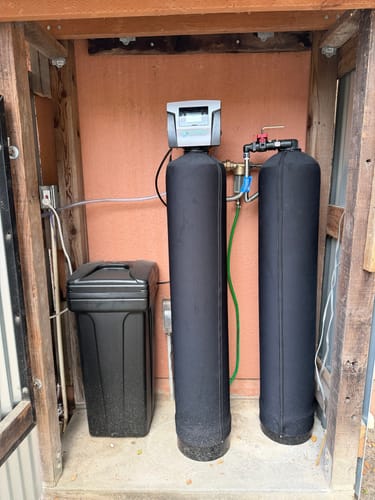
The transformation in our water quality was dramatic and immediate. Within 48 hours of installation, the metallic taste disappeared completely. By the end of the first week, I stopped seeing new iron stains on our fixtures and appliances.
Testing the iron levels became my obsession those first few weeks. I used both test strips and a digital TDS meter to monitor the system's effectiveness. Pre-filtration iron levels consistently measured between 3.8-4.4 PPM, depending on how recently our well pump had cycled. Post-filtration readings dropped to 0.1-0.2 PPM - well below the 0.3 PPM threshold where staining typically occurs.
The air injection process creates a distinctive sound signature that I learned to interpret. Every few hours, I hear the air pump engage for about 45 seconds, followed by a brief pressure change in the house plumbing. This oxidation cycle converts dissolved ferrous iron into particles that the Katalox media can capture. During heavy water usage periods, the cycles become more frequent - the system intelligently responds to demand.
Flow rate performance exceeded my expectations. We never experienced pressure drops during simultaneous usage - showers, dishwasher, and washing machine running concurrently. The system maintains 7.5-8 GPM flow rates throughout the house, compared to 8.2 GPM from our well pump directly. That minimal restriction is impressive given the treatment process involved.
The automated backwash cycles occur every three days, typically during the early morning hours when water usage is low. Each cycle consumes approximately 35 gallons and lasts about 12 minutes. I calculated this represents less than 2% of our total water usage - an acceptable tradeoff for the iron removal benefits.
One unexpected benefit was the improvement in our water's overall clarity and taste. The Katalox media removes small amounts of sediment and other particles beyond just iron. Our water now tastes as clean and fresh as the city water I grew up with, encouraging the whole family to drink more tap water and reducing our bottled water purchases to zero.
Real-World Impact: Daily Life Improvements
The most obvious change was the end of constant cleaning battles against iron stains. My weekly cleaning routine now takes 30 minutes less because I'm not scrubbing orange residue from every water-contact surface. The white porcelain fixtures stay white, and my stainless steel appliances maintain their finish without daily polishing.
Our dishwasher performance improved dramatically within the first month. The spray arms, which I'd been cleaning weekly to remove iron buildup, now stay clear indefinitely. Glassware emerges spot-free, and I no longer need expensive rinse aids designed to combat mineral deposits. The difference in our dishes is so noticeable that dinner guests have commented on how sparkling our glassware looks.
Laundry presented another major improvement. Before the Iron Master, white clothing gradually took on a dingy, yellowed appearance despite premium detergents and bleach additives. I actually had to replace several expensive white shirts that were permanently discolored. Now, whites stay bright, and colored clothing maintains its vibrancy longer. I've also reduced detergent usage by about 25% since the iron isn't interfering with soap effectiveness.
My morning coffee routine became enjoyable again. The metallic taste that required me to over-brew or add extra flavoring disappeared completely. I can taste the subtle differences between coffee bean varieties now that the iron isn't masking the flavors. It sounds minor, but starting each day with good-tasting coffee improved my overall satisfaction significantly.
The kids' acceptance of tap water was immediate and complete. They now drink water throughout the day without complaint, which improved their hydration and reduced our grocery bills. I calculated we were spending $160 monthly on bottled water - an expense that completely disappeared after installation.
Our water heater efficiency improved measurably. The monthly energy costs dropped by approximately 15% as iron deposits stopped insulating the heating elements and reducing heat transfer efficiency. The water heater maintenance technician noted the cleaner conditions during a routine service call, predicting longer equipment life.
Operational Costs and Maintenance Reality
Six months of operation provides a realistic picture of the ongoing costs. The automated backwash cycles consume about 315 gallons monthly - roughly $2.80 in additional well pump electricity and water heating costs. The air injection pump adds approximately $3.50 to our monthly electric bill, running intermittently throughout each day.
The major maintenance requirement is monitoring and occasionally adjusting the backwash frequency. During our initial weeks, I tracked iron breakthrough (when treated water iron levels started rising) to optimize the cycle timing. We settled on every 72 hours, but during heavy usage periods or seasonal changes in well water quality, I sometimes adjust it to every 60 hours.
Salt or chemical costs are zero - a significant advantage over iron removal systems that require ongoing consumables. The Katalox media has a 10-15 year lifespan with proper operation, representing the only major replacement cost. At current prices, that's approximately $180 every 12-14 years, or about $1.20 monthly when amortized.
I perform basic maintenance checks monthly: inspecting the air injection pump for proper operation, checking drain line flow during backwash cycles, and monitoring the pressure gauge readings. These tasks take about 10 minutes total and require no special tools or expertise.
The control head programming occasionally needs minor adjustments based on seasonal water quality changes or usage pattern shifts. The digital interface makes these changes straightforward - typically just adjusting the days between backwash cycles up or down based on treated water test results.
Annual operational costs total approximately $70 - significantly less than our previous bottled water expenses, cleaning chemical purchases for iron stain removal, or appliance maintenance related to iron damage. The system essentially pays for itself through eliminated expenses while dramatically improving our water quality.
Honest Assessment: What Could Be Better
After six months of daily use, several limitations and minor frustrations have become apparent. The air injection pump noise, while not excessive, can be startling when it cycles during quiet evening hours. Installation in a mechanical room or basement minimizes this issue, but homes with limited space might find it disruptive.
The initial programming and optimization period requires more attention than I expected. Finding the optimal backwash frequency took nearly a month of testing and adjustment. While the system eventually becomes very low-maintenance, new users should expect to monitor performance closely during the first 4-6 weeks.
Power outages reset some of the control head settings, requiring reprogramming of the backwash schedule and current time. This has happened twice during storms, and each time I had to consult the manual to restore the proper settings. A battery backup option would prevent this inconvenience.
The system's footprint, while reasonable, does require dedicated space that some homes might not have readily available. The 14-inch diameter tank stands about 54 inches tall, and the clearance requirements for maintenance access mean you need roughly a 4x4 foot area in addition to plumbing and electrical access.
Backwash cycles waste water that might concern environmentally conscious users or those with water usage restrictions. While 35 gallons every three days isn't excessive for most households, it represents water that provides no direct benefit - something to consider if you're on a very limited well or pay high water costs.
The initial cost represents a significant investment that not all budgets can accommodate comfortably. Even with financing options, the upfront expense might delay installation for families already struggling with the costs of iron-related damages and bottled water purchases.






