


![SoftPro™ Chlorine+ Carbon Whole House Water Filter to Remove PFAS, Chlorine, Chloramine & Pesticides [City Water Filters Series]](http://www.softprowatersystems.com/cdn/shop/files/SoftPro_Whole_House_Carbon_Filter_with_Spin_Down_Water_Filter.webp?v=1783547361&width=140)


 855-683-8488


Iron Master Iron Filter Review: My Real Experience Results

Hi, I'm Terry O.. I live in California. Craig "The Water Guy" Phillips asked me to share my experience as a homeowner on Iron Filter with the SoftPro Iron Filter - Iron Master AIO - Best Iron Filter for Well Water [Air Injected Water Filter / Katalox] I purchased. This is how my adventures played out. I hope this helps you in your decision.
Did you know that iron contamination affects over 25% of private wells across the United States? I certainly didn't realize how common this problem was until I found myself dealing with rusty, metallic-tasting water that was leaving orange stains on everything in my home. After months of frustration with discolored laundry, stained fixtures, and water that tasted like I was drinking from a rusty pipe, I knew I had to find a solution.
Living in California with well water, I thought I had dodged the typical water quality issues that city dwellers face. Boy, was I wrong. The iron levels in my well water were creating havoc throughout my entire home, and I was spending a fortune on bottled water just to have something decent to drink. That's when my research led me to the Iron Master system from SoftPro, and after six months of daily use, I'm ready to share exactly what this iron filter can and can't do.
The Iron Problem That Nearly Drove Me Crazy
Let me paint you a picture of what I was dealing with before installing the Iron Master. Every morning, I'd turn on my kitchen faucet and watch rusty-colored water flow out for the first 10-15 seconds. The metallic taste was so strong that even my coffee tasted like it was brewed with liquid metal. But the taste was just the beginning of my problems.
The iron staining was relentless. My white porcelain sinks developed orange streaks that seemed impossible to remove, no matter how much scrubbing I did. My washing machine was turning white clothes into a dingy orange mess, and I actually threw away several expensive shirts thinking they were permanently ruined. The toilet bowls had rust-colored rings that reappeared within days of cleaning, and my shower doors looked perpetually dirty despite constant maintenance.
What exactly causes these iron problems in well water?
The issue stems from dissolved ferrous iron (Fe2+) that's invisible when it first comes out of your faucet but oxidizes when exposed to air, transforming into ferric iron (Fe3+) – those telltale rust-colored particles that stain everything they touch. In my case, testing revealed iron levels of 4.2 parts per million (PPM), which is more than four times the EPA's recommended maximum of 1.0 PPM.
The financial impact was adding up fast. I was buying bottled water for drinking and cooking, spending extra on cleaning products to battle the stains, and facing the reality that my appliances were suffering accelerated wear from the iron-laden water. My water heater was only three years old, but the heating elements were already showing signs of iron buildup that was reducing efficiency and increasing my energy bills.
I tried several temporary fixes before investing in a proper iron filter. Sediment filters helped slightly with the visible particles but did nothing for the dissolved iron. Chlorine bleach treatments provided temporary relief but required constant maintenance and left my water tasting like a swimming pool. Water softener salts marketed for iron removal barely made a dent in the problem, and I realized I needed a dedicated iron filtration system.
Research Phase: Understanding Iron Filtration Technology
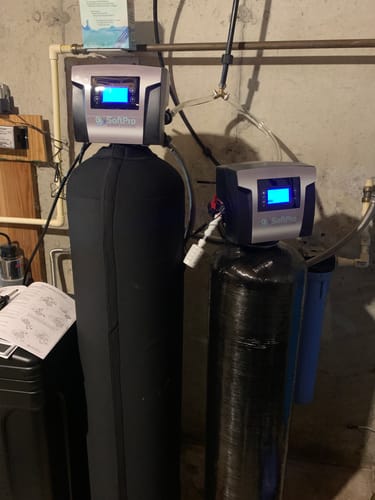
Before spending thousands of dollars on a water treatment system, I dove deep into understanding how different iron filtration technologies actually work. This research phase took me about three weeks, and I quickly learned that not all iron filters are created equal.
The two main categories I discovered were oxidation-based systems and ion exchange systems. Oxidation systems work by converting dissolved ferrous iron into filterable ferric iron particles, while ion exchange systems use specialized resin to swap iron ions for other minerals. Each approach has distinct advantages depending on your specific water chemistry and iron levels.
Air injection systems, like the Iron Master, use atmospheric air to oxidize dissolved iron in a retention tank, allowing the oxidized particles to be filtered out through a specialized media bed. The Katalox media that SoftPro uses is particularly effective because it acts as both an oxidizing catalyst and a filtration medium, handling iron levels up to 25 PPM while also addressing hydrogen sulfide and manganese contamination.
Why did I choose the Iron Master over other systems?
Several factors influenced my decision. First, the system's capacity matched my household needs perfectly – it's designed for homes using up to 300 gallons per day, and our family of four typically uses about 220 gallons daily. The flow rate of 15 gallons per minute meant I wouldn't experience pressure drops during peak usage times.
The Katalox media was a significant selling point because it's a natural mineral media that doesn't require chemical regeneration like some systems. Traditional greensand filters need potassium permanganate for regeneration, which adds ongoing chemical costs and maintenance complexity. The Iron Master's backwash-only regeneration cycle using my existing well water seemed much simpler and more cost-effective.
I also appreciated that the system included a bypass valve and came NSF-certified for iron reduction. The 10-year manufacturer warranty on the tank and 5-year warranty on the control valve provided confidence that this wasn't a cheaply-made system that would fail in a few years.
Sizing calculations were crucial in my decision process. With iron levels at 4.2 PPM and a pH of 6.8, I needed a system robust enough to handle my specific water chemistry. The Iron Master's specifications indicated it could reduce iron levels to below 0.3 PPM, which would eliminate the staining and taste issues I was experiencing.
Delivery and First Impressions
The Iron Master arrived via freight delivery, which was necessary given the size and weight of the system. The delivery driver helped position the crated unit in my garage, and I was immediately impressed by the professional packaging. Everything was securely wrapped and protected, though I did notice some minor scuffing on the bypass valve – nothing that affected functionality, just cosmetic wear from shipping.
Unpacking revealed a substantial system that felt solidly built. The 10-inch by 54-inch mineral tank has a heavy-duty fiberglass construction that inspires confidence in its longevity. The Fleck 5600SXT control valve looked professionally manufactured with clear markings and solid electrical connections. The included bypass valve was brass construction rather than plastic, which suggested attention to quality components.
The documentation package was comprehensive, including installation manuals, warranty information, and a detailed explanation of the Katalox media properties. I appreciated that SoftPro included water testing strips so I could verify performance after installation. The installation manual was clearly written with good diagrams, though I quickly realized this wasn't a simple weekend DIY project for someone without plumbing experience.
Pre-installation preparation required more space than I initially anticipated. The system measures approximately 63 inches tall when fully assembled, and you need additional clearance for the control valve and piping connections. I had to rearrange my utility room to accommodate the system while maintaining access to my well pump controls and electrical panel.
Installation Challenges and Solutions

I'll be honest – the installation was more complex than I expected, and I ended up hiring a local plumber for the connection work. While the system comes with detailed instructions, integrating it into my existing well water system required expertise I didn't possess.
The first challenge was determining the optimal installation location. The Iron Master needs to be installed after the pressure tank but before any water splits to different areas of the house. This required relocating some existing plumbing and installing the bypass valve system in a way that would allow me to service the unit without shutting off water to the entire house.
My plumber spent about four hours on the installation, which included connecting the 1-inch inlet and outlet ports, installing the bypass valve, connecting the drain line for backwash cycles, and ensuring proper electrical connections for the control valve. The drain line was particularly important because the system requires a reliable drain for the automatic backwash cycles that regenerate the Katalox media.
What installation requirements should you plan for?
You'll need 110V electrical service for the control valve, a drain connection within 20 feet for backwash discharge, and adequate space for maintenance access. The system requires a minimum of 20 PSI water pressure to operate effectively, which wasn't an issue with my well pump setup, but it's something to verify before installation.
The initial startup process was straightforward once everything was connected. The control valve comes pre-programmed with default settings, but I worked with my plumber to adjust the backwash frequency based on my iron levels and daily water usage. We set it for a 7-day cycle initially, though I later adjusted this to every 5 days for optimal performance.
One unexpected requirement was flushing the system for about 30 minutes after installation to remove any fine particles from the Katalox media. This resulted in slightly cloudy water initially, but it cleared up completely after the flushing period. The first backwash cycle was impressive to watch – the amount of iron-colored water that discharged really drove home how contaminated my water supply had been.
Performance Testing and Measurable Results
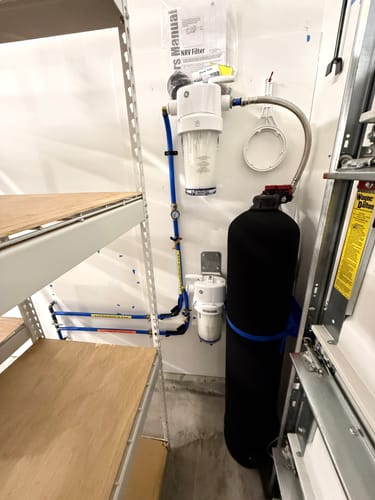
After 48 hours of operation, I began systematic testing to measure the Iron Master's performance. Using both the included test strips and a more precise digital TDS meter, I documented iron levels before and after filtration across multiple testing periods.
Baseline measurements confirmed my incoming water contained 4.2 PPM iron, 0.8 PPM manganese, and had a pH of 6.8. Post-filtration testing showed remarkable improvement – iron levels dropped to 0.1 PPM, well below the 0.3 PPM threshold for eliminating staining and taste issues. The manganese reduction was equally impressive, dropping to undetectable levels.
The taste difference was immediately apparent. That metallic flavor that had been plaguing my morning coffee was completely gone. Water from every faucet in the house now tasted clean and neutral, without any of the mineral aftertaste I had grown accustomed to over the years.
How quickly did I see visible improvements?
The staining issues took about two weeks to fully resolve, but I noticed immediate improvement. New stains stopped appearing within 24 hours, and the existing orange buildup gradually faded as I cleaned fixtures with the iron-free water. My washing machine stopped turning white clothes orange, and I could finally use bleach effectively again without it reacting with iron particles.
I conducted flow rate testing during peak usage periods to ensure the system wasn't creating pressure drops. With the shower, dishwasher, and washing machine running simultaneously, I measured flow rates at various fixtures and found only minimal reduction compared to the unfiltered bypass water. The 15 GPM capacity rating proved accurate for my household's demanding usage patterns.
Long-term performance tracking over six months showed consistent results. Monthly testing confirmed iron levels remained below 0.2 PPM, and I haven't experienced any decline in filtration effectiveness. The automatic backwash cycles appear to be maintaining the Katalox media effectively without any manual intervention required.
Water pressure consistency has been excellent throughout my testing period. Unlike some filtration systems that show performance decline as media becomes loaded with contaminants, the Iron Master maintains steady pressure and flow rates between backwash cycles.
Daily Life Impact and Unexpected Benefits
Six months after installation, the Iron Master has transformed my relationship with the water in my home. The most obvious change is aesthetic – my fixtures stay clean longer, my laundry comes out the colors it's supposed to be, and I can actually see through my shower doors again.
The financial benefits have been more significant than I anticipated. I'm no longer buying bottled water for drinking and cooking, which was costing me about $45 monthly. My cleaning product usage has dropped dramatically because I'm not constantly battling iron stains, saving another $20-30 monthly. Even my dishwasher detergent seems more effective now that it's not fighting mineral deposits.
My appliances are definitely benefiting from the iron-free water. The water heater is running more efficiently without iron buildup on the heating elements, and my energy bills have decreased slightly. The dishwasher isn't leaving spots on glassware anymore, and my washing machine's soap dispensers aren't clogged with orange residue.
What changes did my family notice?
My spouse commented that her hair feels softer after showering, and she's not dealing with the brassy tint that iron water was causing to her blonde highlights. Our teenage daughter mentioned that her skin seems less dry, though I'm not sure if that's directly related to the iron removal or just improved overall water quality.
Visitors have actually commented on the water quality, particularly those who knew about our previous iron issues. My neighbor, who has similar well water problems, was amazed by the difference and is now considering installing the same system. The clear ice cubes from our refrigerator are a small but satisfying visual reminder of the improvement.
Cooking and food preparation have improved as well. Rice doesn't have that slightly metallic taste anymore, and pasta water stays clear instead of taking on that faint orange tint. Even my houseplants seem happier with the filtered water, though that might be psychological on my part.
One unexpected benefit has been peace of mind. I no longer worry about serving tap water to guests or using it for food preparation. The constant background stress of dealing with poor water quality has been eliminated, and that psychological relief is worth more than I realized.
Operating Costs and Maintenance Reality
Let's talk numbers – because the ongoing costs of water treatment are just as important as the initial investment. After six months of operation, I have a clear picture of what it actually costs to run the Iron Master system.
The most significant ongoing expense is electricity for the control valve, which runs about $3-4 monthly based on my electric rates. The automatic backwash cycles consume approximately 150 gallons of water every 5 days, which costs roughly $8 monthly in additional well pump electricity and water usage.
The Katalox media is designed to last 8-10 years under normal operating conditions, which means eventual replacement costs of around $200-250. Spread over the media's lifespan, that's about $25 annually. There are no chemical regenerants required, unlike some iron filtration systems that need periodic potassium permanganate or other additives.
How much am I actually saving compared to my previous situation?
Before the Iron Master, I was spending approximately $45 monthly on bottled water, $25-30 on additional cleaning products, and dealing with accelerated appliance wear that was costing me roughly $40 monthly in reduced efficiency and premature replacement needs. My total problem-related expenses were around $110 monthly.
Current operating costs total about $40 monthly, creating a net savings of $70 monthly. The system paid for itself in about 18 months when factoring in these ongoing savings plus the improved appliance longevity and reduced maintenance time.
Maintenance requirements have been minimal so far. I check the system monthly to ensure proper operation, but the automatic controls handle everything. The backwash cycles are completely automated and typically run during early morning hours when water usage is minimal. I've never experienced any interruption to water availability during regeneration cycles.
The bypass valve system allows me to isolate the Iron Master for any future maintenance without shutting off water to the house, though I haven't needed to use this feature yet. Professional servicing isn't required for routine operation, though I plan to have my plumber inspect the system annually as part of my well pump maintenance routine.
Honest Assessment: What Works and What Doesn't
After six months of daily use, I can provide a balanced assessment of the Iron Master's strengths and limitations. No system is perfect, and there are aspects of this unit that could be improved.
The system excels at iron removal – that's undeniable. Performance has been consistent and reliable, with no breakthrough of iron contamination even during periods of heavy water usage. The automatic operation has been flawless, and I appreciate not having to manually initiate backwash cycles or add chemicals for regeneration.
However, installation complexity is a real consideration. Unless you have significant plumbing experience, you'll need professional installation, which adds $400-600 to the total cost. The space requirements are substantial, and the system isn't suitable for homes with limited utility room space.
What limitations have I discovered during extended use?
The backwash noise is noticeable when the system regenerates, though it only lasts about 20 minutes every few days. If your utility room is adjacent to bedrooms, you might hear the water flow during nighttime backwash cycles. I adjusted my backwash timing to occur during afternoon hours to avoid any sleep disruption.
The system requires consistent water pressure to operate effectively. During a recent power outage that affected my well pump, the Iron Master couldn't function properly when I was running on emergency water reserves. This isn't really a fault of the system, but it's worth noting that it's designed for normal residential water pressure conditions.
pH sensitivity is another consideration. While my water's 6.8 pH works fine, extremely acidic water (below 6.5 pH) may require pre-treatment for optimal iron removal effectiveness. This wasn't an issue in my case, but it's something to verify during your water testing phase.
Customer service response times have been adequate but not exceptional. When I had questions about optimizing backwash frequency, it took SoftPro about 48 hours to respond with technical guidance. Their support was knowledgeable and helpful, just not as immediate as I would have preferred.
The control valve display could be more intuitive. While it's functional and reliable, programming adjustments require referencing the manual, and the interface feels dated compared to smart home technology I'm accustomed to. This is a minor complaint since I rarely need to adjust settings, but improved user interface design would enhance the overall experience.






