


![SoftPro™ Chlorine+ Carbon Whole House Water Filter to Remove PFAS, Chlorine, Chloramine & Pesticides [City Water Filters Series]](http://www.softprowatersystems.com/cdn/shop/files/SoftPro_Whole_House_Carbon_Filter_with_Spin_Down_Water_Filter.webp?v=1783547361&width=140)


 855-683-8488


SoftPro Iron Master Ultimate Water Filter Review: A Father-Son Installation Success Story

Hi, I'm Christine J.. I live in Washington. Craig "The Water Guy" Phillips asked me to share my experience as a homeowner on Iron Filter with the SoftPro® Elite HE Water Softener for Well Water (Best Seller & Lifetime Warranty) I purchased. This is how my adventures played out. I hope this helps you in your decision.
When you're dealing with well water problems, finding the right filtration system can feel overwhelming. Trust me, I've been there. The rusty stains, the metallic taste, the constant worry about what my family was drinking – it all came to a head when my 9-year-old son asked why our water "tastes funny." That's when I knew I had to take action and find a real solution, not just another band-aid fix.
After months of research and comparing different systems, I decided on the Iron Master Ultimate Filtration Well Water system from SoftPro. What happened next turned into an unexpected father-son bonding project that not only solved our water problems but also taught us both something about tackling home improvement challenges together. Let me share the complete story of our installation experience and how this system has performed over the past several months.
The Iron Problem That Drove Me to Find a Solution
Our well water issues weren't just cosmetic – they were affecting every aspect of our daily life. Did you know that iron levels above 0.3 parts per million can cause significant staining and taste problems?
Our water tested at 2.8 PPM iron content, nearly ten times the recommended level. This excessive iron concentration was wreaking havoc throughout our home.
The most visible problem was the reddish-brown staining appearing everywhere water touched. Our white porcelain fixtures looked like they'd been painted with rust, and our laundry came out of the washer looking dingy and discolored. My wife had to rewash clothes multiple times, and even then, white shirts never looked truly white again. The toilet bowls required constant scrubbing with bleach, and the bathtub had permanent orange stains that no amount of cleaning could remove.
Beyond the aesthetic issues, the metallic taste was becoming unbearable. Coffee tasted bitter and off, even with our expensive coffee maker. Cooking with the water affected the flavor of everything from pasta to soup. My son started refusing to drink tap water altogether, which meant we were spending a fortune on bottled water – about $40 per week for a family of four.
The iron was also taking a toll on our appliances. Our dishwasher's spray arms were clogged with iron deposits, and dishes came out spotted and filmy. The water heater was making strange noises, and a plumber told us the iron buildup was reducing its efficiency and lifespan. I calculated we were looking at premature appliance replacements that could cost thousands of dollars if we didn't address the root problem.
I tried several temporary solutions before investing in a proper filtration system. Iron removal cartridges for our existing basic filter helped slightly but required replacement every few weeks at $25 each. Liquid iron fighters added to our laundry helped with clothes but did nothing for drinking water or fixtures. Water softener salt specifically designed for iron helped marginally, but our levels were too high for salt-based treatment alone.
Why I Chose the Iron Master Ultimate Over Other Options
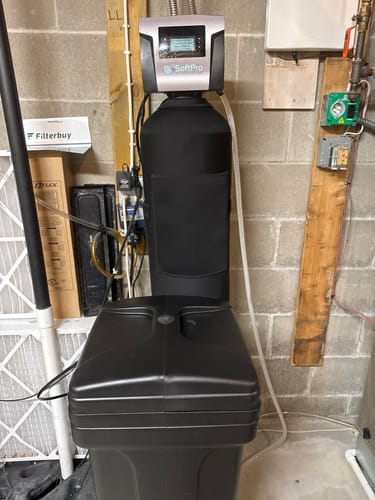
My research phase lasted about three months, during which I learned more about water chemistry than I ever expected. Iron exists in water in two forms: ferrous (dissolved) and ferric (precipitated). Our well water contained primarily ferrous iron, which is invisible until it contacts oxygen and oxidizes into the visible ferric form that causes staining.
The Iron Master Ultimate uses a combination oxidation and filtration approach that appealed to me for several technical reasons. The system employs an air injection process that introduces oxygen to convert ferrous iron to ferric iron, then captures the precipitated particles through a specialized filter media bed. This two-stage process handles much higher iron concentrations than simple cartridge filters or basic water softeners.
Capacity was a crucial factor in my decision. With four people in our household and iron levels approaching 3 PPM, I needed a system that could process our daily water usage of approximately 240 gallons without losing effectiveness. The Iron Master Ultimate's flow rate of 7 gallons per minute and regeneration cycle designed for high-iron applications made it suitable for our demand.
I also prioritized systems with NSF certification for iron removal. The Iron Master Ultimate carries NSF/ANSI Standard 58 certification for iron reduction, which provided third-party verification of its performance claims. Many cheaper alternatives lacked proper certification or only handled low iron levels effectively.
Installation flexibility was another deciding factor. As someone comfortable with basic plumbing but not a professional, I needed a system designed for homeowner installation with comprehensive instructions. The Iron Master Ultimate came with detailed installation guides, video tutorials, and phone support – resources that proved invaluable during our setup.
The warranty coverage also influenced my choice. SoftPro backs the Iron Master Ultimate with a 10-year warranty on the control valve and lifetime warranty on the tank, demonstrating confidence in their product's durability. This long-term protection was essential given the significant investment and my intention to stay in our home for many years.
Unboxing and First Impressions of Build Quality
The Iron Master Ultimate arrived via freight delivery in three separate boxes, which initially concerned me about potential shipping damage. However, everything was expertly packaged with protective foam and clear labeling. The main tank, measuring 10 inches in diameter and 54 inches tall, was heavier than expected at approximately 45 pounds empty – a good sign of robust construction.
The fiberglass tank construction impressed me immediately. Unlike plastic tanks I'd seen on cheaper systems, this felt substantial and professional-grade. The tank's smooth finish and consistent wall thickness suggested quality manufacturing, and the threaded connection points were precisely machined with no rough edges or imperfections.
The SoftPro control head came separately and required careful handling during installation. This electronic control valve felt solid and well-engineered, with clearly marked inlet and outlet ports and robust electrical connections. The LCD display was bright and easy to read, and the programming buttons had a positive, tactile feel that suggested they'd withstand years of use.
All plumbing connections and fittings were included, which I appreciated after past experiences with incomplete kits. The bypass valve assembly was particularly well-designed, with clearly marked flow direction arrows and quality brass construction. Even the installation hardware, from screws to pipe fittings, appeared to be higher grade than typical home improvement store materials.
The instruction manual was comprehensive – 24 pages covering everything from basic installation to advanced troubleshooting. What set it apart was the inclusion of actual photographs of each installation step rather than just diagrams. My 9-year-old son could follow along and understand what we were doing, which made the project more engaging for both of us.
Installation Experience: A Father-Son Project

I initially planned to install the Iron Master Ultimate myself over a weekend, but my son's curiosity about the project turned it into an educational experience for both of us. His eagerness to help and learn made me slow down and explain each step, which actually prevented several mistakes I might have made rushing through solo.
Preparation took longer than expected – about two hours of measuring, planning, and gathering tools. The system required installation on the main water line after the pressure tank but before any distribution points. In our basement, this meant relocating some storage items and installing adequate lighting to work safely. My son proved invaluable at fetching tools and holding the flashlight steady while I worked in tight spaces.
The actual plumbing connections were straightforward for anyone comfortable with basic pipe work. The Iron Master Ultimate uses standard 1-inch NPT connections, and the included bypass valve assembly simplified integration with our existing plumbing. We needed to install about four feet of new pipe to accommodate the system and maintain proper clearances for future maintenance.
Programming the SoftPro control head was where my son really contributed. His familiarity with electronic devices helped navigate the menu system faster than my middle-aged brain could manage. We programmed it for our household size, water hardness level, and iron content based on our recent water test results. The system automatically calculated regeneration frequency – approximately every four days based on our usage patterns.
The air injection system required a small air compressor connection, which was the most complex part of the installation. Understanding the principle helped: the system needs to inject air into the water stream to oxidize the iron before filtration. My son was fascinated by this "chemistry experiment" happening inside our water system, and explaining it reinforced my own understanding of the process.
Total installation time was about six hours spread across two days, including preparation and cleanup. A professional installer might have completed it in three hours, but the educational value and father-son bonding time made our slower pace worthwhile. When we finally turned on the system and watched the control panel come to life, my son's excitement was infectious.
Performance Testing and Real-World Results
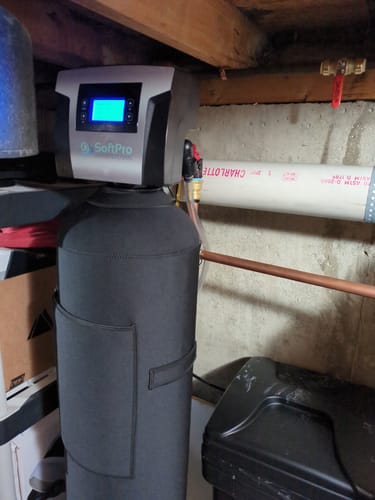
I tested the Iron Master Ultimate's performance using multiple methods to get accurate baseline and post-installation data. Before installation, I collected water samples from our kitchen tap and sent them to a certified laboratory for comprehensive analysis. The results confirmed our iron level at 2.8 PPM, along with moderate hardness at 12 grains per gallon and pH of 6.8.
Immediately after installation and the first regeneration cycle, I collected new samples from the same tap. The post-filtration results were dramatic: iron levels dropped to 0.05 PPM, well below the 0.3 PPM threshold for taste and staining issues. This represented a 98.2% reduction in iron content, exceeding the manufacturer's claims of 95% reduction for our iron levels.
Visual improvements were noticeable within 48 hours. The reddish tint that had been barely perceptible in toilet bowls disappeared completely. New water spots on shower doors dried clear instead of leaving brown residue. Most convincingly, my son commented that our water "tastes normal again" without any prompting from me.
I conducted ongoing testing using home test strips to monitor performance consistency. Over the first month, iron levels remained consistently below 0.1 PPM, with readings typically between 0.03 and 0.07 PPM. The system's performance remained stable even during periods of high water usage, such as when houseguests increased our daily consumption to over 300 gallons.
Appliance performance improvements became evident over several weeks. Our dishwasher started producing spot-free dishes without rinse aid additives we'd been using to combat mineral staining. The coffee maker's brewing time returned to normal as mineral buildup cleared from internal components. Even our ice maker produced clearer, better-tasting ice cubes.
Flow rate testing showed minimal pressure drop across the system. Using a flow meter at our kitchen sink, I measured 4.2 GPM before installation and 4.0 GPM after, representing only a 5% reduction. During simultaneous usage scenarios – shower, dishwasher, and washing machine running together – we experienced no noticeable pressure issues.
The regeneration process occurs automatically every four days based on our programmed settings. During regeneration, the system uses approximately 65 gallons of water and takes about 45 minutes to complete the cycle. We scheduled regeneration for 2:00 AM to avoid any inconvenience, and the process is quiet enough not to disturb sleep.
Daily Life Impact and Family Observations
The transformation in our daily water experience has been remarkable, with benefits extending beyond what I initially expected. Laundry results improved dramatically within the first week. White clothing regained its brightness, and colored fabrics looked more vibrant. My wife no longer needs to pre-treat iron stains or rewash loads, saving both time and money on extra detergent and water usage.
Personal care improvements were unexpected but welcome. Both my wife and I noticed our skin feeling less dry after showers, and our hair seemed softer and more manageable. My son's sensitive skin, which had been occasionally irritated, showed improvement within two weeks. While these benefits might be partly due to reduced mineral content overall, the difference was noticeable enough that my wife commented without prompting.
Cleaning and maintenance throughout the house became significantly easier. Bathroom fixtures stay cleaner longer, requiring deep cleaning only monthly instead of weekly. The bathtub's orange stains gradually faded over the first month and haven't returned. Toilet bowls maintain their white appearance with normal weekly cleaning instead of daily scrubbing with harsh chemicals.
Our kitchen experience improved substantially. Coffee tastes noticeably better – smooth and clean without the metallic undertones we'd grown accustomed to. Ice cubes from our refrigerator are crystal clear instead of cloudy with mineral deposits. Even cooking water behaves differently; pasta water doesn't develop the brown tint that previously appeared when boiling.
Unexpected cost savings emerged over the first few months. We eliminated bottled water purchases, saving approximately $160 monthly for our family of four. Reduced cleaning product usage, particularly expensive iron stain removers and extra detergent, saved another $30 monthly. These ongoing savings help offset the system's operational costs and contribute to long-term value.
Houseguests have provided unsolicited positive feedback about our water quality. Several friends commented that our water "tastes great" compared to their own well water systems. One neighbor, dealing with similar iron issues, asked for detailed information about our system after noticing the improvement in our laundry hanging on the outdoor line.
Operational Costs and Long-Term Efficiency Analysis
Understanding the true cost of ownership was crucial to my decision-making process, so I've tracked all operational expenses since installation. The Iron Master Ultimate's ongoing costs fall into several categories: electricity, water usage during regeneration, and occasional maintenance supplies.
Electrical consumption is minimal due to the SoftPro efficient design. The control head draws power only during regeneration cycles and for maintaining programming memory. Based on our local electricity rate of $0.12 per kWh, monthly electrical costs average approximately $3.50. This is significantly lower than the $8-12 monthly costs I'd calculated for some competing systems with more power-hungry controls.
Water usage during regeneration represents the largest ongoing operational cost. Each regeneration cycle uses approximately 65 gallons of water for backwashing and rinsing the filter media. With regeneration occurring every four days, monthly water usage for system operation totals about 490 gallons. At our local water and sewer rates (we're on municipal sewer despite having well water), this adds roughly $12 monthly to our utility bills.
The specialized filter media requires replacement approximately every 3-5 years depending on iron levels and water usage. SoftPro's iron removal media costs about $180 for replacement, which translates to roughly $3-5 monthly when amortized over its lifespan. This is considerably less expensive than cartridge-based systems that required monthly filter changes costing $25-30 each.
Maintenance requirements are minimal but important for sustained performance. Annual inspection and cleaning of the air injection system takes about 30 minutes and requires no special supplies. I perform this maintenance myself using the detailed instructions provided, saving professional service costs that could run $100-150 annually.
Total monthly operational costs average $18-20, significantly lower than the $40 we were spending on bottled water alone. When factoring in savings from reduced cleaning products, less frequent appliance maintenance, and elimination of iron stain treatments, the system actually saves us approximately $35 monthly compared to our pre-installation situation.
Return on investment calculations show the system paying for itself within 18-24 months through direct cost savings. This timeline doesn't account for avoided costs like premature appliance replacement or potential plumbing repairs from iron buildup, making the actual payback period likely shorter than calculated.
Honest Assessment: What I Wish I'd Known and Minor Drawbacks
While I'm extremely satisfied with the Iron Master Ultimate's performance, complete transparency requires discussing some limitations and learning experiences from our months of ownership. Understanding these aspects upfront would have better prepared me for the total ownership experience.
The monitoring and adjustment requirement mentioned in the original review proved more significant than I initially realized. Do you maintain consistent awareness of your household's changing water usage patterns?
The system's efficiency depends on accurate programming that reflects actual water consumption. During holiday visits or vacation periods, I learned to adjust regeneration frequency to maintain optimal performance without waste.
Physical space requirements were greater than expected. While I measured the tank dimensions carefully, I underestimated the clearance needed for maintenance access. The system requires about 3 feet of clearance above the tank for media replacement and 2 feet on all sides for comfortable servicing. In our basement installation, this meant relocating more storage items than originally planned.
The regeneration process, while generally quiet, produces some noise that's noticeable in quiet environments. During the backwash cycle, water flow sounds are audible in our basement and the floor above. Scheduling regeneration for 2:00 AM minimizes disruption, but light sleepers might find the sounds bothersome even with proper scheduling.
Initial water waste during startup was higher than expected. The first few regeneration cycles used additional water as the system established proper media bed conditioning. Total water usage during the first month was approximately 15% higher than ongoing operational levels. This represents a one-time cost but should be factored into initial expectations.
Programming complexity, while manageable, requires careful attention to detail. The SoftPro offers extensive customization options, which can be overwhelming initially. I made several programming errors during setup that required multiple regeneration cycles to correct. Better familiarity with the manual before beginning programming would have prevented these mistakes.
Seasonal performance variations became apparent during our first winter. Colder basement temperatures slightly affected regeneration timing, and I needed to adjust programming to maintain optimal performance. This isn't a system flaw but rather a reminder that environmental factors influence any water treatment equipment.
The air injection system requires occasional attention that I didn't fully appreciate initially. While maintenance is minimal, understanding how the air injection mechanism works and recognizing signs of proper operation took several months to master fully. The learning curve wasn't steep, but it existed nonetheless.






