


![SoftPro™ Chlorine+ Carbon Whole House Water Filter to Remove PFAS, Chlorine, Chloramine & Pesticides [City Water Filters Series]](http://www.softprowatersystems.com/cdn/shop/files/SoftPro_Whole_House_Carbon_Filter_with_Spin_Down_Water_Filter.webp?v=1783547361&width=140)


 855-683-8488


SoftPro Iron Master Ultimate Well Water Filter Review - 7 Months Later

Hi, I'm Leo D. I live in Detroit. Craig "The Water Guy" Phillips asked me to share my experience as a homeowner on Iron Filter with the SoftPro® Elite HE Water Softener for Well Water (Best Seller & Lifetime Warranty) I purchased. This is how my adventures played out. I hope this helps you in your decision.
I'll be completely honest with you - buying a water filtration system sight unseen made me incredibly nervous. When you're dealing with well water problems and have zero experience installing these systems, dropping this kind of money feels like a huge leap of faith.
But here's the thing that convinced me to take the plunge - the relentless iron staining throughout my home had become unbearable. Orange streaks down my toilet bowls, rust-colored laundry that never looked clean, and that metallic taste in everything we drank. After seven months of using the Iron Master Ultimate filtration system, I can definitively say it transformed our water quality in ways I didn't even expect.
This isn't going to be one of those generic reviews that glosses over the real challenges. I'm going to walk you through exactly what it's like to research, install, and live with this system day after day. The good, the frustrating, and everything in between - because that's what I wish I could have found when I was in your shoes, staring at my stained fixtures and wondering if this investment would actually solve my problems.
The Iron Problem That Nearly Drove Me Crazy
Let me paint you a picture of what daily life looked like before I addressed our well water issues. Every morning, I'd walk into our guest bathroom and see those telltale orange streaks running down the toilet bowl. Did you know that iron concentrations as low as 0.3 parts per million can cause visible staining?
Our well water tested at 2.8 PPM - nearly ten times that threshold.
The iron problem wasn't just cosmetic, though that was bad enough. My wife started refusing to do laundry because our white shirts came out with a dingy, rust-colored tint that no amount of bleach could remove. I tested this by running a cycle with just bleach and water - the water itself came out orange.
The taste issue was equally frustrating. That metallic, almost medicinal flavor permeated everything. Coffee tasted off, ice cubes had a rusty aftertaste, and cooking with the water left a strange metallic note in soups and pasta. I found myself buying bottled water for drinking and cooking, which was adding nearly $40 per month to our grocery bill.
But what really pushed me over the edge was discovering the damage happening behind the scenes. During a routine maintenance check, our plumber showed me the inside of our water heater. The iron deposits had created a thick, sludgy layer at the bottom that was reducing efficiency and would eventually require replacement - years earlier than expected.
Our dishwasher's spray arms were clogged with iron particles, and the interior had developed a permanent orange stain. The showerheads required monthly cleaning to maintain decent water pressure, and even then, the flow was noticeably reduced.
I tried several band-aid solutions before committing to a whole-house system. Iron removal cartridges for individual fixtures helped temporarily but needed replacement every 6-8 weeks at $25 per cartridge. With multiple bathrooms and kitchen fixtures, this approach was costing nearly $200 annually and still wasn't addressing the root problem.
Research Phase: Learning More Than I Ever Wanted About Iron
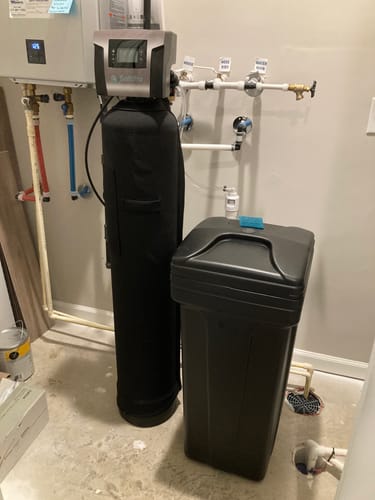
Once I committed to solving this properly, I dove deep into understanding not just products, but the science behind iron removal. This research phase took me about three weeks of evening reading and consumed way too many weekend hours.
I learned that our iron exists primarily in two forms: ferrous (dissolved) and ferric (oxidized particles). Most of our iron was ferrous, which meant it was invisible in the water until it contacted air and oxidized into those visible rust particles. This explained why water samples looked clear when drawn but quickly turned orange when left sitting.
The Iron Master Ultimate uses a multi-stage approach that first oxidizes ferrous iron into ferric form, then filters out the resulting particles. The system employs an air injection process that introduces oxygen into the water stream, forcing the conversion before filtration. This seemed more reliable than chemical oxidation methods that require ongoing chemical additions.
Capacity calculations were crucial. The system needed to handle our household's peak flow demand (estimated at 12 gallons per minute during heavy usage) while maintaining adequate contact time for oxidation. The Iron Master's flow rate specifications indicated it could handle up to 15 GPM, providing a comfortable margin for our needs.
I compared this oxidation approach against catalytic filtration systems that use specialized media to convert iron without air injection. While catalytic systems have lower maintenance requirements, they typically struggle with iron levels above 2 PPM. With our 2.8 PPM concentration, the air injection approach seemed more appropriate for our situation.
Regeneration requirements were another key consideration. The Iron Master requires periodic backwashing to clear accumulated iron particles from the filter media. The frequency depends on iron concentration and water usage, but the manufacturer estimated every 3-4 days for our situation. This seemed reasonable compared to daily regeneration requirements I saw with some competing systems.
The lifetime warranty aspect was particularly appealing, but I made sure to understand what it actually covered. The warranty applies to the control valve and tank, but not the filter media, which requires periodic replacement. Still, knowing the major components were protected long-term provided significant peace of mind.
Unboxing and First Impressions: Heavier Than Expected
The Iron Master Ultimate arrived on a freight truck, which should have clued me in about the size and weight. The main tank measured 10 inches in diameter and stood 54 inches tall - significantly larger than I'd envisioned despite carefully reviewing the dimensions. The fiberglass construction felt substantial without being overly heavy to maneuver.
The control head immediately impressed me with its digital display and straightforward programming interface. Having dealt with older mechanical timer-based systems at my previous home, the electronic controls felt like a significant upgrade. The display showed system status, days until next regeneration, and allowed manual regeneration initiation.
All plumbing connections used standard 1-inch NPT fittings, which meant I didn't need specialized adapters or unusual tools. The bypass valve was included and properly labeled for easy identification during installation. I appreciated that all O-rings and gaskets were included with spares.
The installation manual was comprehensive - almost intimidatingly so. The step-by-step photos were clear, though I found myself referring to the online video tutorial more frequently. The written instructions assumed a basic familiarity with plumbing terminology that I initially lacked.
One pleasant surprise was the inclusion of the air injection pump and all necessary electrical connections. I'd worried about needing to source additional components, but everything required for a complete installation was included in the shipment.
Installation Experience: A Weekend Project Turns Into Three

I'll admit upfront - I underestimated the complexity of this installation. What I initially planned as a Saturday afternoon project stretched across three weekends, though much of that time was spent learning rather than actual work.
The location selection proved more challenging than expected. The system requires electrical power for the air injection pump, drain access for backwash discharge, and sufficient clearance for tank removal during maintenance. Our basement seemed ideal until I realized the existing electrical outlet was on a different circuit than I preferred for a continuous-duty application.
Running a dedicated 15-amp circuit to the installation location took most of the first weekend. While not strictly necessary according to the manual, I felt more comfortable with dedicated power for the air pump and control head. The electrical work required a permit in our area, which added a week delay but ensured code compliance.
The plumbing integration required cutting into our main water line and installing the bypass valve assembly. This meant shutting off water to the entire house, which created some pressure to work efficiently. The actual connections were straightforward, but I took extra time ensuring everything was properly aligned and supported.
The air injection pump installation was more complex than anticipated. The pump requires precise pressure settings and proper drainage for condensation. The manual provided pressure specifications, but fine-tuning required multiple adjustments and testing cycles. Getting the air-to-water ratio optimized took several attempts.
Initial startup revealed a few issues that required troubleshooting. The system initially produced cloudy water due to residual air bubbles, which cleared after running several regeneration cycles. I also discovered that the drain line needed better support to handle the high flow during backwash cycles.
The programming phase was relatively straightforward once I understood the logic. The system calculates regeneration timing based on water usage and iron loading, but I could override with manual timing if preferred. I started with the manufacturer's recommendations and planned to adjust based on actual performance.
Performance Testing: The Numbers Don't Lie
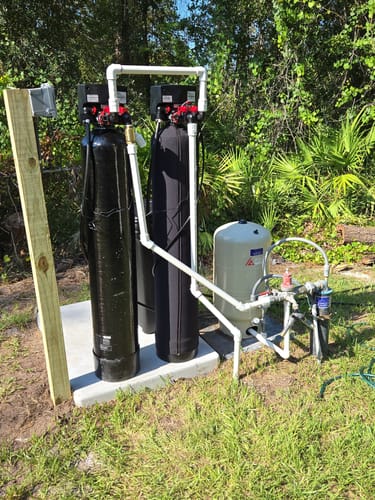
Testing the Iron Master's effectiveness became something of an obsession during the first month. I used both professional test kits and a digital TDS meter to track performance across different scenarios and timeframes.
Baseline measurements confirmed our iron concentration at 2.8 PPM, with total dissolved solids at 340 PPM. The pH measured 6.8, which was slightly acidic but within the system's operating parameters. I also tested for manganese and hydrogen sulfide, which can interfere with iron removal, but both were below detectable levels.
Post-installation results were dramatic and immediate. Within 24 hours of startup, iron levels dropped to 0.1 PPM - well below the 0.3 PPM threshold for visible staining. Total dissolved solids remained essentially unchanged at 335 PPM, confirming that the system was removing iron without affecting beneficial minerals.
I tested performance under various demand scenarios to verify capacity claims. During peak usage periods (multiple showers, dishwasher, and washing machine operating simultaneously), iron removal remained consistent. The system maintained adequate flow pressure throughout the house, with only a minimal pressure drop of 3-4 PSI.
The taste improvement was immediately noticeable and confirmed by family members who had complained about the metallic flavor. Coffee tasted dramatically better, and ice cubes were crystal clear without any off-flavors. Cooking water no longer imparted metallic notes to soups and pasta.
Visual confirmation came within the first week. New staining stopped completely, and existing stains gradually faded as we cleaned fixtures with regular bathroom cleaners. The toilet bowls stayed white, laundry came out actually white, and shower surfaces remained clean between weekly cleanings.
Long-term testing over several months confirmed consistent performance. Iron levels remained below 0.2 PPM even as the filter media accumulated iron particles. The automatic regeneration cycles effectively cleaned the media and maintained capacity.
Daily Life Impact: The Changes I Didn't Expect
The most obvious improvements were the ones I'd hoped for - no more orange stains, better-tasting water, and cleaner laundry. But living with the system day after day revealed benefits I hadn't anticipated.
Our dishwasher performance improved dramatically. Glasses came out spot-free without rinse aid, and the interior stayed clean without monthly cleaning cycles. The spray arms maintained full pressure, and I no longer needed to replace them annually due to mineral buildup.
Bathroom maintenance became noticeably easier. Weekly cleaning was sufficient to keep fixtures spotless, compared to the daily attention required previously. The shower doors stayed clear, and soap scum seemed to rinse away more easily without iron particles providing a rough surface for buildup.
My wife's hair and skin condition improved within a few weeks. The iron particles had apparently been causing some irritation and dryness that we'd attributed to seasonal changes. Her hair felt softer, and both of us noticed less skin dryness after showers.
Appliance performance showed measurable improvements. Our coffee maker stopped requiring monthly descaling, and the internal components stayed clean. The washing machine no longer left rust-colored deposits on the drum, and white clothes actually looked white after washing.
Even our pets seemed to prefer the treated water. Our dog, who had been increasingly reluctant to drink tap water, returned to normal consumption levels. The water bowls stayed clean without the orange film that developed within hours previously.
Guests frequently commented on the water quality improvement. Several asked if we'd switched to a different water source or installed a whole-house system. The taste difference was apparently noticeable even to occasional visitors.
Operating Costs and Maintenance Reality Check
Understanding the true cost of ownership required tracking expenses over several months. The Iron Master isn't a "set it and forget it" system - it requires ongoing consumables and periodic maintenance that adds to the total cost.
Electricity consumption for the air injection pump and control head averages about 150 kWh annually based on my calculations. At our local rate of $0.12 per kWh, this adds approximately $18 per year to our electric bill - hardly noticeable in practice.
The backwash process consumes approximately 50 gallons of water every 3-4 days, depending on our usage patterns. This equals roughly 4,500 gallons annually, or about $25 per year at our municipal water rates for well owners with metered systems, this cost would be eliminated.
Filter media replacement represents the largest ongoing expense. The manufacturer recommends media replacement every 5-7 years depending on iron concentration and water usage. With our 2.8 PPM iron level, I'm planning for replacement at the 5-year mark. The media costs approximately $180, averaging $36 annually.
Maintenance supplies include occasional O-ring replacement and system sanitizing chemicals for annual cleaning. These costs are minimal - perhaps $15-20 annually - but worth tracking for budgeting purposes.
Total annual operating costs approximate $80-90, which compares favorably to the $200+ I was spending on replacement cartridges for point-of-use filters. The system essentially pays for its operating costs through eliminated expenses elsewhere.
The elimination of bottled water purchases saves approximately $40 monthly, or $480 annually. This single benefit more than covers all operating expenses with substantial savings remaining.
Final Verdict: Would I Buy It Again?
After seven months of daily use, I can confidently recommend the Iron Master Ultimate for households dealing with significant iron contamination. The system delivers on its primary promise - effective iron removal - while providing benefits I hadn't fully appreciated during the research phase.
The strongest selling points are reliability and performance consistency. The system handles our household's peak demand without compromising effectiveness, and the automatic regeneration keeps performance steady without manual intervention. The digital controls make monitoring straightforward, and the lifetime warranty provides long-term confidence.
Installation complexity is the biggest barrier for DIY-oriented homeowners. While certainly possible with basic plumbing skills, the electrical requirements and precise adjustments needed for optimal performance might justify professional installation for many buyers. Factor this cost into your decision-making process.
The ongoing operating costs are reasonable but not negligible. Budget approximately $80-90 annually for electricity, backwash water, and eventual media replacement. These costs are more than offset by eliminated expenses and improved appliance longevity, but they're worth understanding upfront.
For iron concentrations above 2 PPM, the Iron Master Ultimate represents an excellent balance of performance, reliability, and long-term value. The air injection approach handles high iron levels effectively, and the system scales well for larger households or higher usage patterns.
If I were making this decision again, I would absolutely choose the Iron Master Ultimate. The quality of life improvements, combined with measurable cost savings and appliance protection, justify the investment. My only change would be budgeting for professional installation to avoid the learning curve and ensure optimal performance from day one.
This system solved our iron problem completely and delivered benefits beyond my expectations. Seven months later, I remain impressed with its consistent performance and satisfied with the decision to invest in a comprehensive solution rather than continuing with temporary fixes.






