


![SoftPro™ Chlorine+ Carbon Whole House Water Filter to Remove PFAS, Chlorine, Chloramine & Pesticides [City Water Filters Series]](http://www.softprowatersystems.com/cdn/shop/files/SoftPro_Whole_House_Carbon_Filter_with_Spin_Down_Water_Filter.webp?v=1783547361&width=140)


 855-683-8488


Iron Resin Fouling: The Costly and Preventable Problem That a Quality Iron Filter Eliminates

Iron resin fouling happens when iron ions attach to your resin's surface, steadily stripping away its ability to soften water. At just 2-3 ppm, iron accelerates clogging, drives up energy costs by as much as 30%, and can lead to emergency repairs costing thousands. The good news? It's completely preventable with the right iron filter and maintenance approach. Keep going, and we'll show you exactly how to protect your system before fouling takes hold.
Key Takeaways
- Iron fouling occurs when iron ions clog resin beds, reducing exchange capacity and increasing energy costs by up to 30%.
- Iron levels as low as 2-3 ppm accelerate resin fouling, leading to frequent clogging and costly emergency repairs.
- Reddish-brown staining, metallic taste, and irregular flow rates are early warning signs of iron fouling.
- Quality iron filters remove ferrous iron before it hardens into resin-clogging deposits, preserving system efficiency.
- Backwashing every three days and quarterly water testing are essential practices to prevent iron fouling effectively.
Iron Resin Fouling: What It Is and What It Costs

Iron resin fouling happens when iron ions latch onto the resin surface, quietly choking your system's ion exchange capacity. The result? Declining efficiency and climbing operational costs that compound over time.
At iron levels of 2-3 ppm, fouling accelerates fast. We're talking frequent clogging, increased rinsing demands, and systems working 30% harder just to keep pace. That extra strain translates directly into higher energy bills.
Neglect maintenance long enough, and you're facing emergency repairs costing thousands. Even chemical oxidation during regeneration won't save you if you've chosen the wrong resin — iron permanently lodges inside, creating inefficiencies that don't reverse.
The pattern is clear: iron resin fouling isn't just an inconvenience. It's a slow, expensive drain on your entire water treatment system.
How Iron Quietly Kills Your Resin's Exchange Capacity
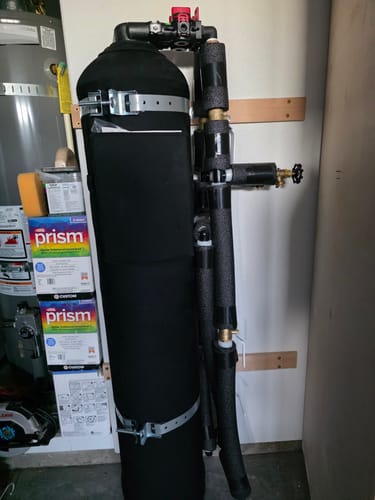
It doesn't announce its damage — it just chips away at your resin's exchange capacity until performance quietly collapses. Iron ions form insoluble hydroxides in alkaline conditions, clogging the resin bed and blocking effective filtration.
Iron doesn't announce its damage — it just chips away at your resin's exchange capacity until performance quietly collapses.
Meanwhile, iron compounds deposit directly onto resin surfaces, steadily reducing exchange efficiency.
Here's what makes iron particularly insidious: its high charge density overwhelms standard resins, making removal increasingly difficult over time. You're then caught in a cycle — more backwashing, more regeneration, more water consumption, and higher energy costs.
The solution isn't reactive maintenance. It's proactive protection through specialized iron removal methods before water ever reaches your resin. When you eliminate iron at the source, you preserve exchange capacity, extend resin lifespan, and keep operational costs firmly under control.
Warning Signs of Iron Fouling on Your Resin
When does iron fouling cross the line from a minor nuisance to a serious threat? Watch for these red flags: reddish-brown staining in your water, a metallic taste, and visible deposits forming on fixtures and appliances. These aren't cosmetic issues—they're your system screaming for attention.
Beyond the visible signs, pay attention to performance shifts. Increased water pressure, irregular flow rates, and frequent filter clogging all signal that iron's compromising your resin's capacity.
A fouled system works up to 30% harder, accelerating wear and inviting costly emergency repairs.
That's why quarterly water testing matters. Catching rising iron levels early lets you act before fouling becomes irreversible damage.
Recognizing these warning signs isn't optional—it's the difference between a simple fix and an expensive system failure.
The Right Iron Filter Stops Fouling Before It Starts
The right iron filter acts as your system's first line of defense, removing ferrous iron before it converts to ferric iron and clumps into the resin-clogging deposits we've already warned you about.
Install it correctly—sediment filter first, then water softener, then iron filter—and you've eliminated the entry points that cause downstream chaos.
We also recommend filters using specialized iron removal resins. They selectively target iron, maintain strong flow rates, and resist clogging far better than standard media.
Pair that with backwashing every three days, and you're actively purging buildup before it compounds into a real problem.
Add quarterly water testing, and you'll catch chemical imbalances early.
Prevention isn't passive here—it's a deliberate system working continuously on your behalf.
Backwash Frequency, Media Checks, and Maintenance That Prevent Iron Fouling
Backwashing every three days isn't arbitrary—in high-iron environments, it's the difference between a system that runs cleanly and one that quietly chokes itself into inefficiency.
Done consistently, it cuts energy consumption by up to 30% and keeps iron from accumulating into a clogging problem.
But backwashing alone won't carry you indefinitely. We recommend checking filter media every 4-6 years—delay that, and you'll notice dropping water pressure and climbing iron levels before you're ready for either.
Keep a backwash log. It sounds tedious until it saves your media's lifespan and reveals patterns you'd otherwise miss.
Pair that with quarterly water testing, and you're catching chemical imbalances before they accelerate fouling. Maintenance isn't reactive here—it's a deliberate, compounding advantage.
Frequently Asked Questions
What Is the Cheapest Way to Remove Iron From Well Water?
We've found the cheapest way to remove iron from well water is installing a specialized iron filter. It's cost-effective, targets ferrous and ferric iron, and eliminates expensive recurring chemical treatments, saving you money long-term.
Which Resin Is Good for Iron?
For iron removal, we recommend iron-specific exchange resins that target both Fe2+ and Fe3+. They're engineered to handle iron's high ionic charge density, delivering superior removal efficiency while preserving essential minerals your water needs.
Does Resin Remove Iron?
Yes, we can use resin to remove iron, specifically ferrous iron (Fe2+). It works similarly to calcium removal, but ferric iron (Fe3+) is trickier—it forms insoluble precipitates that'll foul your resin fast.
Will an Iron Filter Get Rid of Iron Bacteria?
An iron filter won't eliminate iron bacteria. These organisms form biofilms that standard filtration can't address. We recommend pairing your iron filter with chemical injection treatments to effectively tackle biological fouling before it clogs your system.






