


![SoftPro™ Chlorine+ Carbon Whole House Water Filter to Remove PFAS, Chlorine, Chloramine & Pesticides [City Water Filters Series]](http://www.softprowatersystems.com/cdn/shop/files/SoftPro_Whole_House_Carbon_Filter_with_Spin_Down_Water_Filter.webp?v=1783547361&width=140)


 855-683-8488


Iron Stain Removal Costs vs. Iron Filter Installation: Real Comparison

Treating iron stains costs homeowners $450 to $1,000 every year, and that's before accounting for the appliances and pipes quietly failing in the background. Budget iron filters run $800 to $1,500 upfront, while premium systems cost $3,000 to $6,000 but drop annual operating costs to just $40 to $100. The math starts shifting quickly when you factor in early appliance replacements and plumbing repairs. Stick with us, and we'll break down exactly where your money goes either way.
Key Takeaways
- Untreated iron water costs $450–$1,000+ annually in stain cleaning, fixture treatment, and pipe maintenance.
- Budget iron filters cost $800–$1,500 upfront, with $300–$500 in annual operating expenses.
- Premium iron filters cost $3,000–$6,000 initially but only $40–$100 yearly to operate.
- Iron levels above 0.3 mg/L accelerate appliance deterioration, causing replacements 3–5 years earlier than expected.
- Premium filters prevent $2,000+ in appliance damage, making them cost-effective long-term investments.
What Iron Stains Actually Cost Homeowners Each Year

When iron stains go untreated, the financial toll adds up faster than most homeowners expect. Cleaning and treating stained fixtures alone runs $300 to $800 annually.
Add pipe and appliance upkeep, and you're looking at another $150 to $300 per year.
Here's where it gets expensive: iron levels above 0.3 mg/L accelerate appliance deterioration, forcing replacements every 3 to 5 years at $800 to $1,500 each.
That's a recurring cost most budgets aren't prepared for.
Beyond fixtures and appliances, iron stains damage concrete and surfaces, quietly depreciating your property's value.
Factor everything together—stain removal, repairs, replacements—and untreated iron water can cost homeowners $450 to $1,000 or more annually.
Untreated iron water quietly drains $450 to $1,000 or more from your budget every single year.
Understanding these numbers changes how you evaluate your next solution.
What Iron Is Doing to Your Pipes and Appliances
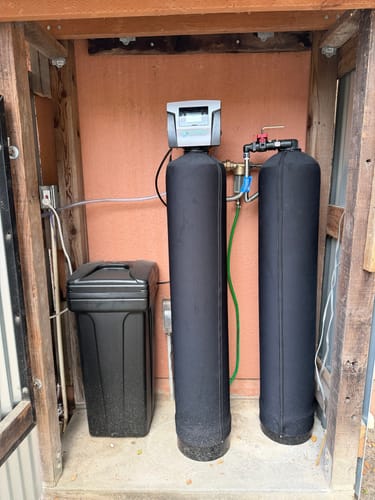
Iron is a slow and silent saboteur inside your plumbing. Once levels exceed 0.3 mg/L, it starts corroding pipes, building sediment, and quietly shortening the lifespan of everything it touches.
| Impact Area | Problem Caused | Estimated Cost |
|---|---|---|
| Pipes | Corrosion & staining | $1,000+ in repairs |
| Appliances | Premature failure (3–5 years early) | $800–$1,500 each |
| Plumbing System | Sediment buildup, reduced flow | Extensive repair costs |
We're not talking about cosmetic issues. Iron deposits clog systems, force expensive maintenance cycles, and push appliances toward early replacement. Every month without filtration, damage compounds invisibly. The real question isn't whether iron is costing you money—it's how much you're willing to lose before acting.
Iron Filter Installation Costs: Budget vs. Premium
Fixing the damage iron causes costs real money—but so does the filter that prevents it.
Budget systems run $800–$1,500 upfront, but they'll demand $200–$600 in media replacements every 6–12 months, plus $300–$500 in annual operating costs. That adds up fast.
Premium systems cost $3,000–$6,000 initially, yet their operating costs drop to just $40–$100 annually, and media replacements happen every 3–7 years.
They also remove over 95% of contaminants and carry 5–10 year warranties—compared to 1–3 years on budget options.
Here's what that tells us: premium manufacturers stand behind their product because it actually performs.
When we factor in avoided plumbing repairs and replacement costs, premium systems frequently deliver thousands in long-term savings.
The math favors quality.
How Iron Filters Pay for Themselves Over Time
The numbers tell a straightforward story: a premium iron filter costing $3,000–$6,000 upfront quietly pays for itself while budget systems drain your wallet through constant maintenance.
Consider what's actually at stake:
- Appliance protection: Untreated iron triggers replacements 3–5 years early, costing thousands in preventable repairs
- Operating costs: Premium systems run $40–$100 annually versus $300–$500 for budget alternatives
- Maintenance cycles: Premium filters need servicing every 4–6 years ($300–$500), while standard systems demand $200–$600 replacements every 6–12 months
We're talking about a system that removes 95%+ of contaminants, lasts a decade between media replacements, and prevents $2,000+ in water heater and softener damage.
The math decisively favors investing upfront rather than perpetually patching an inadequate solution.
Which Iron Filter Investment Makes Sense for Your Home?
Choosing the right iron filter comes down to your home's specific water quality, budget, and long-term priorities.
Start by testing your water—understanding your iron levels determines whether a premium system justifies the $2,000-$3,000 upfront investment. If your iron contamination is severe, that cost becomes negligible compared to the thousands you'll spend replacing appliances and repairing plumbing damage.
Premium iron filters last 5-10 years versus 3-5 years for standard options, and annual maintenance runs just $300-$800. That's a fraction of what untreated iron costs you over time.
We recommend calculating your current annual repair and stain-removal expenses, then comparing them against filter ownership costs. When the numbers tell the story, the right investment decision becomes obvious.
Frequently Asked Questions
How Much Does It Cost to Install an Iron Filter?
Installing an iron filter typically costs $1,000–$5,000, but we'd recommend budgeting 30–40% more for labor. Premium systems run $2,000–$3,000 and deliver superior contaminant removal—making them worth every penny for long-term protection.
What Is the Cheapest Way to Remove Iron From Well Water?
The cheapest way we've found to remove iron from well water is using DIY methods like citric acid or vinegar—they'll tackle visible stains fast, though they won't fully address iron levels at the source.
Do Iron Filters Really Work?
Yes, they absolutely do! We've seen premium iron filters remove over 95% of iron contaminants, protecting your appliances, eliminating stains, and slashing annual maintenance costs from $500 down to just $100.
How Long Does a Whole House Iron Filter Last?
We've seen whole house iron filters last 5–10 years with proper maintenance. Replace the media every 3–7 years, size it correctly, and you'll maximize every dollar of your investment.






