


![SoftPro™ Chlorine+ Carbon Whole House Water Filter to Remove PFAS, Chlorine, Chloramine & Pesticides [City Water Filters Series]](http://www.softprowatersystems.com/cdn/shop/files/SoftPro_Whole_House_Carbon_Filter_with_Spin_Down_Water_Filter.webp?v=1783547361&width=140)


 855-683-8488


Iron Stains on Fixtures and Laundry: The Hidden Monthly Cost

Iron stains cost far more than most of us realize. Between specialty cleaning products, rising utility bills, and accelerated appliance wear, you're likely spending over $135 every single month without even knowing it. Your fixtures corrode, your fabrics age prematurely, and your pipes quietly deteriorate beneath the surface. Annual costs can easily surpass $1,000 — and that's before any major replacements hit. Stick with us, because the full financial picture gets even more eye-opening.
Key Takeaways
- Iron stains cost homeowners over $135 monthly through cleaning products and increased utility bills from clogged pipes.
- Sinks, toilets, bathtubs, and light fabrics quickly develop stubborn reddish-brown discoloration that diminishes overall home appeal.
- Pipe corrosion from iron buildup risks costly leaks, with repairs averaging $5,000 in plumbing emergencies.
- Appliance efficiency drops significantly, leading to premature replacements costing between $500 and $3,000 per unit.
- Water softeners reduce cleaning supply costs by 75% and typically pay for themselves within a few years.
What Do Iron Stains Actually Cost You Each Month?

When iron stains show up on your fixtures and laundry, they're not just an eyesore—they're quietly draining your wallet.
Let's break down the real numbers. You're likely spending around $25 monthly on specialized cleaning products alone. Factor in utility bills creeping up by as much as $100 due to iron-clogged pipes reducing appliance efficiency, and we're already looking at $125 every month.
Iron's hidden costs add up fast: $25 monthly on cleaners, plus $100 more in inflated utility bills.
Spread out the cost of filtration system maintenance—averaging $500 every three to five years—and that's another $10-plus monthly. These costs compound fast. We're talking well over $135 each month before even considering appliance replacements running $1,500 to $3,000 per unit.
Iron isn't just staining your laundry; it's systematically eroding your financial stability.
How Iron Stains Drive Up Your Monthly Cleaning Bill
Those monthly costs we laid out don't tell the whole story. Iron stains create a compounding financial drain that quietly erodes your budget across multiple categories:
- Specialized cleaners: Up to $25 monthly just for stain removal products you wouldn't otherwise need.
- Utility creep: Iron reacting with detergents reduces washing machine efficiency, pushing utility bills up $10–$30 monthly.
- Appliance wear: Iron buildup accelerates machine deterioration, triggering repair bills averaging $300–$1,000 per incident.
These aren't isolated expenses—they stack.
When we calculate annual cumulative costs, they can reach $1,000, which actually exceeds what effective iron filtration systems cost.
We're fundamentally paying a recurring penalty for untreated water when a one-time solution could eliminate these drains entirely.
Which Fixtures and Fabrics Iron Stains Ruin First
Iron doesn't strike randomly—it follows a predictable path through our homes, targeting specific surfaces first. Knowing what's most vulnerable helps us act before damage becomes irreversible.
| Target | What Iron Ruins | Speed of Damage |
|---|---|---|
| Sinks & Toilets | Reddish-brown staining | Fast |
| Bathtubs | Stubborn discoloration | Fast |
| Light Fabrics | Aged, worn appearance | Within washes |
| Washers/Dryers | Interior corrosion | Gradual |
| Home Appeal | Lowered property value | Long-term |
Plumbing fixtures take the first hit—sinks, bathtubs, and toilets show reddish-brown staining almost immediately. Light-colored clothing and linens deteriorate next, looking worn after just a few washes. Meanwhile, our appliances quietly corrode inside, compounding repair costs. Understanding this sequence means we can prioritize protection where it matters most.
How Iron Buildup Destroys Appliances and Pipes Over Time
The real damage from iron-laden water happens where we can't see it—inside our pipes and appliances.
Iron deposits accumulate silently, compounding costs until we're facing major repairs or replacements we never budgeted for.
Here's what's quietly happening behind your walls and inside your machines:
Behind your walls and inside your machines, a silent and costly deterioration is already underway.
- Pipe corrosion escalates leak risks, with repairs averaging $5,000 per incident
- Appliance scale buildup slashes efficiency and triggers premature replacements costing $500–$1,500
- Water heater failure strikes 75% of units by year 12, demanding $1,500–$3,000 replacements
These aren't isolated expenses—they're interconnected consequences of the same root problem.
Iron-restricted water flow also creates clogs generating $1,000+ in annual plumbing emergencies.
Understanding this cascade helps us make smarter, proactive decisions before the damage compounds.
How a Water Softener Stops the Financial Bleeding
When we stop treating iron stains as a cosmetic nuisance and start seeing them as a financial drain, the case for a water softener becomes undeniable.
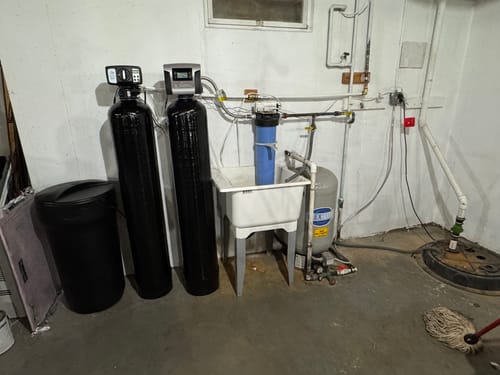
These systems don't just soften water—they remove iron before it wrecks your fixtures, laundry, and appliances.
Here's what that means practically: you'll cut cleaning supply costs by up to 75%, avoid premature appliance replacements, and stop buying specialty stain removers that only mask the problem.
Paired with an iron filter, a water softener creates a thorough defense that extends plumbing and appliance lifespan considerably.
The investment typically pays for itself within a few years.
That's not a sales pitch—that's the math.
Every month you wait, iron quietly drains your budget. A water softener stops that bleeding cold.
Frequently Asked Questions
Does Iron in Water Damage Clothes?
Yes, iron in water absolutely damages clothes! When iron levels exceed 2 ppm, oxidation creates stubborn rust stains that make fabrics look old and worn, ultimately forcing us into costly, premature wardrobe replacements we'd rather avoid.
What Are the Stains of Iron in Water?
Iron in water leaves reddish-brown stains on fixtures, sinks, tubs, and laundry. These rust-like deposits form when iron oxidizes, and they're notoriously stubborn—embedding themselves into surfaces and fabric fibers over time.






