


![SoftPro™ Chlorine+ Carbon Whole House Water Filter to Remove PFAS, Chlorine, Chloramine & Pesticides [City Water Filters Series]](http://www.softprowatersystems.com/cdn/shop/files/SoftPro_Whole_House_Carbon_Filter_with_Spin_Down_Water_Filter.webp?v=1783547361&width=140)


 855-683-8488


Iron Still in Your Water After Filtration: The 6 Most Common Root Causes and Proven Fixes

If your iron filter isn't doing its job, you're likely dealing with one of six common culprits — competing contaminants like manganese, clogged media, infrequent backwashing, seasonal water chemistry shifts, or a system simply overwhelmed past its design limits. Even a well-maintained filter can let iron slip through under the right conditions. Once you understand what's actually causing the problem, fixing it becomes straightforward — and we've broken down exactly how to do that.
Key Takeaways
- Iron levels above 0.3 mg/L signal filtration failure, while concentrations exceeding 10 mg/L overwhelm most standard filter systems entirely.
- Competing contaminants like manganese and hydrogen sulfide take priority over iron, reducing overall filtration effectiveness significantly.
- Seasonal pH shifts caused by heavy rainfall or drought disrupt oxidation processes essential for proper iron removal.
- Clogged filter media and infrequent backwashing allow iron buildup, causing bypass and drastically reduced filtration efficiency.
- Upgrading to multi-stage filtration, shock chlorination, and quarterly maintenance checks reliably resolves persistent iron removal failures.
Why Iron Keeps Appearing After Filtration

Even with a filtration system in place, iron can stubbornly find its way back into your water — and understanding why starts with capacity. When iron concentrations exceed 0.3 mg/L, most filters simply can't keep up.
When iron exceeds 0.3 mg/L, even the best filtration systems struggle to keep up.
But capacity isn't the only culprit. Competing contaminants like manganese or hydrogen sulfide can undermine your filter's effectiveness, allowing iron to slip through untreated.
Seasonal pH shifts also disrupt the oxidation processes your system depends on, making removal inconsistent.
Undersized or poorly maintained systems struggle even harder during peak usage, leaving iron removal incomplete.
And if your raw water iron levels are unusually high, even a properly functioning filter may fall short without regular monitoring and testing to catch the problem early.
The 6 Root Causes of Incomplete Iron Removal
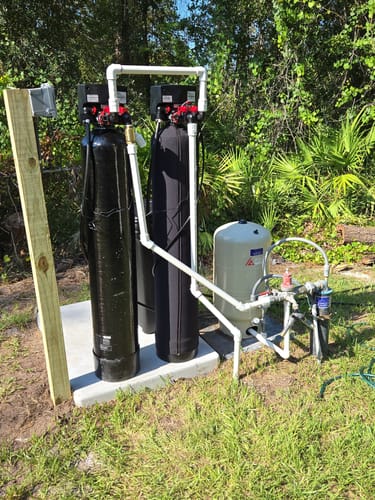
When iron keeps showing up after filtration, it's usually one of six underlying problems at work.
Let's break each one down so you know exactly what you're dealing with.
- Exceeding design capacity — Concentrations above 10 mg/L overwhelm most filters.
- Competing contaminants — Manganese and hydrogen sulfide fight for treatment priority, leaving iron behind.
- Seasonal water chemistry shifts — Heavy rainfall and drought alter conditions your filter wasn't recalibrated for.
- Clogged filter media — Sediment buildup chokes flow rates, cutting filtration efficiency considerably.
- Infrequent backwashing — Skipping this critical step lets iron accumulate and bypass treatment.
- Neglected pH adjustments — Wrong pH levels chemically undermine your system's removal capability.
Identifying your root cause is the fastest path to a real fix.
How to Test Whether Your Iron Filter Is Actually Working
How do you know if your iron filter is actually doing its job? We recommend running four targeted checks to find out fast.
| Test | What to Check | Red Flag |
|---|---|---|
| Water Test | Iron concentration post-filter | Above 0.3 mg/L |
| Visual Inspection | Stains, metallic taste, sediment | Reddish-brown discoloration |
| Flow Rate | Pressure before vs. after filter | Noticeable pressure drop |
| Quarterly Maintenance | Filter media and components | Buildup or damage found |
| Clarity Check | Color and particle presence | Rust-colored particles visible |
Each test reveals a different failure point. Low pressure signals clogging. Stains and metallic tastes suggest bypassing or malfunction. Iron levels above 0.3 mg/L confirm the filter's simply not performing. Run these checks consistently, and you'll catch problems before they escalate.
How to Fix Iron Filtration Failure Based on Root Cause
Once you've pinpointed the failure, fixing it becomes straightforward. Clogged media? Clean or replace it to restore proper flow.
If oxidation's inconsistent, adjust your air injection settings or add a dedicated oxidation stage. Iron bacteria causing slime and odors? Shock chlorination eliminates them effectively—don't skip this step if you're noticing that signature rotten-egg smell.
Seasonal shifts in temperature and flow can overwhelm your system, so build quarterly maintenance checks into your routine and adjust filter settings accordingly.
Finally, if iron levels remain stubbornly high despite these corrections, your system may simply lack capacity. Upgrading to a multi-stage filtration setup handles heavier iron loads more reliably.
Match the fix to the root cause, and you'll see results fast.
Maintenance Habits That Prevent Iron From Returning
Once we've fixed the root cause of iron returning to our water, the real challenge is keeping it from coming back—and that's where consistent maintenance habits make all the difference.
We'll walk you through three practices that form the backbone of long-term iron control: regular filter media cleaning, consistent pH level monitoring, and scheduled professional system inspections.
Each of these habits targets a specific vulnerability in your filtration system, so let's break down why they matter and how to make them routine.
Regular Filter Media Cleaning
Staying on top of regular filter media cleaning is one of the most effective ways to keep iron from sneaking back into your water. When we let cleaning slide, iron particles accumulate, causing channeling and clogs that allow contamination to bypass filtration entirely.
Backwashing your filters according to manufacturer guidelines dislodges built-up iron and restores proper flow rates. We recommend quarterly inspections to assess whether your media needs regeneration or full replacement.
Don't overlook pH levels either—maintaining proper pH actively supports the oxidation processes your filter depends on for iron removal.
Finally, keep a maintenance log tracking cleaning schedules and filter performance. That log becomes invaluable for spotting patterns, catching problems early, and ensuring your system consistently delivers clean, iron-free water.
Consistent pH Level Monitoring
| pH Range | Impact on Iron | Recommended Action |
|---|---|---|
| Below 6.5 | Increased iron solubility | Apply alkaline adjustment |
| 6.5 – 8.5 | Ideal filtration zone | Maintain current balance |
| Above 8.5 | Competing contaminants rise | Apply acidic adjustment |
We recommend quarterly testing to catch shifts before they compound. Use pH balance treatment solutions to stabilize water chemistry proactively. This single habit extends filter lifespan, reduces iron breakthrough, and keeps your water quality consistently high.
Scheduled Professional System Inspections
Even the best filtration system can quietly drift out of ideal performance without scheduled professional inspections catching the drift early. Clogged filters, miscalibrated regeneration cycles, and failing components often go unnoticed until iron reappears in your water.
Annual inspections paired with water quality assessments give technicians the data they need to adjust settings before small problems escalate.
Professionals also identify seasonal fluctuations that spike iron levels during peak usage periods—patterns you'd likely miss without expert evaluation. They'll verify that regeneration cycles align with your actual water consumption, keeping iron removal consistently effective.
Perhaps most importantly, professional oversight guarantees you're following manufacturer maintenance schedules, which directly protects system efficiency over the long term.
Investing in expert inspections means fewer surprises and cleaner water, consistently.
Signs Your Iron Filter Needs a Professional
How do we ascertain when our iron filter has crossed the line from a DIY fix to a job for the pros? Recognizing these signals early prevents costly damage.
| Warning Sign | Likely Cause | Required Action |
|---|---|---|
| Rusty stains & metallic taste | Filter malfunction or saturation | Professional inspection |
| Persistently low water pressure | Clogged or overburdened system | Professional assessment |
| Rust-colored sediment in containers | Iron bypassing filtration | Filter effectiveness evaluation |
| Iron levels exceeding filter capacity | System undersized for demand | Consult professional immediately |
| Foul odors or visible particles | Iron bacteria growth | Specialized professional treatment |
These aren't minor inconveniences—they're diagnostic signals. When multiple signs appear simultaneously, we're dealing with compounding failures that demand expert intervention, not guesswork.
Frequently Asked Questions
What Helps Remove Iron From Water?
We've found that water softeners, oxidation filtration systems, and reverse osmosis units effectively remove iron. Testing your water first helps us identify iron types, ensuring we're selecting the most targeted treatment for ideal results.
What Diseases Are Caused by Iron in Water?
Iron in water doesn't directly cause diseases, but it can worsen hereditary hemochromatosis, promote harmful bacteria growth, and trigger lead or copper leaching from pipes—all of which we'll want to address immediately.
Can I Shower in High Iron Water?
You can shower in high iron water, but we'd advise caution. It'll leave reddish-brown stains on skin and hair, cause a metallic taste, and irritate sensitive skin—making an effective filtration system worth considering.
What Are the Symptoms of Too Much Iron in Water?
We'll notice reddish-brown stains on sinks and laundry, a metallic taste or odor, rust-colored sediment, and yellow-to-brown water discoloration—especially after standing—when iron levels exceed 0.3 mg/L.






