


![SoftPro™ Chlorine+ Carbon Whole House Water Filter to Remove PFAS, Chlorine, Chloramine & Pesticides [City Water Filters Series]](http://www.softprowatersystems.com/cdn/shop/files/SoftPro_Whole_House_Carbon_Filter_with_Spin_Down_Water_Filter.webp?v=1783547361&width=140)


 855-683-8488


Iron Type Water Test Identification: Why Knowing the Ferrous vs. Ferric Difference Matters for Treatment

When it comes to iron in your well water, the type you have matters just as much as how much you have. Ferrous iron stays dissolved and invisible, while ferric iron forms those telltale reddish-brown particles. Treating the wrong type wastes money and leaves your problem unsolved. A simple test tells you exactly what you're dealing with—and once you know, choosing the right filtration system becomes surprisingly straightforward. Stick with us, and we'll show you exactly how.
Key Takeaways
- Ferrous iron (Fe²⁺) stays dissolved and invisible, while ferric iron (Fe³⁺) forms visible reddish-brown particles, requiring completely different treatment methods.
- Water softeners effectively remove dissolved ferrous iron but are entirely ineffective against ferric iron, making accurate identification essential before purchasing equipment.
- Testing water without air exposure prevents ferrous iron from oxidizing, ensuring accurate identification of which iron type is actually present.
- Ferric iron requires sediment or backwashing filters, while ferrous iron needs softeners or catalytic media filters for effective removal.
- Misidentifying iron type leads to costly, ineffective treatment installations that fail to protect plumbing, fixtures, and household appliances from damage.
Ferrous vs. Ferric Iron: What's Actually Different?

When it comes to iron in your water, not all iron is created equal — and understanding the difference between ferrous and ferric iron can save you from choosing the wrong treatment solution entirely.
Not all iron in your water is the same — and knowing the difference could save your entire treatment system.
Ferrous iron (Fe²⁺) carries a +2 oxidation state, stays dissolved, and keeps your water looking deceptively clear.
Ferric iron (Fe³⁺), with its +3 oxidation state, is insoluble — it's what creates those unmistakable reddish-brown particles you can actually see.
Here's where it gets critical: water softeners handle ferrous iron effectively but do absolutely nothing against ferric iron.
That requires specialized filtration. And if ferrous iron gets exposed to air, it oxidizes into ferric iron — triggering staining and plumbing damage.
Knowing which type you're dealing with changes everything about your treatment approach.
Why Your Iron Type Determines the Treatment You Need
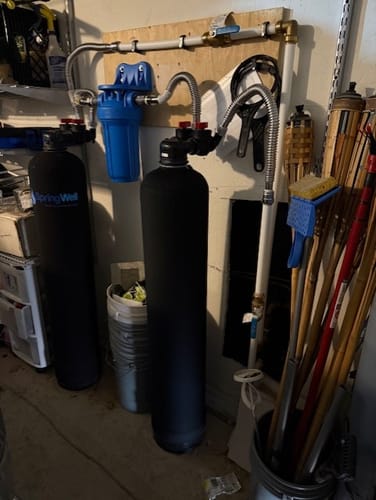
Knowing the difference between ferrous and ferric iron isn't just chemistry trivia — it's what stands between you and the wrong treatment system.
Install a water softener when you're actually dealing with ferric iron, and you've spent money on equipment that won't touch your problem.
Here's why: ferrous iron stays dissolved and invisible, moving right through filtration media that catches particles. Water softeners handle it well.
Ferric iron, though, arrives as reddish-brown sediment — it needs a backwashing filter to physically trap and flush those particles out.
We can't stress this enough: thorough testing for both forms gives you the exact intelligence needed to match treatment to your specific iron type.
That precision protects your plumbing, eliminates staining, and prevents costly missteps.
How to Test Your Well Water for Ferrous or Ferric Iron
Testing your well water for ferrous or ferric iron comes down to two distinct approaches, and choosing the right one first saves you time and money.
Here's how we tackle it effectively:
- Check for visible clues first — reddish-brown stains or discoloration signal ferric iron immediately.
- Use iron test strips or color kits — these deliver quick concentration readings above the critical 0.3 mg/L threshold.
- Collect samples without air exposure — oxygen converts ferrous iron into ferric during transport, corrupting your results.
- Order a thorough lab test — this measures total iron while identifying dissolved ferrous levels precisely.
Each step builds on the last, giving us a cleaner picture of exactly what's flowing through our pipes.
What Untreated Iron Does to Your Plumbing and Appliances
Untreated iron doesn't just sit quietly in your water — it actively works against your plumbing and appliances every single day. Ferric iron leaves reddish-brown stains on fixtures while steadily clogging pipes and restricting flow.
Ferrous iron seems harmless while dissolved, but once it oxidizes inside your system, it creates the same destruction.
Here's what most homeowners don't realize: iron sediment and rust build-up don't just stain — they wear down dishwashers and washing machines from the inside, dramatically shortening their lifespan.
Corrosion accelerates, flow efficiency drops, and repair bills climb.
The good news? Treating iron contamination before damage occurs prevents costly service calls and extends the life of both your appliances and plumbing.
Knowing your iron type makes that treatment possible.
Which Filtration Systems Remove Ferrous and Ferric Iron?
Once we recognize which type of iron is in our water, we can match it to the right filtration system — and that pairing makes all the difference.
Matching the right filtration system to the right type of iron is where effective water treatment truly begins.
Here's how the matching works:
- Ferrous iron (0.3–1.0 mg/L): Water softeners or catalytic media filters dissolve it efficiently.
- Ferric iron: Sediment cartridge filters or backwashing iron filters capture its particulate form.
- Mixed iron (1–5 mg/L): Air injection or chlorine treatment oxidizes both types before filtration.
- Iron exceeding 5 mg/L or iron bacteria: Pre-oxidation combined with backwashing media filters delivers effective removal.
For dissolved iron, we can also layer in point-of-use reverse osmosis filters — they sharpen taste and clarity beyond what primary systems achieve alone.
Frequently Asked Questions
What Is the Difference Between Ferric and Ferrous Iron in Water?
We'll break it down: ferrous iron (Fe²⁺) dissolves invisibly in water, while ferric iron (Fe³⁺) appears as reddish-brown particles. Each requires different treatment—water softeners tackle ferrous, but ferric demands advanced filtration systems.
How to Tell if Iron Is Ferric or Ferrous?
We can identify ferric iron by its visible reddish-brown particles, while ferrous iron stays dissolved and clear. Collect a water sample, let it sit—if it turns brown, you've got ferrous iron oxidizing.
How to Remember Ferric and Ferrous?
"ferric" has an "i" for iron in its oxidized state, while "ferrous" has a "u" for undissolved, since it stays soluble. That's it—locked in forever!
Which Is Better, Ferrous or Ferric?
Neither's "better" — they're just different problems we need to tackle differently. Ferrous iron dissolves invisibly, while ferric stains visibly. Knowing which you've got determines whether you'll actually solve your water quality issues effectively.






