


![SoftPro™ Chlorine+ Carbon Whole House Water Filter to Remove PFAS, Chlorine, Chloramine & Pesticides [City Water Filters Series]](http://www.softprowatersystems.com/cdn/shop/files/SoftPro_Whole_House_Carbon_Filter_with_Spin_Down_Water_Filter.webp?v=1783547361&width=140)


 855-683-8488


Iron Water Damage vs. Iron Filter Cost: Which Is More Expensive?

Iron water damage is far more expensive than an iron filter. Without filtration, you're looking at up to $4,500 annually in hidden repair costs, plumbing damage, and appliance replacements. A premium iron filter runs about $4,500 total over an entire decade. That's the difference between paying once for a solution or paying every single year for a problem. Stick with us, and we'll break down exactly where those costs come from.
Key Takeaways
- Iron water damage can cost up to $4,500 annually in appliance repairs, plumbing fixes, and maintenance, far exceeding filter costs.
- Premium iron filters cost around $4,500 total over 5–10 years, making them cheaper than ongoing water damage repairs.
- Budget iron filters range from $3,800–$6,800 over time due to frequent media replacements, reducing their cost advantage.
- Regular filters clog every six months, leading to over $2,000 in appliance repairs from untreated iron damage.
- Iron levels above 0.3 mg/L cause fixture staining and accelerated wear, making filtration financially necessary above $500 annually.
What Iron Water Damage Costs Homeowners Each Year

Iron in your water isn't just an inconvenience — it's quietly draining your wallet. Most homeowners don't connect the dots until the damage is already done.
Let's break down what's actually happening.
Appliance damage alone can cost you over $1,500 annually. Add plumbing repairs from iron buildup, and you're potentially looking at another $3,000 each year.
Ongoing maintenance? That's roughly $1,000 more. We're talking serious money slipping through the cracks.
There's also the efficiency angle — iron contamination reduces appliance performance by 20-30%, which drives up your utility bills steadily.
When you stack everything together, the cumulative hidden costs can reach $4,500 over time.
That's not a minor inconvenience. That's a financial problem demanding a real solution.
At What Point Iron Damage Is Too Expensive to Ignore
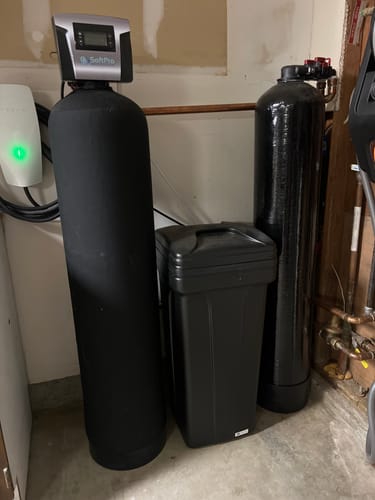
So we've established the damage iron does to your wallet — but at what point does ignoring it cross the line from "manageable" to "expensive mistake"?
Here's the threshold: once iron levels exceed 0.3 mg/L, you're looking at stained fixtures, accelerated appliance wear, and plumbing repairs that can top $3,000.
Add appliance replacements at $1,500+ and recurring service visits, and cumulative costs easily surpass $4,500.
The tipping point isn't a single bill — it's the compounding effect. Regular filters failing every six months, water heater repairs, softener damage — it stacks fast.
When your annual iron-related expenses start climbing past $500, you've crossed into territory where an iron filtration system isn't optional.
It's the financially smarter move.
What Iron Filters Actually Cost Over 10 Years
Most homeowners are surprised to find that the true cost of an iron filter isn't just the price tag on the box — it's what you pay over the next decade.
We've seen this play out repeatedly, and the numbers tell a clear story.
Here's what a 10-year cost breakdown actually looks like:
- Premium systems: ~$4,500 total, with media replacements only every 10–15 years (~$1,000)
- Budget systems: $3,800–$6,800 total, with media replacements every 6–12 months ($200–$600 each)
- No filter: Up to $4,500 in hidden iron damage costs alone
Budget systems look cheaper upfront, but frequent media replacements quietly drain your wallet.
Premium systems cost more initially yet deliver predictable, lower long-term expenses — that's the distinction serious homeowners need to understand.
Iron Filters vs. Regular Filters: The Real Price Gap
When homeowners swap a regular filter for an iron-specific one, the difference isn't subtle — it's thousands of dollars over a decade.
Swapping a regular filter for an iron-specific one isn't a minor upgrade — it's thousands of dollars saved over a decade.
Regular filters weren't built for high-iron water. They clog fast, need replacing every six months, and quietly allow iron to wreck water heaters and softeners — racking up over $2,000 in appliance repairs alone.
Iron-specific filters are engineered differently. They target both ferrous and ferric iron, last 5–10 years, and keep plumbing damage from snowballing into $4,500 in repair bills.
Meanwhile, choosing the wrong system exposes you to hidden costs exceeding $3,000 from untreated iron deposits.
The price gap isn't just about the filter itself — it's about what each system either prevents or quietly allows to destroy your home.
Iron Filter vs. No Filter: Which Saves More Money Long-Term
Skipping an iron filter doesn't save money — it defers a much bigger bill. Without treatment, iron silently damages pipes, appliances, and fixtures, stacking repair costs that dwarf any upfront filter investment.
Here's what we're really comparing:
- No filter: $4,500+ in hidden plumbing and appliance repair costs, plus 20-30% higher utility bills from reduced efficiency
- Budget filter: $3,800-$6,800 over a decade from frequent media replacements
- Premium iron filter: ~$4,500 total over 5-10 years, preventing all the above
The math isn't close. A premium system fundamentally pays for itself by neutralizing the damage before it starts.
We're not spending money on a filter — we're redirecting money we'd otherwise lose.
Frequently Asked Questions
What Is the Cheapest Way to Remove Iron From Well Water?
The cheapest way we've found to remove iron from well water is DIY aeration or sedimentation. These methods cost the least upfront, though they'll demand more of your time and consistent effort to stay effective.
How Much Does It Cost to Replace an Iron Filter?
Replacing an iron filter typically costs us between $1,000 and $5,000, depending on system capacity. We'll also want to budget for installation fees of $500–$2,000 and annual maintenance expenses ranging from $300 to $800.
What Are Common Problems With Iron Filters?
We've seen iron filters struggle with clogging, bacterial growth, and frequent backwashing needs. Without proper monitoring, these issues snowball fast, slashing your filter's efficiency and lifespan while leaving you with stained fixtures and unexpected repair bills.
What Is the Life Expectancy of an Iron Filter?
Iron filters typically last 5 to 10 years, outlasting regular filters by nearly double. With proper maintenance, we're looking at premium models that only need media replacement every 10 to 15 years—making them a smart, long-term investment.






