


![SoftPro™ Chlorine+ Carbon Whole House Water Filter to Remove PFAS, Chlorine, Chloramine & Pesticides [City Water Filters Series]](http://www.softprowatersystems.com/cdn/shop/files/SoftPro_Whole_House_Carbon_Filter_with_Spin_Down_Water_Filter.webp?v=1783547361&width=140)


 855-683-8488


Iron Well Water and Dry Skin: The Overlooked Connection Most Dermatologists Never Bring Up

If your skin feels perpetually dry and no moisturizer seems to help, your well water's iron content could be the silent culprit. Iron strips your skin's natural oils, clogs pores, and dulls your complexion over time. Most dermatologists never think to ask about your water source, so the damage keeps building. Understanding this overlooked connection could finally give you the answers your skin's been waiting for.
Key Takeaways
- Iron in well water strips natural oils from skin, creating dryness that often resists even consistent moisturizer application.
- Iron combines with skin oils to form a pore-clogging film, triggering unexpected acne breakouts and dull complexion.
- Most dermatologists overlook water mineral content, treating symptoms without identifying iron exposure as the root cause.
- The EPA flags iron levels above 0.3 mg/L as problematic, yet many homeowners unknowingly bathe in it daily.
- Installing a whole-house filtration system and using ceramide-based moisturizers effectively protects skin from ongoing iron damage.
What Iron Well Water Does to Your Skin

When iron-rich well water touches your skin, it strips away your natural oils, leaving behind dryness, irritation, and rough patches that only worsen over time.
Every time iron-rich well water touches your skin, it quietly steals your natural oils — leaving dryness and damage behind.
But that's just the beginning. Iron mixes with your skin's natural oils to create a pore-clogging film, setting the stage for persistent acne breakouts.
Meanwhile, mineral buildup dulls your complexion and reduces your skin's ability to retain moisture.
It doesn't stop there — if you're already managing eczema or psoriasis, the bacteria and contaminants hiding in your well water will actively fuel that inflammation, making flare-ups more frequent and harder to control.
We're not talking about minor inconveniences. We're talking about a daily assault on your skin's health that compounds quietly until the damage becomes impossible to ignore.
Signs Your Well Water Is Behind Your Skin Problems
If your skin has been acting up and you can't figure out why, your well water might be the culprit hiding in plain sight.
Watch for these telltale signs: persistent dryness that moisturizer can't fix, a rough texture that worsens after showering, unexpected breakouts, and a complexion that looks perpetually dull. Sound familiar?
Iron-rich well water strips your skin's natural oils, clogs pores with mineral residue, and triggers inflammation—especially if bacteria are lurking in untreated water.
Those with eczema or psoriasis often notice significant flare-ups without an obvious cause.
Here's the thing: your skincare routine isn't failing you. Your water is. Testing your well water for iron levels and contaminants gives you the clarity you need to finally connect the dots.
Why Dermatologists Miss the Iron Well Water and Dry Skin Link
So you've tested your water, connected the dots, and finally have answers—but your dermatologist still isn't asking the right questions.
Here's why: most practitioners are trained to chase common culprits—allergens, diet, genetics. Well water mineral content rarely enters the conversation.
Dermatologists aren't ignoring you intentionally. They simply aren't screening for it. Iron-related skin damage—compromised barrier function, clogged pores, chronic dryness—mimics dozens of other conditions.
Without water testing as part of their assessment, they're treating symptoms while missing the source.
That's a critical gap. Long-term iron exposure quietly degrades skin texture and tone, and without that context, patients cycle through prescriptions that address the surface, never the cause.
We deserve better diagnostics—and now we understand to demand them.
How to Test Your Well Water for High Iron Levels
Testing your well water is easier than you might think, and it starts with one simple step: collect a water sample in a clean container and send it to a certified laboratory. Labs provide accurate, detailed results that home testing kits simply can't match — though those kits work well for quick preliminary readings.
Here's what you're watching for: the EPA flags iron levels exceeding 0.3 mg/L as problematic for water quality and skin health. That's a surprisingly low threshold, meaning many homeowners unknowingly shower and drink water that's quietly irritating their skin daily.
We recommend testing at least once a year. High iron often signals other lurking contaminants, so thorough testing isn't optional — it's essential for protecting your skin and your household's overall health.
How to Protect Your Skin From Iron Well Water
Once you know your well water has high iron levels, protecting your skin comes down to a few targeted strategies that address the problem at its source.
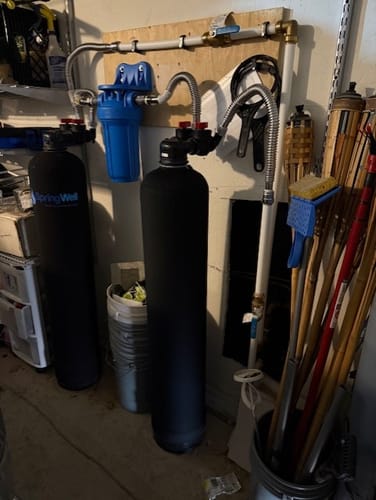
First, invest in a salt-based water softener or whole-house filtration system — these aren't luxury upgrades, they're necessities. They eliminate iron before it ever contacts your skin.
A water softener isn't a luxury — it's your first line of defense against iron-damaged skin.
Next, if you're noticing orange or rusty discoloration on your skin, switch to specialized cleansers designed to combat mineral buildup.
Don't let that residue sit.
Finally, rebuild what iron strips away. Moisturizers containing ceramides and hyaluronic acid directly counteract the drying effects, restoring your skin's protective barrier.
For those managing eczema or sensitive skin, this step isn't optional — it's critical to maintaining skin integrity long-term.
Frequently Asked Questions
Does Iron in Water Dry Out Skin?
Yes, iron in water dries out your skin by stripping its natural oils. It leaves a film that clogs pores, worsens texture, and triggers conditions like eczema. We recommend testing your water and investing in filtration.
What Are 5 Signs of Hard Water?
We've seen hard water show itself through chalky skin residue, poor soap lather, mineral deposits on fixtures, dry irritated skin, and relentless itching—especially if you're battling sensitive skin or eczema.
What Kind of Water Makes Your Skin Dry?
Hard water's the culprit behind your dry skin. It's loaded with minerals like calcium, magnesium, and iron that strip your skin's natural oils, leaving it parched, irritated, and struggling to retain moisture.
What Does Well Water Do to Your Skin?
Well water strips your skin's natural oils, clogs your pores with mineral residue, and disrupts your skin barrier—leaving you with dryness, irritation, and a dull complexion that worsens the longer you're exposed.






