


![SoftPro™ Chlorine+ Carbon Whole House Water Filter to Remove PFAS, Chlorine, Chloramine & Pesticides [City Water Filters Series]](http://www.softprowatersystems.com/cdn/shop/files/SoftPro_Whole_House_Carbon_Filter_with_Spin_Down_Water_Filter.webp?v=1783547361&width=140)


 855-683-8488


Iron Well Water Long-Term Costs vs. One-Time Filter Investment

Ignoring iron contamination in well water can cost you over $4,500 every single year in appliance damage and plumbing repairs. Meanwhile, a quality iron filter runs between $800 and $6,000 upfront, with manageable annual maintenance costs of $300–$800. That's a dramatically better deal over time. We've broken down exactly where every dollar goes, what hidden costs most homeowners never see coming, and which filter investment actually makes sense for your situation.
Key Takeaways
- Untreated iron contamination costs homeowners over $4,500 annually through appliance damage and plumbing repairs alone.
- Iron filter systems range from $800–$6,000 upfront, with annual maintenance adding $300–$800 yearly.
- Over 10 years, budget filter systems total $3,800–$6,800, often less than reactive repair spending.
- Premium filter systems cost more upfront but deliver lower long-term expenses and over 95% iron removal.
- Hidden costs like chemical refills, service visits, and media replacement significantly impact total filter ownership costs.
What Iron Contamination Actually Costs Well Water Homeowners Each Year

Iron contamination isn't just a water quality issue—it's a financial one that quietly drains your wallet year after year.
Think about what's actually happening inside your home: appliances silently degrading, plumbing slowly corroding, efficiency steadily dropping.
Here's what the numbers reveal. Untreated iron can push appliance damage costs beyond $1,500 annually, while plumbing repairs alone may surpass $3,000.
That's potentially $4,500 disappearing before you've addressed a single filtration solution.
It doesn't stop there. Iron-compromised appliances operate at 20-30% reduced efficiency, compounding your utility bills over time.
These aren't dramatic, sudden losses—they're slow bleeds that accumulate into serious financial damage.
Understanding these costs isn't about fear. It's about making informed decisions before the damage becomes unavoidable.
The Real Price of an Iron Filter for Well Water
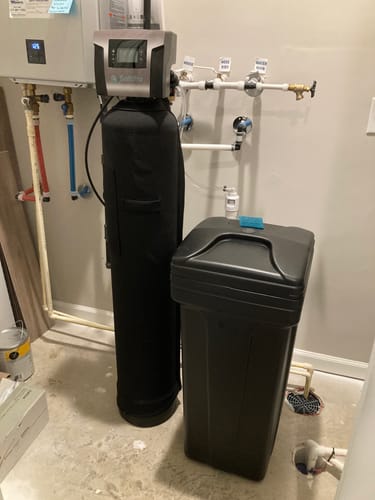
So what does an iron filter for well water actually cost? More than the sticker price suggests. Systems run $800–$6,000, yet manufacturers produce them for $100–$250. That markup is significant.
But the purchase price is just the beginning. Here's what you're really signing up for:
The sticker price is just the entry fee. The real costs are waiting further down the road.
- Annual maintenance: $300–$800 every year
- Replacement media: $150–$400 every 4–6 years
- Installation, permits, and chemical refills: Several thousand dollars over time
- Ignored iron damage: $1,500+ in appliances, $3,000+ in plumbing repairs
Those last numbers reframe everything. When untreated iron destroys your appliances and corrodes your pipes, the filter's upfront cost looks far less painful.
We're not just buying equipment—we're buying protection against a much costlier alternative.
Hidden Iron Filter Maintenance Costs Most Homeowners Miss
Most homeowners budget for the filter itself and call it a day—but that's where the real costs quietly begin. Annual maintenance typically runs $300–$800, and that's before factoring in professional service visits, which add another $300–$700 yearly. Those numbers alone can catch people off guard.
Then there's the ongoing chemical refills—$20–$40 monthly—which compound quietly over time.
And every 4–6 years, you'll face media replacement costs between $150–$400.
Here's what we've noticed: homeowners who skip this math don't just overspend—they lose confidence in their systems because they're constantly reacting instead of planning. Understanding these layered costs upfront transforms iron filtration from a financial surprise into a strategic, well-managed investment.
That's the difference between ownership and mastery.
Iron Filter for Well Water vs. No Treatment: 10-Year Cost Breakdown
Now that we've mapped out the hidden maintenance costs, let's put two paths side by side and see where they actually lead over a decade.
Here's what the numbers reveal:
- No treatment: Appliance damage exceeds $1,500, plumbing repairs surpass $3,000—totaling $4,500+ in reactive spending.
- Budget filter systems: $3,800–$6,800 total, including frequent media replacements every 4–6 years.
- Premium filter systems: $3,000–$5,000 upfront, but markedly lower operational costs long-term.
- Annual maintenance: $300–$800 per year versus unpredictable, compounding repair bills from untreated iron.
The pattern becomes undeniable—untreated iron quietly drains your wallet while you're focused elsewhere.
Premium systems cost more initially, but they're fundamentally buying predictability.
That's the real value proposition most homeowners overlook entirely.
What to Look for When Buying an Iron Filter for Well Water?
Choosing the right iron filter comes down to a handful of critical factors that separate a smart investment from an expensive mistake. First, match the system's capacity to your household size — undersizing it means you'll feel the strain fast.
Next, scrutinize contaminant removal efficiency. Premium systems clear over 95% of iron, while budget options stall at 70-80%. That gap matters more than you'd think over a decade.
Don't overlook maintenance costs. Media replacement runs $150-$400 every 4-6 years, though premium systems stretch that timeline. Factor installation too — typically $200-$600 on top of the unit price.
Finally, prioritize backwashing technology. Systems that automatically clean their own media last longer and perform consistently, which is exactly what a long-term investment demands.
Frequently Asked Questions
What Is the Cheapest Way to Remove Iron From Well Water?
We've found that basic filtration systems, costing $800–$1,500, offer the cheapest solution. DIY sediment filters or chemical injections cut costs further, though we'll need to budget $300–$800 annually for maintenance to keep everything running efficiently.
What Are Common Problems With Iron Filters?
We've seen iron filters struggle with costly media replacements every 4-6 years, high initial investments, reduced efficiency in budget systems, potential plumbing damage, and monthly chemical refills that quietly drain your wallet over time.
Should I Get an Iron Filter for Well Water or Water Softener?
If your well water's iron-heavy, we'd recommend an iron filter—it's built for that battle. A water softener tackles hardness but won't efficiently remove iron, potentially costing you thousands in plumbing repairs down the road.
Is a Water Filter a Good Investment?
Yes, a water filter's a smart investment. We're talking about avoiding $3,000+ in iron damage repairs. A premium system costs more upfront, but it'll save us considerably over time through lower maintenance and fewer replacements.






