


![SoftPro™ Chlorine+ Carbon Whole House Water Filter to Remove PFAS, Chlorine, Chloramine & Pesticides [City Water Filters Series]](http://www.softprowatersystems.com/cdn/shop/files/SoftPro_Whole_House_Carbon_Filter_with_Spin_Down_Water_Filter.webp?v=1783547361&width=140)


 855-683-8488


Is AIO Air Injection Iron Filter Really Better Than Chemical Treatment for High Iron Levels?

Yes, AIO air injection filters really are better than chemical treatments for most high iron situations. They remove up to 90% of iron without chlorine or harmful byproducts, handling concentrations as high as 30 PPM naturally. Chemical treatments match that efficiency but demand monitoring every one to two months and cost $100–$200 annually. AIO systems need attention only every four to six years. Stick with us, and we'll show you exactly when each solution wins.
Key Takeaways
- AIO filters achieve up to 90% iron removal naturally through air injection, matching chemical treatments without harmful byproducts or ongoing chemical costs.
- Chemical treatments require monitoring every 1-2 months and cost $100-$200 annually, while AIO systems only need maintenance every 4-6 years.
- For iron levels exceeding 10 PPM, AIO filters significantly outperform chemical treatments in efficiency and long-term operational management.
- AIO systems handle concentrations beyond 30 PPM effectively, eliminating reliance on chlorine or potassium permanganate used in chemical treatments.
- AIO filters reduce plumbing damage, operational costs, and harmful byproduct risks, making them superior for sustained high-iron water treatment.
Why High Iron Levels Behave Differently in Well Water

High iron levels in well water don't behave the way most people expect. You pump it fresh from the ground, and it looks perfectly clear. That's because it exists as soluble ferrous iron—invisible, dissolved, hiding in plain sight.
But the moment it meets air, it oxidizes into ferric iron, and suddenly you've got rust-colored stains on your sinks and an orange tint in your glass.
Ferrous iron oxidizes on contact with air—leaving rust stains on your sinks and an orange tint in your glass.
Here's where it gets more complicated: iron bacteria thrive in these conditions, forming slimy deposits that quietly choke your pipes.
And once concentrations exceed 0.3 PPM, you're looking at real plumbing damage and compromised water quality.
Different iron forms demand different solutions, which is exactly why testing your water first isn't optional—it's everything.
How AIO Air Injection Filters Remove Iron Without Chemicals
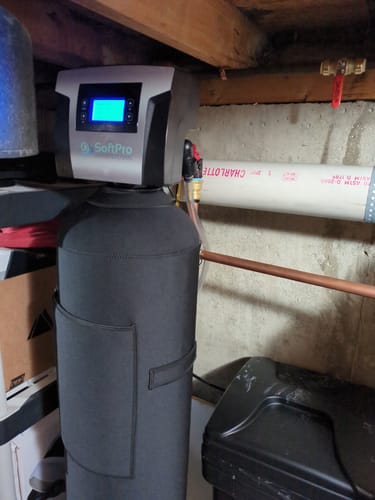
When iron hides in your well water as a dissolved, invisible ferrous form, AIO filters solve the problem elegantly—no chemicals required.
Here's what's happening inside: the system injects air directly into your water, triggering oxidation. That process transforms soluble ferrous iron into insoluble ferric iron—essentially rust particles your filter can physically trap and remove.
The results are impressive. We're talking up to 90% iron removal efficiency, handling concentrations as high as 30 PPM. No chlorine. No potassium permanganate. No recurring chemical costs or monthly replenishment headaches.
What we appreciate most is what doesn't happen—no harmful chemical byproducts contaminating your drinking water, no accelerated plumbing damage.
And maintenance? Every 4-6 years, compared to the constant attention chemical systems demand. It's elegantly simple engineering.
How Chemical Treatments Handle High Iron Concentrations
While AIO systems handle a lot of iron-heavy situations beautifully, they do hit a ceiling—and that's where chemical treatments step in.
When iron levels exceed 10 PPM, oxidizing agents become the heavy artillery we need.
Here's what makes chemical treatments uniquely powerful:
- Oxidizing agents—chlorine, potassium permanganate, hydrogen peroxide—aggressively convert soluble ferrous iron into filterable ferric iron
- Extreme contamination scenarios that defeat conventional filtration methods become manageable
- Precision targeting of iron concentrations that would overwhelm passive systems
But there's a trade-off worth understanding.
Chemical treatments demand regular monitoring, interventions every 1-2 months, and ongoing costs reaching $100-$200 annually.
They're not passive solutions—they're active, high-maintenance systems requiring consistent attention to prevent harmful byproducts from developing.
AIO Filters vs. Chemical Treatment: Which Removes More Iron for Less
So how do these two systems actually stack up when we cut through the noise? AIO air injection systems remove up to 90% of iron naturally through aeration, converting soluble ferrous iron into filterable ferric iron without chemicals.
Chemical treatments hit a similar 85-90% efficiency ceiling, but they demand monthly upkeep, ongoing oxidizing agent purchases, and careful monitoring to avoid harmful byproducts.
Here's where it gets interesting. AIO systems handle concentrations exceeding 30 PPM, while chemical methods often buckle under extreme levels.
AIO maintenance windows stretch every 4-6 years, slashing long-term costs dramatically. Factor in eliminated chemical purchases and reduced plumbing damage, and the math becomes undeniable.
We're looking at superior performance delivered at a fraction of the operational cost.
When to Choose an AIO Iron Filter Based on Your Water Test Results
Your water test results tell the whole story. Once you see those numbers, choosing an AIO filter becomes straightforward. Here's what we look for:
Your water test results tell the whole story — and the numbers make choosing the right filter simple.
- Iron above 0.3 PPM — AIO systems oxidize ferrous iron efficiently, making them our go-to recommendation immediately.
- Iron exceeding 10 PPM — AIO filters achieve over 90% removal without harsh chemicals, outperforming chemical treatments decisively.
- pH below 6.5 or multiple contaminants — AIO handles acidic water while simultaneously targeting manganese and hydrogen sulfide.
Unlike traditional water softeners that clog when iron oxidizes, AIO systems handle soluble ferrous iron without hesitation.
Your results aren't just numbers — they're a roadmap. When those concentrations climb, we confidently point homeowners toward AIO technology every time.
Frequently Asked Questions
Do Air Injection Iron Filters Work?
Yes, they work remarkably well! We've seen AIO filters remove 75-90% of iron without harsh chemicals, handling concentrations up to 30 PPM by converting soluble ferrous iron into easily filterable ferric iron.
What Are Common Problems With Iron Filters?
We've seen iron filters struggle with iron bacteria, pressure drops from poor sizing, and clogged media. Neglecting maintenance—like skipping backwashes or delaying media replacement—compounds these issues, leaving you with persistently poor water quality.
What Is the Best Water Filter to Remove Iron?
We've found AIO systems excel at removing iron—handling up to 30 PPM without chemicals. They're our top recommendation for high iron levels, offering reliable, low-maintenance filtration that protects plumbing and dramatically improves water quality.
How Long Does an Iron Filter Typically Last?
We've found that AIO iron filters typically last 10–15 years with proper care. You'll want to schedule backwashing every 4–6 years and budget for media replacement every 5–10 years, costing $200–$500.






