


![SoftPro™ Chlorine+ Carbon Whole House Water Filter to Remove PFAS, Chlorine, Chloramine & Pesticides [City Water Filters Series]](http://www.softprowatersystems.com/cdn/shop/files/SoftPro_Whole_House_Carbon_Filter_with_Spin_Down_Water_Filter.webp?v=1783547361&width=140)


 855-683-8488


Is Your Iron Filter Defective, or Is It Simply Poorly Configured? How to Tell the Difference

Most iron filter problems aren't actually caused by a broken filter—they're caused by a misconfigured one. Rust stains, metallic-tasting water, and low pressure often point to incorrect regeneration settings, pH imbalances, or clogged media rather than total failure. Before you spend money on repairs or replacement, it's worth testing your water and reviewing your system's settings first. Stick with us, and we'll walk you through exactly how to tell the difference.
Key Takeaways
- Rust stains, metallic-tasting water, and orange discoloration often indicate either a failing filter or incorrect regeneration settings needing immediate investigation.
- Conduct a water test; iron levels exceeding 0.3 ppm confirm the filter isn't performing correctly, whether from defects or misconfiguration.
- Incorrect regeneration frequency or pH levels outside 6.5–8.5 are configuration issues that mimic the symptoms of a defective filter.
- Salt bridges in the brine tank or mineral buildup in the injector assembly are fixable configuration problems, not signs of filter failure.
- Persistent issues despite proper adjustments and maintenance strongly suggest filter capacity exhaustion, warranting professional evaluation or full system replacement.
Warning Signs Your Iron Filter Has Actually Failed

When an iron filter starts failing, it rarely goes quietly. The signs show up fast — rust stains spreading across your sinks and bathtubs, water running yellowish or orange straight from the tap. You might notice a metallic taste creeping into your drinking water, which typically means ferrous iron is slipping right past the filter undetected.
Iron filter failure rarely goes quietly — rust stains, discolored water, and metallic taste arrive fast and demand attention.
Cloudy water or visible sediment signals clogged filter media, and once media clogs, iron breakthrough follows.
Don't overlook pressure either — a sudden drop during normal usage often points to a malfunctioning system disrupting flow efficiency.
The most definitive confirmation? Test your water. Iron levels exceeding 0.3 ppm tell you the system isn't performing correctly, whether through outright failure or a configuration problem worth diagnosing immediately.
How to Test Your Iron Filter Before Replacing Anything
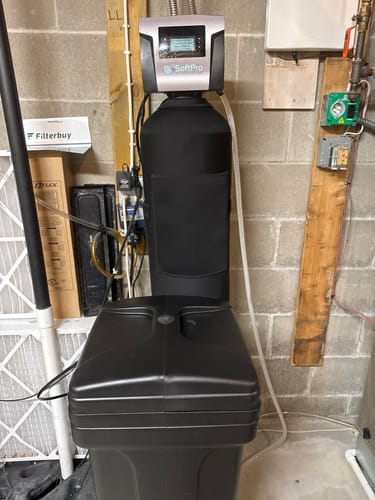
Before you spend money on a replacement, it's worth running a few simple checks that can tell us exactly what's failing and why. Start with a water test—iron levels above 0.3 ppm point directly to a performance issue worth investigating.
Next, check your water pressure; a noticeable drop usually means clogged media, not a broken unit.
Listen during regeneration cycles for gurgling sounds, which often signal an air draw misconfiguration.
Review your programming settings to confirm they match your household's actual water demand—wrong settings quietly sabotage performance.
Finally, look for rust stains, yellow-tinted water, or metallic taste. These visible clues help us distinguish between a configuration problem we can fix and a component that's genuinely failed.
Regeneration Settings and pH Errors That Fake Filter Failure
How often do we blame the filter itself when the real culprit is a misconfigured regeneration cycle or a pH imbalance throwing the whole system off?
Incorrect regeneration settings cause insufficient cycling, letting iron slip through untreated—mimicking outright filter failure. If your pH strays outside the 6.5–8.5 range, efficiency drops fast, making functional components appear broken.
Here's what we recommend: test iron levels and pH regularly. Catching programming errors early prevents those telltale rusty stains and metallic tastes before they escalate.
Also, adjust regeneration frequency based on actual household usage—media saturation is easily mistaken for a dead system.
Don't overlook the brine tank either. Salt bridges block brine draw, disrupting regeneration entirely. Solve that first before assuming anything's mechanically wrong.
Iron Filter Settings to Correct Before Spending Money on Repairs
Most iron filter problems trace back to settings we can tweak in minutes—not parts we need to replace.
Start by matching your regeneration cycle duration to your actual household water usage; a misaligned schedule starves the system of proper cleaning time.
A misaligned regeneration schedule starves your iron filter of proper cleaning time—match the cycle to actual usage.
Next, verify your pH sits between 6.5 and 8.5—anything outside that range quietly sabotages filtration efficiency.
Check the injector assembly for mineral buildup, since even partial clogs block brine draw completely.
Monthly brine tank inspections prevent salt bridges from interrupting regeneration cycles before we even notice a problem.
Finally, calibrate your salt dosage and regeneration frequency to real usage patterns, not factory defaults.
These adjustments cost nothing but attention—and they eliminate most "failures" before a repair technician ever arrives.
When DIY Fixes Fail and Iron Filter Replacement Is the Answer
Sometimes every adjustment we make hits a wall—and that wall tells us something important. When cleaning injectors, recalibrating settings, and clearing clogged media still leave us with rust stains and metallic-tasting water, the filter's treatment capacity may be genuinely exhausted—not misconfigured.
Persistent air injector failures, saturated media, and recurring programming errors despite regular maintenance are signals worth taking seriously. Continued repairs on a failing system can quietly cost more than a replacement would.
Here's the smarter move: consult a water treatment professional before committing either direction. They'll assess whether we're chasing diminishing returns or if targeted repairs still make sense.
When the data points toward replacement, acting decisively protects water quality and prevents further degradation from a system that's simply reached its operational limit.
Frequently Asked Questions
What Are Common Problems With Iron Filters?
We've found that common iron filter problems include clogged injectors, salt bridges, media saturation, incorrect regeneration programming, and iron bacteria buildup—each quietly sabotaging your water quality and system performance if left unchecked.
What Is the Life Expectancy of an Iron Filter?
Iron filters typically last 5 to 15 years, but we can extend that lifespan considerably with regular maintenance, quality media replacements every 5 to 7 years, and monitoring our water's iron levels closely.
Why Is My Iron Filter Not Working?
Your iron filter's likely failing due to clogged injectors, incorrect timer settings, or misconfigured regeneration cycles. We'd recommend testing your water's iron levels first—if they're above 0.3 ppm, improper programming's probably your culprit, not a defective unit.
How Often Should Your Iron Filter Regenerate?
We recommend regenerating your iron filter every 3 to 4 days, though higher iron levels or increased water usage may require more frequent cycles to prevent media saturation and maintain peak filtration performance.






