


![SoftPro™ Chlorine+ Carbon Whole House Water Filter to Remove PFAS, Chlorine, Chloramine & Pesticides [City Water Filters Series]](http://www.softprowatersystems.com/cdn/shop/files/SoftPro_Whole_House_Carbon_Filter_with_Spin_Down_Water_Filter.webp?v=1783547361&width=140)


 855-683-8488


Is Your Iron Filter Too Small? Here's Exactly How to Know — and What to Do About It

If your iron filter's too small, you'll notice rust stains, a metallic taste, and appliances working harder than they should. An undersized system gets pushed beyond its limits fast. Proper sizing depends on your peak flow rate — smaller homes need filters rated for 5-7 GPM, larger homes up to 15 GPM — plus accurate iron measurement and seasonal demand. Stick with us, and we'll walk you through exactly how to size your system right.
Key Takeaways
- Rust stains, metallic taste, and appliances working harder are clear signs your iron filter is undersized and struggling.
- Iron levels fluctuate up to 25% seasonally, so one-time testing may not reveal your filter's true sizing needs.
- Peak flow rate determines filter size; smaller homes need 5–7 GPM, while larger homes may require up to 15 GPM.
- Every 1 ppm of iron requires 3–6 grains per gallon of media capacity to ensure proper daily filtration performance.
- Seasonal spikes from spring runoff and autumn rains can overwhelm filters sized only for average iron conditions.
Is Your Iron Filter Actually Too Small?

When an iron filter's too small for your home's demands, the signs show up fast — rust stains creeping across your sinks, a metallic bite to your drinking water, and appliances working harder than they should.
These aren't minor inconveniences; they're warnings that your system's struggling under real demand.
An undersized iron filter isn't just inconvenient — it's a system pushed past its limits, and it's telling you so.
Here's what most people miss: sizing isn't just about average usage. Your filter needs to handle peak flow rates — anywhere from 5 to 7 GPM for smaller households, up to 15 GPM for larger ones.
Factor in seasonal iron spikes of up to 25%, and an undersized system gets overwhelmed fast.
The fix starts before you buy anything — test your water first, then size accordingly.
Everything else is guesswork.
How Much Iron Is Really in Your Water?
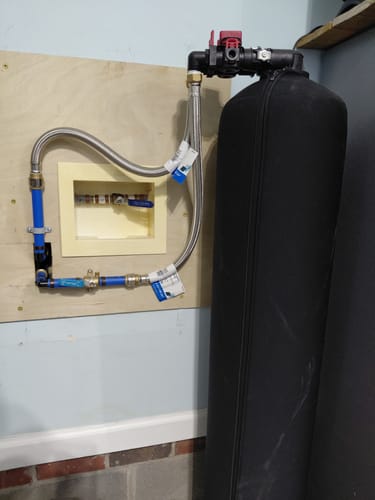
How much iron is actually lurking in your water? You might be surprised. Many homeowners assume their levels are manageable, but testing tells a different story.
Here's what accurate measurement reveals:
- Iron levels fluctuate up to 25% seasonally, making one-time testing unreliable.
- Levels appearing manageable at 1 ppm often test considerably lower — sometimes just 0.09 ppm.
- Every 1 ppm of iron demands 3-6 grains per gallon compensation in your filter sizing.
- Competing contaminants discovered during testing can dramatically affect filtration performance.
We can't emphasize this enough — guessing your iron levels leads to undersized systems and chronic water quality problems.
Precise lab testing isn't optional; it's the foundation of every sizing decision you'll make going forward.
Does Your Iron Filter Handle Your Home's Peak Flow Rate?
Think about the last time everyone in your house showered, ran the dishwasher, and did laundry all at once — that's your peak flow rate in action, and it's the real test of whether your iron filter can keep up.
Smaller households typically need filters rated for 5-7 GPM, while larger homes can demand up to 15 GPM.
When your filter can't match that demand, untreated water slips through, leaving rust stains and that unmistakable metallic taste.
We've seen it happen repeatedly — homeowners blame their water source when the real culprit is an undersized filter getting overwhelmed during high-usage moments.
Know your household's peak flow rate before purchasing, and you'll avoid the frustration of a system that fails exactly when you need it most.
Is Your Filter's Media Capacity Enough for Your Daily Iron Load?
Most homeowners zero in on flow rate and forget entirely about media capacity — and that's where iron problems quietly sneak back in.
Your filter's media must handle your daily iron load, not just your momentary demand.
Here's how to think about it:
- Calculate your daily water usage in gallons
- Multiply by your iron concentration in ppm
- Add 3–6 grains per gallon compensation for every 1 ppm of iron present
- Verify your filter's rated capacity exceeds that number
Undersized media gets overwhelmed fast, letting iron slip through and leaving rust stains and metallic tastes behind.
Worse, premature media exhaustion drives up maintenance costs considerably.
We always recommend investing in properly sized media upfront — because chasing iron problems after installation costs far more than getting it right the first time.
Are Seasonal Iron Spikes Overwhelming Your Iron Filter?
Seasonal iron spikes catch a lot of homeowners completely off guard.
Spring runoff and heavy rainfall can swing iron levels by as much as 25%, pushing undersized filters past their breaking point. You'll notice it in the rust stains that suddenly reappear after months of clean water.
Spring runoff can spike iron levels by 25% — enough to push undersized filters past their breaking point.
Autumn rains create a second wave, hitting systems that never fully recovered from spring.
That's why we recommend testing your water at least quarterly — not annually.
You need data that reflects seasonal peaks, not just average conditions. If your filter was sized around typical iron levels, it's almost certainly struggling during those high-demand windows.
Size for your worst-case scenario, and your plumbing, fixtures, and appliances stay protected year-round, not just when conditions are favorable.
Frequently Asked Questions
How Big of an Iron Filter Do I Need?
We recommend sizing your iron filter by adding 3-6 gpg of capacity for every 1 ppm of iron detected, while ensuring it handles your household's peak demand of 5-15 GPM.
What if My Furnace Filter Is Too Small?
If your furnace filter's too small, we're letting unfiltered air sneak past it, forcing the furnace to work harder, spiking energy costs, and degrading air quality. Replace it with the correct size immediately.
What Are Common Problems With Iron Filters?
We've seen iron filters fail due to undersized capacity, poor media selection, low pH levels, and skipped testing. These issues cause rust stains, metallic-tasting water, premature wear, and costly maintenance that's completely avoidable.
Can I Use a 1 Inch Filter Instead of 4?
We don't recommend it. A 1-inch filter severely restricts flow, leaving your system struggling to handle daily iron loads, causing rust stains, metallic tastes, and premature wear on your filtration components.






