


![SoftPro™ Chlorine+ Carbon Whole House Water Filter to Remove PFAS, Chlorine, Chloramine & Pesticides [City Water Filters Series]](http://www.softprowatersystems.com/cdn/shop/files/SoftPro_Whole_House_Carbon_Filter_with_Spin_Down_Water_Filter.webp?v=1783547361&width=140)


 855-683-8488


Low pH Well Water and Iron Filters: Can a Single System Realistically Handle Both Problems?

Low pH and high iron almost always show up together in well water, and yes, some single systems can tackle both — but it depends on your water chemistry. A system like the Fleck 2510AIO can handle iron up to 30 ppm while raising pH, but it's not a universal fix. Severe cases often need separate treatment stages to work correctly. Stick with us, and we'll help you figure out exactly what your water needs.
Key Takeaways
- Low pH and high iron commonly occur together in well water, as acidic conditions increase iron's solubility and concentration.
- Standard iron filters remove ferrous and ferric iron but typically cannot raise pH on their own.
- Certain combined systems, like the Fleck 2510AIO, can handle both issues, managing iron up to 30 ppm while raising pH.
- Separate treatment stages offer greater precision, with neutralizers raising pH first so iron filters perform optimally and last longer.
- Water test results measuring pH and total iron levels are essential before choosing a single or dual-stage treatment system.
Why Do Low pH and High Iron Show Up Together in Well Water?

When you pull water from a well, low pH and high iron levels tend to show up as a package deal — and there's a good reason for that. Groundwater moves through iron-rich soils and rocks — particularly sandstone and limestone formations — leaching minerals as it travels.
Well water doesn't pick favorites — where low pH goes, high iron levels usually follow.
Acidic water accelerates this process because low pH increases iron's solubility, making it easier for the mineral to dissolve and stay suspended in your water supply.
That dissolved iron typically exists as ferrous iron, which remains invisible in acidic conditions. Once pH rises, it converts to ferric iron and precipitates — creating that familiar rust-colored staining.
Understanding this relationship matters because treating one problem without addressing the other leaves your system incomplete and your water quality compromised.
What Dual-Purpose Iron Filters Do: and Don't Do?
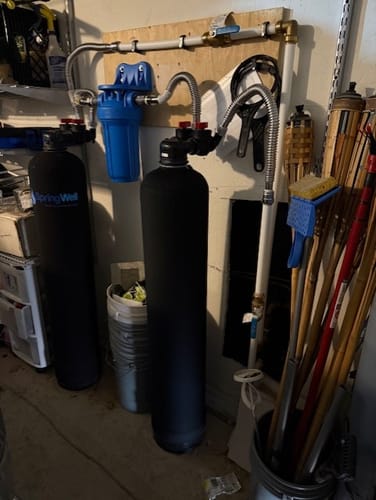
Dual-purpose iron filters do a solid job of tackling ferrous and ferric iron — but they're not the complete solution many homeowners assume them to be. They oxidize and filter out iron effectively, yet they typically won't raise your water's pH on their own.
Some models incorporate neutralizing media, but that's secondary to their core function.
Here's what matters: if your water is acidic, an iron filter alone leaves that problem untreated. You'll still face corroding pipes and compromised water quality.
The fix? Pair your iron filter with a dedicated acid neutralizer — calcite-based systems work particularly well here.
For homes dealing with both issues simultaneously, a multi-stage approach isn't optional; it's the only way to genuinely solve both problems.
How to Read Your Water Test and Choose the Right System
Your water test report holds the answers — but only if you know what to look for. Focus on three critical parameters: pH, total iron (mg/L), and iron type — ferrous or ferric.
| Parameter | Concerning Range | Recommended Action |
|---|---|---|
| pH | Below 7.0 | Add acid neutralizer |
| Total Iron | Above 2–5 mg/L | Install specialized iron filter |
| Iron Type | Ferrous (dissolved) | Oxidation-based filtration needed |
| Iron Type | Ferric (particulate) | Sediment/mechanical filtration works |
| Combined Issues | Low pH + high iron | Multi-stage system required |
When you're seeing both low pH and elevated iron, a single-stage system won't cut it. We strongly recommend consulting a water treatment professional — they'll translate your exact numbers into a precisely matched, multi-stage solution.
When One Filter Can Realistically Treat Both Iron and Low pH
Most water problems don't arrive one at a time — and once you've identified both low pH and elevated iron in your test results, the natural next question is whether a single system can tackle both. The good news is that it's genuinely possible under the right conditions.
Systems like the Fleck 2510AIO combine iron removal media with calcite-based pH neutralization in a sequenced, multi-stage process. That sequencing matters — iron oxidation happens first, then pH correction follows.
Done correctly, this approach can handle iron concentrations up to 30 ppm while raising acidic pH to safe levels.
The caveat? Your water chemistry has to fall within the system's operational range. That's why reading your test results carefully, as we covered previously, directly determines whether a combined system is realistic for your situation.
When You Need Separate Treatment Stages Instead
When the conditions aren't right for a combined system, separate treatment stages aren't just a fallback — they're the smarter call. Severely low pH paired with high iron demands a sequenced approach — one that protects each component and maximizes overall performance.
Here's why staging matters:
- Acid neutralizers raise pH first, creating conditions where iron filters can actually function as designed.
- Acidic water degrades iron filter media faster, shortening lifespan and reducing efficiency.
- Treating pH separately eliminates interference between the two distinct chemical processes.
- A neutralizer-first sequence protects your downstream iron filtration investment long-term.
We're talking about precision over convenience. When both problems are aggressive, forcing one filter to handle everything compromises both outcomes.
Sequential treatment isn't overcomplicated — it's engineered thinking applied to real water chemistry.
Frequently Asked Questions
What Is the Best Filter for Well Water With Iron?
We recommend the Fleck 2510AIO Katalox Light iron filter—it's our top pick for removing up to 30 ppm of iron, 15 ppm of manganese, and 10 ppm of sulfur from your well water.
How Do You Fix Low pH in Well Water?
We can fix low pH in well water by installing a neutralizing filter with calcite media, using a chemical feed pump, or testing regularly to tailor the right treatment for our specific water quality needs.
What Are Common Problems With Iron Filters?
We'll find that iron filters require regular maintenance, media replacement every 6–8 years, and pre-filtration when sediment's high. They also struggle with low pH levels, often demanding a multi-stage setup for thorough treatment.
Is It Okay to Drink Well Water With Iron in It?
We can drink well water with iron in moderate amounts since it's a necessary nutrient, but levels exceeding 0.3 mg/L cause metallic taste and staining, while other contaminants accompanying iron create more serious safety concerns.






