


![SoftPro™ Chlorine+ Carbon Whole House Water Filter to Remove PFAS, Chlorine, Chloramine & Pesticides [City Water Filters Series]](http://www.softprowatersystems.com/cdn/shop/files/SoftPro_Whole_House_Carbon_Filter_with_Spin_Down_Water_Filter.webp?v=1783547361&width=140)


 855-683-8488


Why Manganese Dioxide Iron Filter Media Outperforms the Competition — And What the Maintenance Actually Looks Like

Manganese dioxide iron filter media outperforms the competition because it doesn't just trap contaminants — it chemically transforms them. It converts dissolved iron, manganese, and hydrogen sulfide into filterable solids, achieving over 80% iron removal purity. Solid media lasts decades, while coated alternatives wear out in roughly five years. Maintenance is straightforward, requiring backwashing every one to three weeks. Stick with us, and we'll walk you through everything you need to know.
Key Takeaways
- Solid manganese dioxide media lasts decades, outperforming coated alternatives that require replacement every five years, reducing long-term costs significantly.
- Manganese dioxide oxidizes dissolved iron, manganese, and hydrogen sulfide, achieving over 80% iron purity without relying on added chemicals.
- Higher media density of 120–140 lbs/ft³ delivers greater oxidizing capacity and supports flow rates of 8–20 GPM consistently.
- Backwashing every one to three weeks at 50–70 m³/m²/hr effectively clears accumulated particles and maintains optimal filter performance.
- A pressure drop increase of 1–3 PSI signals maintenance is needed, preventing reduced flow rates and degraded filtration performance.
What Makes Manganese Dioxide Filter Media More Effective Than Other Options?

When it comes to removing iron from your water, not all filter media are created equal — and manganese dioxide stands out for good reason.
We're talking about a media that achieves over 80% purity while converting ferrous iron to ferric iron more effectively than coated alternatives. That distinction matters — coated media simply can't match the conversion efficiency solid manganese dioxide delivers.
Its higher density, ranging from 120 to 140 lbs/ft³, isn't just a spec on paper; it directly translates to longer-lasting performance and fewer replacement cycles.
While coated media demands replacement every five years, solid manganese dioxide can last decades.
If you're serious about iron removal, understanding why the media itself makes the difference is where mastery begins.
How Manganese Dioxide Removes Iron, Manganese, and Hydrogen Sulfide
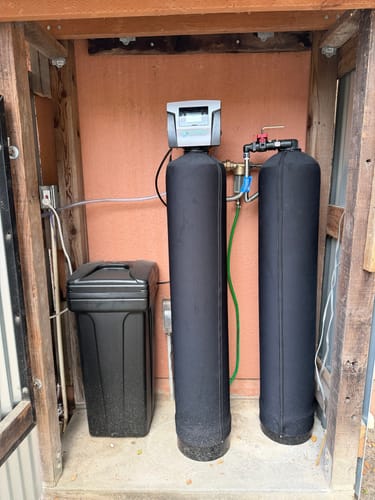
Manganese dioxide doesn't just filter water — it transforms it at a chemical level. Here's exactly what happens inside the media:
Manganese dioxide doesn't just filter water — it rewires it, triggering precise chemical reactions deep inside the media.
- Fe²⁺ oxidation — Dissolved iron converts into solid precipitates, making removal straightforward.
- Mn²⁺ oxidation — Dissolved manganese follows the same pathway, locking it into filterable solids.
- H₂S elimination — Hydrogen sulfide oxidizes into sulfate, destroying those rotten-egg odors permanently.
- No chemicals required — The media drives all three reactions catalytically, keeping costs and environmental impact low.
What we find remarkable is the precision involved. The media performs at its best between pH 5.5 and 9.0, handling iron concentrations up to 10 ppm without chemical regeneration.
That's a genuinely capable system working silently in your favor.
Solid Manganese Dioxide Media vs. Coated Media: Which Type Lasts Longer?
Not all manganese dioxide filter media are built the same, and that distinction matters enormously when you're investing in a long-term water treatment solution. Solid manganese dioxide media lasts decades — coated media needs replacement roughly every five years.
That's not a minor difference; it's a fundamental performance gap.
Here's why: solid media's density runs 120–140 lbs/ft³, giving it far more oxidizing capacity than a thin coating ever could. It handles flow rates of 8–20 GPM without the pressure drop penalties that plague coated alternatives over time.
And when converting ferrous iron to ferric iron, solid media consistently outperforms its coated counterpart.
Both types require backwashing every one to three weeks, but solid media retains its effectiveness long after coated media has surrendered its edge.
What Manganese Dioxide Filter Maintenance Actually Requires
Keeping a manganese dioxide filter running at peak performance isn't complicated, but it does demand consistency.
Here's what we've found the maintenance routine actually requires:
- Backwash every 1–3 weeks at 50–70 m³/m²/hr to flush accumulated particles and restore flow.
- Monitor pressure drops — a 1–3 PSI increase signals it's time to act before efficiency suffers.
- Verify chemical oxidation — if you're running chlorinated or ozone systems, confirm they're properly enhancing iron removal.
- Inspect plumbing and ventilation regularly, especially air injection components, to catch reliability issues early.
Miss these steps, and you'll face reduced flow rates and degraded performance.
Neglect the maintenance routine, and your system will pay the price with sluggish flow and failing performance.
Stay consistent, and the system rewards you with long-term, reliable water treatment.
Why the Wrong Iron Filter Media Costs More Than You Think
Consistency in maintenance only gets you so far if you started with the wrong media in the first place.
Coated media alternatives need replacement every five years — and those costs compound fast. Add higher pressure drops, frequent backwashing, and ongoing chemical treatments, and you're paying considerably more than you bargained for.
Solid manganese dioxide flips that equation. Its superior flow rates of 8–20 GPM minimize downtime, and its efficient conversion of ferrous to ferric iron reduces your chemical dependency.
The upfront cost feels heavier, but the total cost of ownership tells a different story. Decades of reliable performance versus five-year replacement cycles — that math isn't close.
Choosing the wrong media doesn't just cost money; it costs you confidence in your system.
Frequently Asked Questions
Do Iron Manganese Filters Work?
Yes, they work remarkably well. We've seen manganese dioxide filters convert dissolved iron into insoluble particles that we can easily remove, handling up to 10 ppm without additional chemicals — keeping your water clean and costs low.
What Is the Best Media for Manganese Filter?
We recommend solid manganese dioxide media, like Pro-OX or Filox. It's over 80% pure, lasts decades, and handles flow rates up to 20 GPM—outperforming coated alternatives in both longevity and iron removal efficiency.
What Is the Best Iron Filter Media?
We recommend solid manganese dioxide media, like Pro-OX or Filox, for iron filtration. With over 80% purity and a lifespan spanning decades, it converts ferrous iron into insoluble ferric iron with unmatched efficiency.
How Long Does a Manganese Filter Last?
With proper maintenance, solid manganese dioxide media like Pro-OX and Filox can last decades—far outlasting coated media alternatives that typically need replacement every five years. That's a massive long-term value advantage.






