


![SoftPro Chlorine+ Carbon Whole House Water Filter to Remove PFAS, Chlorine, Chloramine & Pesticides [City Water Filters Series]](http://www.softprowatersystems.com/cdn/shop/files/SoftPro_Whole_House_Carbon_Filter_with_Spin_Down_Water_Filter.webp?v=1780515157&width=140)
![SoftPro Iron Filter - Iron Master AIO - Best Iron Filter for Well Water [Air Injected Water Filter / Katalox]](http://www.softprowatersystems.com/cdn/shop/files/SoftPro_AIO_Iron_Master_Iron_Filter_Main.webp?v=1772123747&width=140)


 855-683-8488


Manganese Dioxide Iron Filter Media Maintenance: How Often to Regenerate It and the Exact Process to Follow

Manganese dioxide filter media removes dissolved iron and manganese by oxidizing them into particles your system can capture. You'll need to regenerate it when iron exceeds 5 ppm, you notice rust staining, or detect a metallic taste. The process involves backwashing, settling the media bed, and conducting a brine rinse. Regeneration frequency ranges from every 1–3 days for high iron levels to monthly for lower concentrations. Stick around — there's a lot more to uncover.
Key Takeaways
- Regenerate manganese dioxide media every 1–3 days when iron exceeds 5 ppm, or monthly when levels stay below 1 ppm.
- Begin regeneration by backwashing the media bed to flush out accumulated iron, manganese, and other trapped contaminants.
- After backwashing, allow the media bed to settle for 30–60 minutes before proceeding with the next regeneration step.
- Perform a brine rinse following settlement to fully restore the media's filtration and oxidation capabilities.
- Add oxidizing agents during regeneration, then monitor pressure readings and water quality to confirm successful media restoration.
How Manganese Dioxide Filter Media Removes Iron and Manganese

Manganese dioxide filter media tackles dissolved iron and manganese through a straightforward chemical process: oxidation. The media reacts with these dissolved metals, converting them from their soluble state into insoluble particles that the filter can physically capture and remove.
Here's what makes this process work: oxygen. Whether introduced through air exposure or chemical additives, oxygen is the essential catalyst that drives the oxidation reaction within the media. Without it, the process stalls.
What's particularly impressive is the media's adsorptive capacity. It effectively captures iron concentrations exceeding 0.3 mg/L and manganese concentrations of 0.05 mg/L—the thresholds where water quality becomes problematic.
Understanding this mechanism matters because it directly informs how we maintain the media to keep it performing at its best.
When Your Manganese Dioxide Media Actually Needs Regeneration?
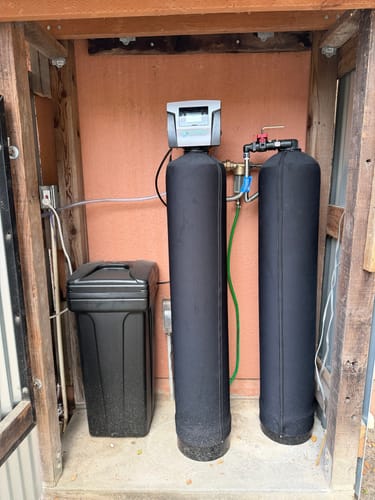
How do we determine when our manganese dioxide media is crying out for regeneration? Watch for these clear signals: visible rust staining, a metallic taste in your water, or iron concentrations exceeding 5 ppm. At that threshold, we're looking at regeneration cycles every 1-3 days—serious business.
Regular water quality testing isn't optional; it's our compass. Without knowing exact iron and manganese levels, we're fundamentally guessing, and guessing costs us efficiency and money.
Regular water quality testing isn't optional—it's our compass for avoiding costly guesswork.
Running combo manganese-iron systems? Expect weekly regeneration minimum under high concentrations.
And here's what we must never forget—neglecting regeneration doesn't just hurt performance temporarily. It slashes our media's lifespan from a healthy 3-5 years down dramatically, triggering expensive repairs or full replacements we could've easily avoided.
Signs Your Manganese Dioxide Media Needs Replacement, Not Regeneration
So we've covered when regeneration is necessary—but what happens when regeneration simply isn't enough anymore? Knowing the difference saves you from wasted effort and compromised water quality.
Watch for these replacement indicators:
- Persistent sulfur or rotten egg odors — the media's oxidizing capacity is depleted beyond recovery
- Rust stains on fixtures or laundry — iron is breaking through despite regeneration attempts
- Significant pressure drops — severe fouling that backwashing can't resolve
- Irregular or ineffective regeneration cycles — a reliable signal the media has reached its functional limit
Most manganese dioxide media lasts 3–5 years, though high-manganese environments accelerate deterioration.
If you're experiencing multiple symptoms simultaneously, replacement isn't optional—it's overdue. Continuing to regenerate exhausted media only delays the inevitable while your water quality suffers.
How to Regenerate Manganese Dioxide Media, Step by Step
Regenerating your manganese dioxide media correctly makes the difference between a filter that performs and one that just takes up space.
Here's exactly what to do:
Backwash first. Flush accumulated iron and manganese from the media bed thoroughly. This clears the path for everything that follows.
Let it settle. Give the bed 30-60 minutes to stabilize before moving forward. Rushing this step undermines your results.
Run a brine rinse. This restores the media's filtration capabilities and completes the regeneration cycle.
Add oxidizing agents. Incorporating specialized oxidizers during regeneration boosts the media's ability to attack contaminants more aggressively.
Check your numbers. Monitor pressure readings and water quality post-regeneration.
If iron exceeds 5 ppm, you'll want to repeat this process every one to three days.
How Iron Concentration and Usage Rate Determine Your Regeneration Schedule
Two key variables determine how often you'll need to regenerate your manganese dioxide media: iron concentration and household water usage. Getting this balance right prevents clogged systems and unnecessary maintenance costs.
Here's what the data tells us:
- Above 5 ppm iron: Regenerate every 1–3 days to maintain peak performance
- Below 1 ppm iron: Monthly regeneration cycles are sufficient
- High household usage: Increase frequency during peak seasons, particularly summer
- Regular water testing: Essential for accurately calibrating your schedule to actual conditions
Ignoring these variables is where most homeowners go wrong.
Your system's effectiveness depends entirely on matching regeneration frequency to real-time conditions—not guesswork. Test your water consistently, track your usage patterns, and adjust accordingly.
Frequently Asked Questions
How Often Should an Iron Filter Regenerate?
We recommend regenerating your iron filter every 1-3 days when iron exceeds 5 ppm. For moderate levels of 3-5 ppm, we'd adjust to weekly or biweekly cycles based on your usage and seasonal changes.
How Often Should I Replace Iron Filter Media?
We recommend replacing your iron filter media every 4-6 years, though high iron concentrations above 30 ppm can shorten that window. With consistent backwashing and maintenance, you'll potentially extend media life up to 9 years.
How Long Does a Manganese Filter Last?
Manganese filters typically last 6–8 years under standard conditions. In high iron or manganese environments, we're looking at 3–5 years. With regular backwashing and diligent maintenance, you can stretch that lifespan to 9 years.
How to Maintain an Iron Filter?
We'll keep your iron filter running strong by backwashing every 2-4 weeks, regenerating every 1-3 days for high iron levels, replacing pre-filters every 3-6 months, and scheduling annual professional inspections.



