


![SoftPro™ Chlorine+ Carbon Whole House Water Filter to Remove PFAS, Chlorine, Chloramine & Pesticides [City Water Filters Series]](http://www.softprowatersystems.com/cdn/shop/files/SoftPro_Whole_House_Carbon_Filter_with_Spin_Down_Water_Filter.webp?v=1783547361&width=140)


 855-683-8488


Manganese in Well Water: When Your Iron Filter Can Handle It (and When It Absolutely Can't)

Your iron filter can handle manganese when levels stay below 0.05 mg/L and your water's pH sits above 6.5—dissolved iron actually helps oxidize manganese into filterable particles. But once manganese climbs higher or your pH drops, that filter starts losing ground fast. You'll notice black stains, metallic taste, and darkening laundry. Knowing which type of manganese you're dealing with—dissolved or oxidized—makes all the difference, and there's a lot more to unpack here.
Key Takeaways
- Iron filters handle manganese effectively when levels stay below 0.05 mg/L and water pH remains above 6.5.
- Dissolved iron in water helps oxidize manganese into solid particles, making it filterable by iron filters.
- Iron filters perform best against manganese at pH above 8, ensuring optimal oxidation conditions.
- Metallic taste, dark stains, or water tests showing manganese above 0.05 mg/L signal your iron filter is struggling.
- Severe manganese concentrations require advanced treatments like chlorination, manganese greensand filters, or reverse osmosis systems.
Dissolved vs. Oxidized Manganese: What Every Well Owner Needs to Know

Manganese in well water isn't a one-size-fits-all problem — it actually shows up in two distinct forms, and knowing which one you're dealing with changes everything about how you treat it.
Dissolved manganese, or manganous manganese, moves through water invisibly — like sugar or salt — and requires precipitation followed by filtration, often at higher pH levels, to remove it effectively. Water softeners can also help here.
Oxidized manganese, or manganic manganese, behaves completely differently. It exists as solid particles, leaves those telltale black stains, and responds best to straightforward filtration.
Here's why this matters: misidentifying your manganese type means choosing the wrong treatment. Regular well water testing isn't optional — it's the foundation of any strategy that actually works.
Black Stains, Metallic Taste: How Manganese Shows Up in Well Water
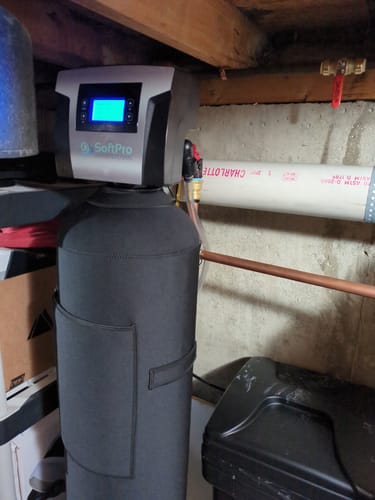
Once manganese takes hold in your well water, it makes itself known in ways that are hard to ignore. Those stubborn black stains on your fixtures and laundry? That's oxidized manganese announcing its presence. The metallic taste ruining your morning coffee? Also manganese.
What's worth understanding is that manganese rarely travels alone. It typically shows up alongside iron, since both metals leach from the same deep rock formations your well taps into. That pairing matters enormously when you're choosing a treatment solution.
The EPA sets a health advisory limit at 0.3 mg/L, but aesthetic problems—staining, odor, taste—start appearing at just 0.05 mg/L.
When Your Iron Filter Can Handle Manganese on Its Own
Depending on what's in your water, you mightn't need a separate manganese solution at all. If your manganese levels stay below 0.05 mg/L and your pH runs above 6.5, your iron filter can likely pull double duty.
Here's why: dissolved iron actually helps oxidize manganese, converting it into solid particles the filter can capture. It's a chemical teamwork situation that works in your favor.
Dissolved iron doesn't just cause problems—it actually helps oxidize manganese, turning it into solid particles your filter can trap.
The catch? pH matters enormously. For your iron filter to consistently knock out manganese alongside iron, you'll want pH above 8 ideally.
You'll also need to stay committed to regular backwashing and media replacement—a neglected filter loses effectiveness fast.
Get those variables right, and one well-maintained system handles both problems efficiently.
Signs Your Iron Filter Is Losing the Battle With Manganese
There are 3 telltale signs your iron filter is losing ground against manganese: a metallic taste or smell creeping into your water, rust-colored or dark brown stains appearing on fixtures and laundry, and water tests showing manganese climbing past 0.05 mg/L.
When you spot these warning signs, your filter's either exhausted or simply wasn't designed to handle manganese long-term. Remember, filters optimized for iron often struggle when manganese enters the equation — especially as concentrations rise over time.
That's why regular water testing isn't optional; it's your early-warning system. Increasing manganese readings across consecutive tests tell you the filter needs maintenance or replacement before the problem compounds.
Don't wait for stained laundry or off-tasting water to confirm what your test results are already signaling.
Manganese Your Iron Filter Can't Remove: Treatment Options That Work
When an iron filter waves the white flag on manganese, you've got targeted solutions that actually work. Let's break down your options by manganese type.
For dissolved manganous manganese, water softeners handle it surprisingly well.
But manganic manganese—those stubborn solid particles causing black water and staining—needs oxidation first, then filtration.
Chlorination's your heavy hitter here. Give it a mandatory 20-minute contact time before filtration, and you'll see real results.
For moderate levels, manganese greensand filters work beautifully, though they demand regular potassium permanganate regeneration to stay effective.
When concentrations get serious, escalate your approach.
Reverse osmosis systems and catalytic carbon filtration tackle what oxidizing filters can't.
The key is matching your specific manganese chemistry to the right treatment—anything less leaves you fighting a losing battle.
Frequently Asked Questions
How to Remove Manganese and Iron From Well Water?
We'll tackle both by oxidizing them first—chlorination works well—then filtering the solids out. For manganese, we need higher pH levels and greensand or oxidation filters to hit those safe concentration targets.
What Causes High Levels of Manganese in Well Water?
High manganese levels come from groundwater dissolving minerals in rock formations. Low dissolved oxygen makes it worse, keeping manganese in its dissolved state—especially in deep wells where pH shifts accelerate the process considerably.
What Kills Manganese in Water?
We kill manganese in water using oxidizers like chlorine, ozone, or potassium permanganate. These transform dissolved manganese into solid particles we can then filter out—but we'll need a pH above 8 for ideal results.
What Is the Best Filter to Remove Iron From Well Water?
For most well water, we'd recommend an oxidizing filter—it's versatile, handles both dissolved and oxidized iron effectively, and tackles higher concentrations. If maintenance is your concern, Birm filters offer a low-maintenance alternative worth exploring.






