


![SoftPro™ Chlorine+ Carbon Whole House Water Filter to Remove PFAS, Chlorine, Chloramine & Pesticides [City Water Filters Series]](http://www.softprowatersystems.com/cdn/shop/files/SoftPro_Whole_House_Carbon_Filter_with_Spin_Down_Water_Filter.webp?v=1783547361&width=140)


 855-683-8488


Manganese Removal Rate From Well Water: What to Realistically Expect From an AIO Iron Filter

When conditions are right, we've seen AIO iron filters remove over 90% of dissolved manganese from well water. That means no more black stains on fixtures, no more metallic taste, and genuinely cleaner water straight from the tap. The key word, though, is conditions — pH, temperature, and manganese concentration all play a role in how well these systems perform. Stick with us, and we'll walk you through everything you need to know.
Key Takeaways
- A well-maintained AIO iron filter typically removes over 90% of dissolved manganese when conditions are optimal.
- AIO filters work best at manganese concentrations below 2 mg/L; higher levels produce inconsistent removal results.
- Ideal water pH of 7.0–8.0 and temperatures above 40°F are critical for effective manganese oxidation.
- Air injection converts dissolved manganese into solid particles, which the filter media traps and backwashing removes.
- For manganese levels exceeding 2 mg/L, alternatives like manganese greensand filters or chemical oxidation are recommended.
What Manganese Levels Can an AIO Iron Filter Realistically Handle?

When it comes to AIO iron filters, they're most effective at tackling manganese levels up to around 2 mg/L. Within that range, these systems shine by converting dissolved manganous manganese into precipitated manganic manganese, which the filter then captures during backwashing.
AIO iron filters perform best when manganese stays at or below 2 mg/L — beyond that, results can get inconsistent.
Think of it as a two-step knockout: oxidation first, filtration second. When both steps work together under the right conditions — pH above 7 and adequate dissolved oxygen — you'll see consistently strong results.
However, once manganese climbs beyond 2 mg/L, an AIO system alone may struggle to keep up. That's when we'd recommend layering in additional treatment methods.
Knowing your water's exact manganese concentration upfront helps you set realistic expectations and build a system that actually delivers.
How Does an AIO Iron Filter Actually Remove Manganese?
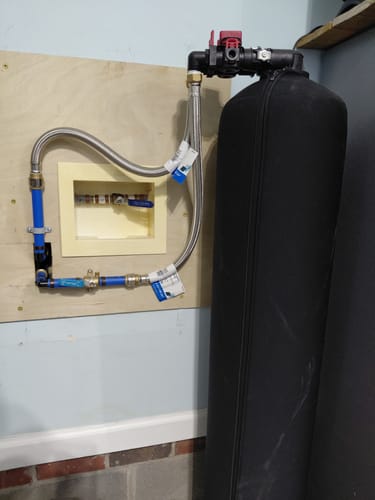
It injects air directly into the water, which triggers a chemical reaction that converts dissolved manganous manganese into a solid, precipitated form.
Think of it like rust forming on metal — the oxygen attacks the dissolved manganese and forces it out of solution.
Once it's precipitated, the manganese can't slip through your plumbing undetected. Instead, the filter media traps those particles during each filtration cycle.
Then, during backwashing, the system flushes those captured solids out, resetting itself for the next round.
For this process to work efficiently, your water's pH needs to sit between 7 and 9.
That range gives dissolved oxygen the right environment to do its job.
Outside that window, oxidation slows — and so does your removal rate.
Which Water Chemistry Conditions Determine AIO Manganese Removal Performance?
Getting consistent manganese removal from an AIO system isn't just about the equipment — it's about what's already in your water. Three conditions determine whether your system thrives or struggles.
| Condition | Ideal Range | Impact if Outside Range |
|---|---|---|
| pH Level | 7.0 – 8.0 | Reduced oxidation efficiency |
| Water Temperature | Above 40°F | Slower oxidation process |
| Manganese Concentration | Below 2 mg/L | System becomes ineffective |
When pH stays between 7.0 and 8.0, dissolved oxygen converts manganous manganese into filterable manganic manganese efficiently. Drop below 40°F, and that conversion slows dramatically. Exceed 2 mg/L of manganese, and you'll need stronger treatment methods entirely. We recommend regularly monitoring these three variables — they're your early warning system for catching performance issues before they compound.
What Manganese Removal Rates Should You Expect From an AIO Filter?
Now that you know what water conditions keep an AIO system running at its best, let's talk numbers — because knowing what removal rates to actually expect helps you judge whether your system is doing its job.
A well-maintained AIO filter typically removes over 90% of dissolved manganese, making it highly effective for concentrations exceeding 0.05 mg/L. Most systems perform best below 2 mg/L — push past that threshold, and you'll likely need supplemental treatment.
Real-world results back this up. Homeowners consistently report the disappearance of black stains on fixtures and that unpleasant metallic taste from their water.
Those aren't minor improvements — they're proof the system is converting dissolved manganese into filterable solids and catching them before they reach your tap.
When Should You Use a Different System Instead of an AIO Filter for Manganese?
AIO filters do a solid job for most households, but there's a point where the water's manganese load simply outpaces what the system can handle.
If your manganese levels exceed 2 mg/L, you're already pushing the AIO's limits. Beyond that threshold, manganese greensand filters become the smarter choice, handling concentrations up to 10-15 mg/L reliably.
Non-dissolved manganese presents another challenge. AIO filters struggle here, making Birm filters a more suitable alternative.
Similarly, if your ferrous iron exceeds 5 mg/L, it actively undermines the AIO's manganese removal efficiency, requiring additional treatment systems alongside it.
For truly stubborn manganese, oxidation using chlorine or potassium permanganate followed by filtration delivers more consistent results.
Knowing your water chemistry precisely helps you match the right system to your actual problem.
Frequently Asked Questions
What Is the Best Filter to Remove Manganese From Water?
We recommend the Air Injection Oxidation (AIO) filter as your best solution for manganese removal. It oxidizes dissolved manganese into filterable particles, effectively tackling concentrations up to 15 mg/L with proper pH management and pretreatment.
What Is Considered a High Level of Manganese in Well Water?
We consider manganese levels above 0.3 mg/L high, raising neurological concerns. Levels exceeding 0.6 mg/L are especially problematic, often requiring treatment solutions like an AIO iron filter to protect your family's health.
How to Remove Manganese and Iron From Well Water?
We recommend using an AIO iron filter, which injects air to oxidize dissolved iron and manganese into solid particles that your filter media then captures, consistently achieving removal rates exceeding 90%.
What Are the Symptoms of Too Much Iron in Well Water?
When your well water's iron levels are too high, you'll notice rust-colored stains, a metallic taste, foul odors, damaged appliances, and discolored laundry—all telltale signs it's time to treat your water.






