


![SoftPro™ Chlorine+ Carbon Whole House Water Filter to Remove PFAS, Chlorine, Chloramine & Pesticides [City Water Filters Series]](http://www.softprowatersystems.com/cdn/shop/files/SoftPro_Whole_House_Carbon_Filter_with_Spin_Down_Water_Filter.webp?v=1783547361&width=140)


 855-683-8488


Manganese vs. Iron in Well Water: Key Similarities, Critical Differences, and Treatment Options

Both iron and manganese sneak into well water as groundwater dissolves minerals from surrounding rock and soil. They share similar symptoms—stained fixtures, clogged pipes, and foul taste—but they're not identical problems. Iron leaves reddish-brown stains, while manganese creates darker discoloration and carries real neurological health risks at higher levels. Treatment options exist for both, but matching the right method to your water chemistry is everything. Stick with us, and we'll show you exactly how.
Key Takeaways
- Both iron and manganese dissolve into groundwater by moving through soil and rock, causing staining, pipe clogging, and reduced appliance lifespan.
- Iron produces reddish-brown stains, while manganese creates darker gray-to-black discoloration and a bitter taste in water.
- Unlike iron, manganese poses neurological health risks, with the EPA setting a Health Advisory level of 0.3 mg/L.
- Testing at a DEP-accredited lab is essential, targeting iron below 0.3 mg/L and manganese below 0.05 mg/L.
- Both minerals respond to similar treatments, including oxidizing filters and aeration, but require matching specific water chemistry to the method.
How Iron and Manganese Get Into Your Well Water

When groundwater moves through soil and rock, it picks up iron and manganese by dissolving the minerals it contacts along the way. This process intensifies in deeper wells, where low-oxygen conditions make both metals far more soluble.
That's why well depth matters—the deeper you go, the more likely you'll encounter elevated concentrations of both contaminants.
Deeper wells mean greater risk—the further groundwater travels underground, the more iron and manganese it collects.
In Pennsylvania's northern and western regions, geological conditions make iron and manganese particularly co-located in aquifers, so finding one often means finding the other.
Once pumped to the surface, dissolved metals meet oxygen and oxidize rapidly, creating that familiar reddish-brown or black discoloration.
Old iron pipes compound the problem further by contributing additional iron through corrosion—meaning your plumbing infrastructure itself can become a contamination source.
What Iron and Manganese Do to Your Water, Plumbing, and Home
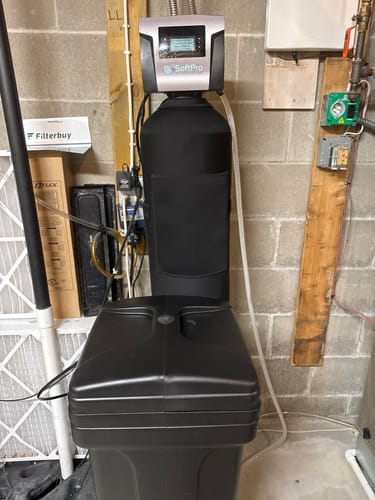
Once iron and manganese enter your water supply, they don't just sit quietly—they stain, clog, corrode, and degrade nearly everything they touch. Their damage compounds over time, hitting your home in three distinct ways:
- Aesthetics: Iron produces reddish-brown stains on fixtures and laundry; manganese creates gray-to-black discoloration and a bitter taste—both detectable well below harmful concentrations.
- Plumbing: Iron bacteria generate gelatinous masses that restrict flow, while both minerals accumulate inside pipes and appliances, quietly strangling efficiency.
- Costs: Reduced appliance lifespan, clogged systems, and mounting repairs make untreated water an expensive problem.
The secondary MCLs—0.3 mg/L for iron, 0.05 mg/L for manganese—exist for good reason. Exceeding them isn't just unpleasant; it's a slow drain on your home's infrastructure.
How Do Iron and Manganese Actually Differ From Each Other?
Though iron and manganese share a lot in common—both lurk in groundwater, both wreak havoc on your plumbing, and both respond to similar treatments—they're not identical twins.
Iron shows up more frequently and leaves that familiar reddish-brown stain, while manganese appears less often but produces darker, black or brown staining that's arguably more unattractive.
Chemically, iron exists as either dissolved ferrous iron or oxidized ferric iron, whereas manganese typically stays dissolved or forms oxidized solids.
The sharpest distinction, though, is health-related. Manganese carries neurological risks at higher concentrations, prompting the U.S. EPA to establish a Health Advisory level of 0.3 mg/L—a threshold iron doesn't trigger. That difference alone makes manganese worth taking more seriously.
How to Test Your Well Water for Iron and Manganese
Knowing the differences between iron and manganese is only useful if you actually know what's in your water—and that means testing.
Since private wells aren't regulated by state or federal standards, the responsibility falls entirely on us. Start by watching for visual clues:
- Yellow or red discoloration typically signals iron
- Dark gray or black staining points to manganese
- Metallic tastes suggest elevated levels of either
But color alone won't cut it. We recommend sending samples to a DEP-accredited laboratory to get precise measurements.
You're looking for iron levels below 0.3 mg/L and manganese below 0.05 mg/L. Also test pH, hardness, and alkalinity—these parameters directly influence which treatment method will actually work.
Regular testing tracks concentration trends over time, keeping your strategy sharp.
Which Treatment Method Actually Works for Your Water?
Now that we recognize what's in our water, how do we actually get rid of it? The answer depends entirely on what your test results reveal. For moderate iron levels between 3 and 10 mg/L, oxidizing filters like manganese greensand or Birm work exceptionally well, handling both contaminants simultaneously.
If concentrations are lower, simple aeration followed by filtration converts dissolved metals into filterable solids efficiently.
At lower concentrations, simple aeration paired with filtration efficiently transforms dissolved metals into solids you can filter out.
Here's what most homeowners overlook: the entry point matters. Point-of-entry systems treat every drop entering your home, eliminating the patchwork approach of individual fixture filters.
Manganese, while less prevalent than iron, actually responds more predictably to treatment—making it slightly easier to address. The key is matching your specific water chemistry to the right system, not guessing.
Frequently Asked Questions
How Do You Treat Iron and Manganese in Well Water?
We treat iron and manganese through oxidation—using chlorination, aeration, or greensand filters—converting dissolved metals into solid particles we can filter out. Testing your water first guarantees we're choosing the most effective treatment method.
What Is the Difference Between Manganese and Iron?
Both occur in well water, but iron's more common and exists in three forms—dissolved, oxidized, and colloidal—while manganese appears at lower levels, causes darker staining, and we'll find it's actually easier to treat.
Why Are Iron and Manganese Undesirable in Water?
Both metals make water taste metallic or bitter, stain fixtures reddish-brown or black, and clog plumbing with bacterial growth. At high levels, manganese's neurological risks make it especially concerning for our long-term health.
What Problem Is Caused by the Presence of Iron and Manganese?
Both iron and manganese cause staining, metallic or bitter tastes, pipe clogs, and laundry damage. We've also found iron promotes bacterial growth, creating gelatinous masses that worsen plumbing maintenance challenges we'll want to address quickly.






