


![SoftPro™ Chlorine+ Carbon Whole House Water Filter to Remove PFAS, Chlorine, Chloramine & Pesticides [City Water Filters Series]](http://www.softprowatersystems.com/cdn/shop/files/SoftPro_Whole_House_Carbon_Filter_with_Spin_Down_Water_Filter.webp?v=1783547361&width=140)


 855-683-8488


Measuring Your Well Pump Output Accurately: The Essential First Step Before Any Iron Filter Purchase

Before buying an iron filter, you need to know your well pump's flow rate in gallons per minute (GPM). This single measurement determines which filter size actually works for your home. Too small, and your iron problem never gets solved. Too large, and you've wasted serious money. We'll show you how to measure your output accurately using a simple bucket-and-timer method, then explain exactly what your results mean for choosing the right system.
Key Takeaways
- Measure your well pump's flow rate in gallons per minute (GPM) before selecting any iron filter to ensure proper sizing.
- Open a nearby faucet, collect water in a 5-gallon bucket, time the cycle, then calculate GPM using: (Gallons ÷ Seconds) × 60.
- A flow rate below 6 GPM may require a smaller filtration system or a pump upgrade beforehand.
- Higher iron concentrations may demand a larger filter than your GPM measurement alone would otherwise indicate.
- Regular GPM monitoring ensures your iron filter continues backwashing efficiently, preventing untreated iron from passing through.
What Is Well Pump Flow Rate and Why Does It Matter?

Well pump flow rate is simply how many gallons your pump moves per minute — and getting this number right matters more than most homeowners realize.
We're talking about the single measurement that determines whether your iron filter can actually do its job or silently fail you.
Here's why it's critical: filtration systems require specific flow rates to backwash properly and maintain peak performance. Get the sizing wrong, and you've wasted money on equipment that underperforms.
A typical household needs between 6 and 12 GPM for adequate daily water supply. Low readings often signal pump wear, blockages, or insufficient capacity — problems that compound when paired with an undersized filter.
Know your flow rate first, and every equipment decision downstream becomes dramatically clearer.
Why Flow Rate Determines Which Iron Filter You Need
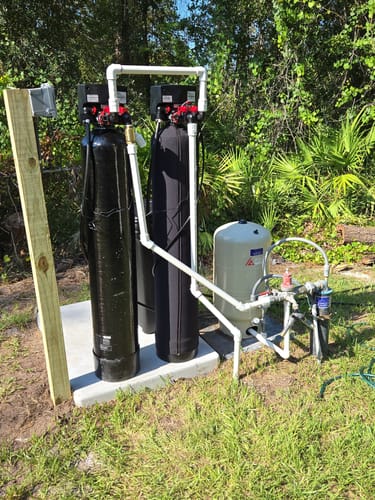
Once you know your GPM, choosing the right iron filter stops being guesswork. Flow rate directly controls which system works and which fails prematurely.
Here's what flow rate actually determines:
- Filter size — 5 GPM typically requires 1 cubic foot of filter media; higher flow demands more.
- Backwash effectiveness — insufficient flow means incomplete cleaning cycles, killing your filter's lifespan.
- Iron concentration tolerance — higher iron levels sometimes require undersizing for flow, prioritizing treatment capacity.
- Long-term cost efficiency — mismatched systems cause frequent media replacement and operational failures.
We see homeowners skip this measurement constantly, then wonder why their expensive filter underperforms.
Your GPM isn't just a number — it's the foundation every other purchasing decision builds upon.
How to Measure Your Well Pump Output in 5 Steps
Measuring your well pump's output takes five straightforward steps and nothing more than a bucket and a timer.
| Step | Action | Purpose |
|---|---|---|
| 1 | Open a nearby faucet | Activates the pump |
| 2 | Time the pump's run cycle | Captures seconds running |
| 3 | Collect water in a 5-gallon bucket | Tracks gallons drawn |
| 4 | Record gallons and seconds | Prepares calculation data |
| 5 | Apply (Gallons ÷ Seconds) × 60 | Reveals your GPM |
We recommend running no other fixtures during this test — competing draws skew everything. Once the pump restarts, you've captured your window. Plug your numbers into the formula, and you'll know exactly what flow rate you're working with, giving you the precision needed to match the right iron filter to your system.
What Your GPM Results Tell You About Filter Compatibility
Now that you've got your GPM number, here's what it actually means for your filter setup.
Your flow rate directly determines which filtration system will actually work for your home. Here's how to interpret what you've measured:
- Below 6 GPM — Consider a smaller system or upgrade your pump before purchasing.
- At 5 GPM — A 1.0 cubic foot filter handles iron removal effectively.
- At 12+ GPM — Multiple simultaneous water uses are supported without performance loss.
- High iron concentration — Requires a larger filter than your GPM alone suggests.
We can't overstate this: mismatched flow rates and filter sizes destroy backwashing efficiency, letting iron slip through untreated.
Your GPM number isn't just data — it's your filter compatibility blueprint.
Low GPM and High Iron: Choosing the Right Filter Anyway
Having a low GPM reading doesn't mean you're stuck with poor iron filtration — it just means we need to be smarter about the system we choose. When iron hits 2 ppm or higher, even a modest flow rate demands a capable system.
| GPM Range | Iron Level | Recommended Action |
|---|---|---|
| Under 6 GPM | Below 2 ppm | Smaller specialized unit |
| Under 6 GPM | 2 ppm+ | Upgrade to larger system |
| 6 GPM+ | Any level | Standard filtration applies |
Matching your system to both variables prevents premature filter wear and protects water quality. We also can't ignore backwash requirements — your well must support that flow. Monitor your GPM regularly, especially if iron levels fluctuate, so you're always running the right system.
Frequently Asked Questions
How Many Gallons per Minute Does a Good Well Produce?
We'd expect a good residential well to produce 6 to 12 gallons per minute. Hit that range, and you've got solid flow to power effective filtration and meet your household's daily demands.
Is a 30/50 or 40-60 Pressure Switch Better?
For iron filters requiring backwashing, we'd recommend a 30/50 switch—it delivers the higher flow rates needed for effective media cleaning. If your household demands consistent pressure, though, a 40/60 switch might serve you better.
How Often Should an Iron Filter Run?
We recommend backwashing your iron filter every 1,000–2,000 gallons, which typically means every 3–5 days. Higher iron concentrations demand more frequent cycles, so we'd encourage testing your water regularly to dial in the perfect schedule.
What Is the Correct Order of Water Treatment?
We recommend starting with flow rate, then testing iron and pH, addressing hardness and TDS, and finally selecting your filtration system—ensuring each parameter's properly understood before choosing treatment equipment.






