


![SoftPro™ Chlorine+ Carbon Whole House Water Filter to Remove PFAS, Chlorine, Chloramine & Pesticides [City Water Filters Series]](http://www.softprowatersystems.com/cdn/shop/files/SoftPro_Whole_House_Carbon_Filter_with_Spin_Down_Water_Filter.webp?v=1783547361&width=140)


 855-683-8488


Media Clogging and Iron Breakthrough: The Hidden Long-Term Cost of Skipping Iron Filter Backwash

When you skip backwash on your iron filter, you're setting off a slow chain reaction that quietly gets worse over time. Trapped iron particles clog the media, pressure builds, and iron starts breaking through into your water — bringing metallic taste, rust stains, and rising energy costs with it. What starts as a skipped maintenance step can snowball into full system replacement. Stick with us, and we'll show you exactly what's at stake.
Key Takeaways
- Skipping backwash causes media to trap excess oxidized iron particles, eventually leading to iron breakthrough and reduced filtration effectiveness.
- Clogged filter media allows iron levels to exceed 0.3 mg/L, producing metallic taste and rust-colored stains.
- Neglected backwashing increases pump energy costs by 20-30% monthly due to restricted water flow.
- Iron breakthrough from clogged media can ultimately require full system replacement within a few years.
- Backwashing every 3-6 weeks using only 5-15 gallons prevents costly long-term damage and system failure.
What Happens Inside Your Iron Filter When You Skip Backwash?

When you skip backwash cycles, your iron filter's media starts trapping more oxidized iron particles than it can handle, and things go downhill fast.
The buildup creates pressure differentials that force untreated water through the media—what we call "iron breakthrough." You're basically paying for filtration you're not getting.
It gets worse underneath the surface. Stagnant iron deposits become breeding grounds for iron bacteria, accelerating contamination beyond what your system was designed to handle.
Your pumps compensate by working harder, quietly driving energy costs up 20-30% before you even notice something's wrong.
What starts as a skipped maintenance cycle compounds into clogged media, bacterial colonies, and a system straining against its own limitations—all while delivering progressively worse water quality to your home.
How a Clogged Filter Lets Iron Break Through Into Your Water
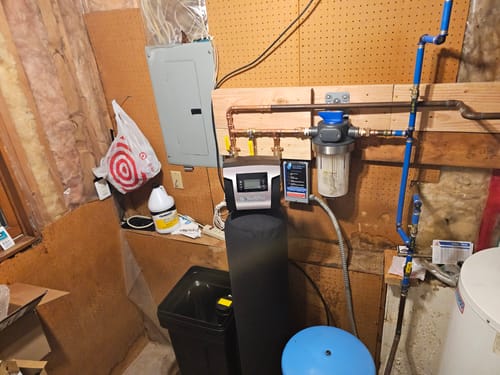
The internal breakdown we just walked through has a direct, measurable consequence you'll notice in your water: iron breakthrough. When your filter media clogs, it loses its ability to trap dissolved iron effectively, allowing untreated water to pass straight through.
That means iron levels climbing past 0.3 mg/L—the threshold where problems become visible and tangible.
You'll taste it first: that unmistakable metallic bite. Then you'll see it—rust-colored stains reappearing on your fixtures, plumbing, and clothing you thought were protected. These aren't cosmetic annoyances; they're confirmation that your filtration system has stopped doing its job.
The filtration failure isn't gradual—it accelerates. A partially clogged filter lets more iron slip through, which compounds buildup, which lets even more iron escape.
The cycle worsens fast.
Signs Your Iron Filter Is Already Failing
How do you know your iron filter is already past the point of prevention? Your water tells you. A metallic taste or discoloration means iron's slipping through unchecked. Rust stains appearing on fixtures or laundry confirm the media's either saturated or channeling—neither is fixable by simply waiting.
Watch your pressure, too. A noticeable drop throughout your home signals restricted flow from clogged media.
And if you're backwashing more frequently just to maintain baseline performance, your resin's struggling to regenerate properly.
The clearest signal? Rising iron levels on a water test. That's media breakthrough—iron passing straight through a filter that's lost its ability to capture it.
At that stage, you're not preventing damage anymore. You're already living with it.
What Neglected Iron Filter Repairs Actually Cost
Neglect has a price tag, and with iron filters, it adds up faster than most people expect. Clogged media forces your system to work harder, driving energy costs up 20-30%. That's money leaving your pocket every single month.
Neglect has a price tag. Clogged media pushes energy costs up 20-30%—money leaving your pocket every single month.
Let it go longer, and you're facing iron breakthrough—untreated water sneaking past the filter entirely—which often means full system replacement within just a few years.
The damage doesn't stop there. Worsening water quality demands expensive treatments, stained fixtures require special cleaners, and your laundry bills climb because standard detergents won't cut it anymore.
Meanwhile, proper backwashing only uses 5-15 gallons every few weeks. The math is brutally simple: a little routine maintenance now costs almost nothing compared to the compounding repairs waiting ahead.
How Often Should You Backwash Your Iron Filter?
So now that we realize what skipping backwash actually costs, let's talk about how to avoid those costs altogether. The sweet spot for backwashing your iron filter is every 3-6 weeks, but here's what most people miss — that window isn't one-size-fits-all. Your actual water usage patterns matter enormously.
Push beyond six weeks, and you're inviting media clogging and iron breakthrough, meaning untreated iron sneaks right past your filter. Your system then compensates by working harder, quietly inflating your energy consumption by 20-30% over time.
Each backwash cycle only uses 5-15 gallons of water. That's a genuinely small investment compared to the systemic failures and replacement costs waiting on the other side of a neglected maintenance schedule.
Stay consistent, and you stay protected.
Frequently Asked Questions
How Much Does It Cost to Replace Iron Filter Media?
Replacing iron filter media typically costs $300–$1,000 for materials, plus $160–$200 for skilled labor and $50–$200 in permit fees. We're looking at total expenses of $510–$1,400 every 4–6 years.
How Long Does Iron Filter Media Last?
Iron filter media typically lasts 4-6 years, but here's the catch—that lifespan depends heavily on your maintenance habits. Consistent backwashing keeps media performing longer, while neglecting it accelerates clogging and shortens replacement cycles considerably.
What Filter Media Removes Iron?
We've found that birm, greensand, catalytic carbon, and Katalox Light all effectively remove iron. Each works differently—birm oxidizes iron naturally, greensand targets manganese too, catalytic carbon tackles multiple contaminants, and Katalox Light offers longer-lasting efficiency.
How Long Should an Iron Filter Backwash?
We recommend backwashing your iron filter for 10-15 minutes every 3-6 weeks. This duration guarantees we're fully flushing trapped iron particles, regenerating the media, and keeping your system performing at peak efficiency long-term.






