


![SoftPro™ Chlorine+ Carbon Whole House Water Filter to Remove PFAS, Chlorine, Chloramine & Pesticides [City Water Filters Series]](http://www.softprowatersystems.com/cdn/shop/files/SoftPro_Whole_House_Carbon_Filter_with_Spin_Down_Water_Filter.webp?v=1783547361&width=140)


 855-683-8488


pH and Iron Filter Adjustment: How to Get Your Well Water Chemistry Right for Maximum Results

Getting your well water chemistry right starts with understanding that pH is everything when it comes to iron filtration. When pH drops below 6.8, even premium filter media like Birm and Pro-OX can't do their job. We recommend testing your water first, correcting pH to the 7.0–9.0 range, then selecting the right media for your iron levels. Keep that balance, and you'll eliminate rust stains, metallic taste, and costly filter failures. Stick with us, and we'll show you exactly how.
Key Takeaways
- Test water pH and iron levels before any adjustments, as accurate baseline data prevents costly treatment mistakes.
- Maintain pH above 7.0 to ensure iron filter media like Birm and Pro-OX perform at maximum efficiency.
- Use neutralizing calcite filters or soda ash injection systems to correct acidic pH below 6.8.
- Choose filter media based on pH level, iron concentration, and maintenance capacity for optimal long-term results.
- Retest water quarterly after installation to catch seasonal chemistry shifts before they degrade filter performance.
Why Your Well Water pH Directly Affects Iron Filter Performance

When your well water's pH drops below 6.8, your iron filter starts fighting a losing battle. The chemistry simply won't cooperate. Filters like Birm and Pro-OX thrive between pH 7.0 and 9.0, where oxidation works efficiently to capture and precipitate iron particles.
Drop below that range, and you're looking at rust stains, metallic-tasting water, and a filter working twice as hard for half the results.
Below optimal pH, expect rust stains, foul taste, and an overworked filter delivering underwhelming results.
Here's what makes it worse — acidic water actively corrodes your plumbing, feeding more iron into the system your filter's already struggling to handle. It's a compounding problem.
That's why we recommend keeping pH above 7.5. You'll protect your filter media from premature exhaustion, extend equipment life, and actually taste the difference in your water.
Test Your Water Before Adjusting pH or Iron Levels
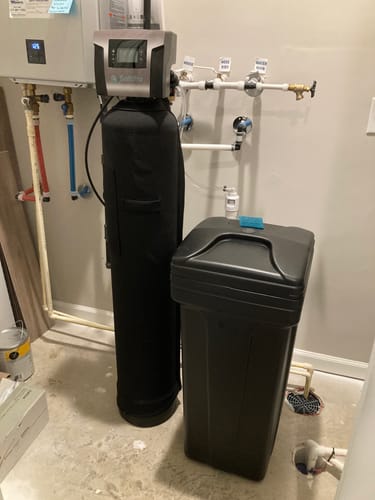
Before you touch a single dial or drop a neutralizer tablet into your system, you need to know exactly what you're dealing with. Guessing costs money and time. We recommend professional water testing over DIY kits—they deliver precise pH readings and identify competing contaminants like iron and manganese that'll quietly sabotage your filtration media.
Watch that pH number closely. Drop below 6.8, and you're not just fighting filtration inefficiency—you're inviting plumbing corrosion throughout your entire system.
Don't test once and walk away. Seasonal shifts change everything. Quarterly testing reveals fluctuations that demand different treatment strategies at different times of year.
This data becomes your roadmap, ensuring every treatment decision—every media selection, every pH adjustment—is tailored precisely to your water's actual chemistry.
Choose the Right Iron Filter Media for Your Water Chemistry
Choosing the right filter media comes down to 3 key variables: your pH level, your iron concentration, and how much maintenance you're willing to commit to.
For high-pH environments between 7.0 and 9.0, Birm is your go-to — it's efficient, reliable, and lasts 4-8 years.
Dealing with severe iron and manganese? Pro-OX handles the heavy lifting with a lifespan stretching up to 10 years.
If you're comfortable with periodic potassium permanganate regeneration, Greensand manages moderate iron and manganese effectively.
Here's the strategic layer most people miss: combining activated carbon with your primary media tackles odors while maintaining iron removal performance.
But none of this matters without regularly analyzing your water chemistry — chlorine and iron levels specifically — because your water's profile dictates everything.
Raise Your pH So Your Iron Filter Actually Works
Your iron filter is only as effective as the water chemistry surrounding it — and pH is the variable that determines whether the whole system works or quietly fails.
Keep pH at 6.8 or above, or watch iron removal collapse and maintenance costs climb.
pH below 6.8 doesn't just slow iron removal — it unravels it entirely, and your maintenance costs will prove it.
Here's your correction roadmap:
- Use calcite-based neutralizing filters to raise acidic pH naturally
- Test water regularly to catch drops before they damage performance
- Inject soda ash via chemical feed systems when pH stays below 6.5, targeting 6.5–7.5
- Deploy two backwashing acid neutralizer tanks for severe acidity below 4.5
- Treat pH correction as ongoing maintenance, not a one-time fix
Get the chemistry right first — everything downstream depends on it.
Test Iron and pH Levels After Installation to Stay Ahead of Problems
Installing a filtration system is only half the battle — the real work starts the moment water begins flowing through it. We recommend testing iron and pH levels immediately after installation, then quarterly to catch seasonal shifts before they cause problems.
Here's what we're watching for: pH should hold at 6.8 or higher for media like Pro-OX or Birm to perform correctly. If it drops, your media's efficiency drops with it. Iron concentration matters too — higher loads accelerate media exhaustion faster than expected.
Don't wait for metallic tastes or orange staining to tell you something's wrong. Those are late warnings.
Regular testing gives you early data, so you're adjusting proactively rather than reacting to a system that's already failing.
Frequently Asked Questions
How to Correct pH Balance in Well Water?
We'll correct your well water's pH by installing neutralizing filters with calcium carbonate, raising levels above 7.5. For precise control, we'll inject soda ash solutions and schedule annual professional testing to catch seasonal shifts.
What Are the Symptoms of Too Much Iron in Well Water?
When iron's too high, we'll notice reddish-brown stains on fixtures, a metallic taste, foul "rotten egg" odors, and clogged pipes—all signs it's time we take action and treat our water.
Does Shocking a Well Help With Iron?
Yes, shocking your well helps with iron! We'll introduce chlorine at 50-200 mg/L, oxidizing dissolved iron so it precipitates out, making filtration far more effective while eliminating iron bacteria causing those foul odors and stubborn stains.
What Is the Acceptable Iron Level in Well Water Ppm?
We've found that acceptable iron levels in well water range from 0.03 to 0.3 ppm. Exceed 0.3 ppm, and you'll notice staining; surpass 1.0 ppm, and you're battling metallic taste and iron bacteria.






