


![SoftPro™ Chlorine+ Carbon Whole House Water Filter to Remove PFAS, Chlorine, Chloramine & Pesticides [City Water Filters Series]](http://www.softprowatersystems.com/cdn/shop/files/SoftPro_Whole_House_Carbon_Filter_with_Spin_Down_Water_Filter.webp?v=1783547361&width=140)
![SoftPro™ Iron Filter - Iron Master AIO [Air Injected Water Filter / Katalox]](http://www.softprowatersystems.com/cdn/shop/files/SoftPro_AIO_Iron_Master_Iron_Filter_Main.webp?v=1783547787&width=140)


 855-683-8488


Plumbing Repair Bills From Iron Water: A Cost Breakdown by System

Iron water quietly wrecks your plumbing, and the repair bills add up fast. Galvanized pipe replacements run $300–$500, while cast iron joint repairs can hit $600 due to specialized tooling. Mineral buildup clogs pipes, shortens appliance lifespans, and drives cumulative maintenance costs to roughly $1,000 annually. If corrosion gets severe enough, full pipe replacement can cost $6,000–$12,000. Stick with us, and we'll break down exactly where your money's going—and how to stop the bleeding.
Key Takeaways
- Galvanized pipe replacements cost $300–$500, while cast iron joint repairs run $400–$600 due to specialized tooling requirements.
- Iron-related mineral buildup clogs pipes and reduces appliance lifespans, averaging roughly $1,000 in annual maintenance costs.
- Severe pipe corrosion can require full replacement, costing $6,000–$12,000, with untreated water damage adding $10,000–$30,000 more.
- Iron filtration systems help homeowners avoid $1,000 in annual repair costs while prolonging appliance and fixture lifespans.
- Early detection through video inspections ($250–$1,600) and proactive maintenance significantly reduces long-term plumbing repair expenses.
Repair Costs by System: Pipes, Fixtures, and Water Heaters

When iron water flows through our plumbing systems, it doesn't hit every component equally — pipes, fixtures, and water heaters each take their own kind of beating, and the repair bills reflect that.
Galvanized pipe section replacements typically run $300–$500, while cast iron joint repairs climb to $400–$600 because of specialized tooling requirements.
Galvanized pipe replacements run $300–$500, while cast iron joint repairs climb higher due to specialized tooling demands.
Those costs compound quickly when multiple pipes fail or when hidden plumbing complicates access.
Water heaters face a different threat — iron accumulation degrades performance and accelerates failure, pushing households toward full replacements rather than simple repairs.
Across all systems combined, frequent iron-related service calls average roughly $1,000 annually.
Understanding where those costs concentrate helps us make smarter decisions about prevention — particularly when evaluating whether iron filtration systems are worth the upfront investment.
What Iron Water Does to Your Plumbing Over Time
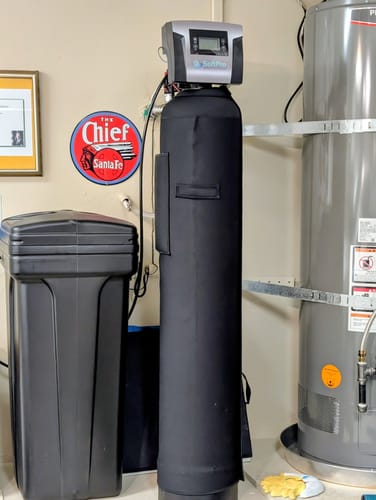
Here's what's happening inside your system:
- Pipe corrosion restricts water flow and triggers frequent leaks.
- Mineral buildup clogs pipes, driving up repair costs considerably.
- Appliance degradation shortens lifespans through relentless mineral accumulation.
- Iron staining damages clothing and fixtures, adding cleaning and replacement costs.
- Cumulative maintenance expenses average roughly $1,000 annually for affected homeowners.
Each effect feeds the next. Corrosion weakens pipes, clogs strain appliances, and staining accelerates fixture replacement.
Understanding this chain helps us make smarter, earlier intervention decisions.
Full Pipe Replacement: When Iron Damage Has Gone Too Far
Sometimes iron damage quietly crosses a point of no return—and full pipe replacement becomes the only real option.
We're talking about severe corrosion that produces rusty, foul-smelling water, sewage backups, and even foundation cracks from plumbing failures. These aren't minor inconveniences—they're structural red flags.
Replacement costs typically run between $6,000 and $12,000, depending on labor and accessibility.
But here's what stings more: untreated water damage can add another $10,000 to $30,000 on top of that.
Before committing to full replacement, we'd recommend a sewer scope inspection, which costs between $250 and $1,600.
It confirms whether replacement is truly necessary or whether a targeted repair can still save the system. Knowledge here directly protects your wallet.
Iron Filtration vs. Ongoing Repair Costs: A Direct Comparison
At some point, the math on ongoing plumbing repairs stops making sense. We're talking $300+ per leak, recurring water damage costs, and pipe replacements that compound annually.
Iron filtration systems, like Katalox Light Advanced Iron Filter, reframe that equation entirely.
Here's what filtration actually protects against:
- Annual repair costs averaging $1,000 from iron buildup
- Individual leak repairs exceeding $300 each
- Water damage restoration expenses
- Accelerated appliance deterioration from iron deposits
- Cleaning supply costs from persistent fixture and laundry staining
The system pays for itself within a few years — while simultaneously delivering cleaner, higher-quality water throughout your home.
Ongoing repairs offer zero return on investment. Filtration does. That distinction matters when we're evaluating long-term household infrastructure decisions with real financial consequences.
How to Reduce Iron Water Damage Costs Before They Escalate
Catching iron water problems early is where the real savings happen. A video inspection—running between $250 and $1,600—sounds steep until you consider what undetected iron buildup actually costs in emergency repairs. We'd rather pay for clarity upfront than guesswork later.
Discolored water and recurring leaks aren't minor nuisances—they're warnings. Addressing them immediately keeps single-visit repair costs from compounding.
Discolored water and recurring leaks aren't decorative—they're your plumbing system sending urgent, expensive warnings you can't afford to ignore.
Pair that urgency with specialized detergents used routinely, and we're also eliminating the hidden drain of iron-stained fixtures and ruined laundry.
A proactive maintenance plan through a trusted plumber delivers consistent early detection, extending our system's lifespan while reducing cumulative repair costs.
Combined with an iron filtration system, these habits shift us from reactive spending to strategic protection—where every dollar works harder.
Frequently Asked Questions
What Is the 135 Rule for Plumbing?
The 135 Rule means we keep your water heater set between 130°F and 140°F. This prevents dangerous Legionella bacteria growth while balancing safety, energy efficiency, and reduced wear on your plumbing fixtures and appliances.
What Is the Most Expensive Plumbing Issue?
Extensive leaks and pipe failures are the most expensive plumbing issues we'll face, costing $4,500–$15,000. When water damage compounds repairs, we're looking at an additional $10,000–$30,000, making prevention our smartest financial strategy.
How Much Does a Plumber Charge to Repair a Leak?
Plumbers typically charge $150–$300 for minor leak repairs, but we're looking at $400–$600 for extensive work. Emergency services? Expect $200–$1,000. Getting multiple quotes helps us manage these costs effectively.
How Much Does It Cost to Plumb a 2000 Sq Ft House?
Plumbing a 2,000 sq ft house typically costs between $10,000 and $40,000. We'll see labor driving roughly 70% of that, while our material choices—like PEX over copper—can substantially reduce our overall investment.





