


![SoftPro™ Chlorine+ Carbon Whole House Water Filter to Remove PFAS, Chlorine, Chloramine & Pesticides [City Water Filters Series]](http://www.softprowatersystems.com/cdn/shop/files/SoftPro_Whole_House_Carbon_Filter_with_Spin_Down_Water_Filter.webp?v=1783547361&width=140)


 855-683-8488


Pro-Ox Iron Filter Review: Real Results from 6 Months of Use
Hi, I'm Sarah Mitchell. I live in rural Ohio.
Craig "The Water Guy" Phillips asked me to share my experience as a homeowner on Iron Filter with the Pro-Ox system I purchased.
This is how my adventures played out. I hope this helps you in your decision.
Did you know that iron contamination affects over 25% of American households, yet most people don't realize their water problems stem from dissolved metals until the damage is already visible?
Six months ago, I was one of those homeowners dealing with orange stains, metallic-tasting water, and appliances that seemed to break down faster than they should. After extensive research and a significant investment, I decided on the Pro-Ox iron filtration system from SoftPro Water Systems.
What I'm about to share isn't a sugar-coated sales pitch – it's the real story of living with this system through installation headaches, learning curves, unexpected discoveries, and ultimately, the transformation of my home's water quality. If you're considering an iron filter investment, this detailed account will help you understand exactly what you're getting into.
The Iron Problem That Finally Pushed Me Over the Edge
Living in rural Ohio means dealing with well water, and for three years, I thought rusty-looking water was just part of country living. Boy, was I wrong.
The wake-up call came last winter when my nearly-new dishwasher started leaving orange film on everything. My white clothes were turning yellow-brown despite using expensive detergents, and guests began commenting on the metallic taste in our coffee. The final straw was discovering rust-colored buildup choking my bathroom faucet aerators – some were completely blocked.
I had my water tested and discovered we had 4.2 parts per million (PPM) of iron. For context, anything above 0.3 PPM is considered problematic, and we were running fourteen times the recommended level. The iron existed primarily as ferrous iron (dissolved), which explains why our water looked clear coming out of the tap but turned orange after sitting exposed to air.
This level of contamination was causing several expensive problems:
- Iron bacteria growth in our water heater, reducing efficiency
- Premature failure of appliance components
- Staining of fixtures, clothing, and dishes
- Unpleasant taste and odor
- Clogged aerators and shower heads requiring constant maintenance
The iron wasn't just an aesthetic issue – it was costing us money in damaged appliances, excessive cleaning products, and constant replacement of stained items. I calculated we were spending roughly $200 per month on problems directly related to iron contamination.
My Research Journey and Why I Chose Pro-Ox
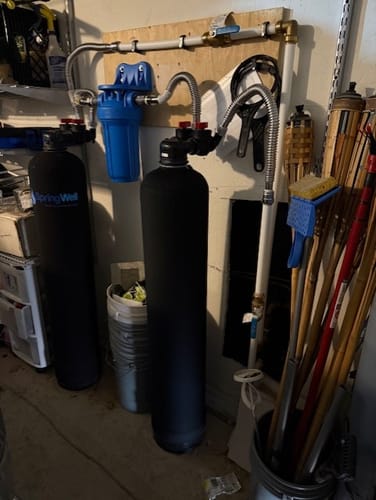
After identifying the problem, I spent weeks researching iron removal technologies. The main options were traditional water softeners (which handle some iron but aren't designed for high levels), air injection systems, chemical feed pumps, and catalytic media filters like the Pro-Ox system.
Traditional softeners were immediately ruled out – our iron levels were too high, and I didn't want the ongoing sodium addition and the environmental impact of salt discharge. Chemical feed systems seemed overly complex for a household application, requiring storage of oxidizing chemicals and precise dosing equipment.
Air injection systems initially appealed to me because they use natural oxidation without chemicals. However, local water treatment professionals warned that they require more maintenance and can struggle with varying iron levels. Since our well's iron content fluctuated seasonally, consistency was important.
The Pro-Ox system stood out for several reasons:
- Uses a catalytic media (MangOx) that doesn't require chemical regeneration
- Handles both ferrous and ferric iron effectively
- Designed for iron levels up to 15 PPM – well above our 4.2 PPM
- NSF Standard 61 certified for drinking water treatment
- Automatic backwash system for low-maintenance operation
- No ongoing chemical costs or storage requirements
The technology works by using manganese dioxide media to catalyze iron oxidation. As water flows through the media bed, dissolved iron converts to particles that get trapped and removed during automatic backwashing. The process is purely physical – no chemicals added to your drinking water.
What sealed the decision was speaking with three local homeowners who had Pro-Ox systems installed for 2-5 years. All reported consistent performance with minimal maintenance, and none had experienced significant media degradation or system failures.
Unboxing and First Impressions
The Pro-Ox system arrived in a substantial wooden crate – much more protective packaging than I expected. Inside, the fiberglass tank looked industrial-grade with a smooth, professional finish. At 54 inches tall and 13 inches in diameter, it's larger than I anticipated, but the slim profile meant it fit in my utility room corner without issues.
The Fleck 5600SXT control head immediately impressed me. Unlike cheap plastic valves I'd seen on other systems, this felt substantial – heavy die-cast construction with clear, well-labeled connections. The digital display was bright and easy to read, though I'd later learn the programming interface takes some getting used to.
Component quality exceeded expectations:
- Thick-walled fiberglass tank with NSF certification markings
- Professional-grade bypass valve with union connections
- Clear, detailed installation manual with actual photos (not just diagrams)
- High-quality fittings and connectors – no cheap plastic parts
- Pre-loaded MangOx media (saved me the messy job of filling the tank)
The only surprise was the weight. Even with media pre-loaded, my neighbor and I could handle it, but it's definitely a two-person job. The manual suggested the total weight would be around 180 pounds when fully operational.
Installation Experience and Initial Setup

I hired a local plumber for installation, which cost $480 but proved wise given the complexity. The Pro-Ox system requires specific plumbing considerations that aren't obvious from the manual.
Key installation requirements I learned:
Location Planning:
The system needs 110V power, drain access within 20 feet, and sufficient space for the backwash cycle. Our utility room required minor rearrangement, but the compact footprint helped. The plumber recommended installing 6 inches from the wall to allow access to connections.
Pressure and Flow Considerations:
The system requires minimum 25 PSI and maximum 80 PSI. Our well pump delivered 55 PSI, perfect for optimal operation. Flow rate through the 1-cubic-foot media bed is rated at 7 GPM, adequate for our household of three with normal usage patterns.
Backwash Drain Setup:
This was the most complex aspect. The system discharges approximately 60 gallons during each backwash cycle, requiring a drain capable of handling 10 GPM flow rate. We connected to our utility sink drain with an air gap to prevent any potential backflow contamination.
The actual installation took about 4 hours. Most time was spent on plumbing connections and ensuring proper support for the system weight. The plumber appreciated the quality of included fittings and noted that union connections made future service much easier than systems requiring pipe cutting.
Initial Programming and Startup:
Programming the Fleck control head proved more complex than expected. The manual provides step-by-step instructions, but understanding the relationship between backwash frequency, household water usage, and iron loading required some trial and error.
We initially set backwash frequency to every 3 days based on manufacturer recommendations for our iron level and household size. The first manual backwash cycle was impressive – 10 minutes of visibly orange water flowing to the drain, followed by gradually clearing water as the media bed cleaned itself.
Performance Testing and Real-World Results
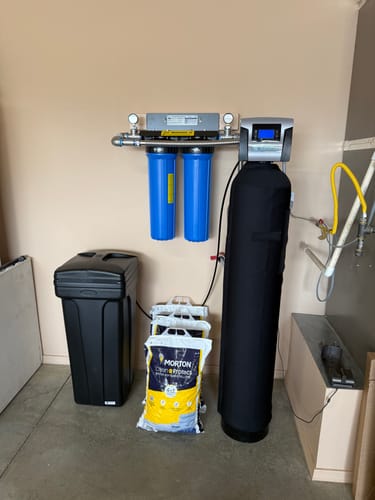
After installation, I conducted systematic testing to verify performance and establish baselines for long-term monitoring. Using a TDS meter and iron test strips, I tracked removal efficiency over several weeks.
Immediate Results (First Week):
Pre-filtration iron levels: 4.2 PPM
Post-filtration iron levels: Less than 0.1 PPM (below test strip detection)
Removal efficiency: Greater than 97%
The transformation was immediately visible. Water from filtered taps remained crystal clear even after sitting in glasses overnight. Previously, any standing water would develop an orange tint within hours as dissolved iron oxidized naturally.
Taste and Odor Improvements:
The metallic taste disappeared completely within 48 hours. Coffee and tea quality improved dramatically – guests began commenting positively instead of politely tolerating our water. Cooking with the filtered water enhanced food flavors that had been masked by iron contamination.
Staining Elimination:
New staining stopped immediately. Existing orange buildup on fixtures required manual cleaning, but no new stains appeared. White laundry began coming out actually white instead of off-white or yellow-tinged. Dishes from the dishwasher sparkled without orange film.
Long-Term Performance (6 Months):
Monthly testing shows consistent iron removal efficiency. Even during spring when our well's iron content spiked to 5.1 PPM due to seasonal water table changes, the Pro-Ox system maintained output below 0.1 PPM without adjustment.
The automatic backwash system proved crucial for maintaining performance. Every three days, the system initiates a 10-minute cleaning cycle, purging accumulated iron particles and regenerating the catalytic media. I've watched this process numerous times – initially orange water clears to crystal clear, indicating thorough media cleaning.
Daily Living Impact and Household Benefits
Six months of operation have revealed benefits beyond just iron removal. The transformation affects daily life in ways I hadn't anticipated.
Kitchen and Cooking:
Coffee and tea taste significantly better – so much that we stopped buying bottled water for brewing. Ice cubes are crystal clear instead of cloudy, and don't impart any off-flavors to drinks. Cooking vegetables retains natural colors that iron contamination had been muting.
Laundry Improvements:
White clothes stay white longer, reducing the need for bleaching or color-safe brighteners. I've cut my detergent usage by roughly one-third because soap works more effectively without iron interference. Fabric softener is more effective, and clothes feel softer overall.
Bathroom and Personal Care:
Shower water feels noticeably softer on skin, and hair doesn't have the mineral-coated feeling it had before. Soap lathers better and rinses cleaner. Bathroom fixtures stay cleaner longer – I'm cleaning toilets and sinks half as frequently.
Appliance Performance:
The dishwasher produces spotless dishes without rinse aid, which I'd been using heavily to combat iron staining. My coffee maker hasn't required descaling since installation – previously a monthly necessity. The water heater's efficiency appears improved based on lower gas usage, though I'll need a full year to confirm this trend.
Maintenance Reduction:
Faucet aerators and showerheads no longer clog with iron buildup. Previously, I cleaned or replaced these monthly; now they function normally for months without intervention. This alone saves considerable time and replacement costs.
Unexpected benefits include improved taste of home-brewed beverages, cleaner-looking swimming pool water (we occasionally top off with well water), and elimination of iron bacteria smell that occasionally affected our cold water.
Operational Costs and Long-Term Ownership
Understanding the true cost of ownership was crucial for my purchasing decision. After six months, I can provide realistic operational expense projections.
Electricity Consumption:
The Fleck control head draws approximately 6 watts continuously for the timer and display, plus additional power during backwash cycles. Based on my electricity monitoring, monthly consumption averages 12 kWh, costing about $1.80 per month at my local rates.
Water Usage for Backwashing:
Each backwash cycle uses approximately 60 gallons over 10 minutes. With backwashing every 3 days, monthly water consumption for regeneration is roughly 600 gallons. At my well water costs (primarily electricity for pumping), this represents about $8 monthly expense.
Media Replacement:
MangOx media has an expected lifespan of 5-8 years depending on iron loading and backwash frequency. Replacement media costs approximately $150 plus labor for changeout. Prorated over 6 years, this represents roughly $25 annually or $2 monthly.
Total Monthly Operational Costs:
Electricity: $1.80
Water: $8.00
Media replacement reserve: $2.00
Total: $11.80 per month
Savings Generated:
Comparing to our pre-filtration expenses:
- Cleaning products reduction: $15/month
- Bottled water elimination: $25/month
- Reduced appliance maintenance: $20/month
- Laundry product reduction: $8/month
Net monthly savings: $56.20 after operational costs
The system pays for itself through operational savings in roughly 24 months, not accounting for avoided appliance replacement costs or the value of improved water quality.
Maintenance Reality and Long-Term Assessment
Real-world maintenance requirements differ somewhat from manufacturer guidelines, based on my six-month experience and conversations with long-term users.
Routine Maintenance Tasks:
Monthly: Visual inspection of system operation, checking for leaks or unusual sounds during backwash cycles. I also verify the control head display shows normal operation and test a sample of filtered water with iron strips.
Quarterly: Clean the bypass valve and check all connections for tightness. Seasonal temperature changes can affect plumbing connections, so periodic inspection prevents minor leaks from becoming major problems.
Annually: Professional inspection recommended, though not strictly necessary. A qualified technician can verify backwash effectiveness, check media bed condition, and adjust programming if household usage patterns have changed.
Unexpected Maintenance:
During month four, I noticed the backwash cycle wasn't clearing completely – orange water continued flowing longer than usual. This indicated media channeling, where water finds preferential flow paths instead of distributing evenly through the bed.
The solution was simple: manually initiating two consecutive backwash cycles restored proper operation. This taught me to monitor backwash water clarity as an indicator of system health. Clear water at cycle completion indicates proper media cleaning.
Seasonal Adjustments:
Spring brought higher iron levels as water table conditions changed. Rather than constant programming adjustments, I increased backwash frequency from every 3 days to every 2 days during the high-iron season. This maintained consistent performance without other modifications.
Long-Term Durability:
Build quality appears excellent after six months of continuous operation. The fiberglass tank shows no signs of wear, and the Fleck control head operates reliably. All plumbing connections remain tight without adjustment.
The only wear item is the media, which gradually degrades over years of service. However, degradation is gradual, allowing planned replacement rather than emergency failure. Performance monitoring through periodic testing provides early warning of media exhaustion.
Based on discussions with users having 3+ years of experience, the Pro-Ox system represents a "set it and forget it" solution once properly installed and programmed. Major repairs are rare, and component replacement follows predictable schedules rather than random failures.






