


![SoftPro™ Chlorine+ Carbon Whole House Water Filter to Remove PFAS, Chlorine, Chloramine & Pesticides [City Water Filters Series]](http://www.softprowatersystems.com/cdn/shop/files/SoftPro_Whole_House_Carbon_Filter_with_Spin_Down_Water_Filter.webp?v=1783547361&width=140)


 855-683-8488


Rotten Egg Sulfur Odor Still Present After Iron Filter Installation: How to Diagnose the Problem

If your water still smells like rotten eggs after installing an iron filter, the filter likely isn't the whole solution. Iron filters target dissolved iron, not hydrogen sulfide gas. Sulfur bacteria in your well, a compromised water heater, or corroded pipes can keep reintroducing the odor. Your filter may also lack the right catalytic media to handle hydrogen sulfide. Pinpointing the exact source is the critical first step, and there's a lot more to uncover here.
Key Takeaways
- Iron filters target dissolved iron, not hydrogen sulfide gas, so persistent sulfur odor may indicate your filter lacks proper catalytic media.
- Smell both hot and cold water separately; odor only in hot water suggests sulfur bacteria residing in your water heater.
- Test water directly from the well and multiple plumbing points to pinpoint whether contamination originates at the source or within pipes.
- Inspect fixtures for black stains or corrosion, which confirm hydrogen sulfide exposure and help identify where the problem is concentrated.
- Check for deteriorating well casings or bacterial slime in pipes, as these can continuously reintroduce hydrogen sulfide despite filtration.
Why Rotten Egg Smell Survives an Iron Filter

There are a few reasons why that rotten egg smell can stubbornly persist even after installing an iron filter, and understanding them helps us tackle the problem at its source.
Iron filters target dissolved iron effectively, but they're not designed to eliminate hydrogen sulfide gas, the actual culprit behind that unmistakable odor.
Iron filters catch dissolved iron, but hydrogen sulfide gas — the real odor culprit — slips right through untouched.
Sulfur bacteria thriving in low-oxygen well water keep producing hydrogen sulfide even after filtration. High concentrations can also overwhelm the filter's capacity entirely.
If your water heater is involved, chemical reactions there generate additional hydrogen sulfide, bypassing the filter's work upstream.
Finally, without proper aeration or supplemental chemical treatment like oxidation or chlorination following filtration, residual hydrogen sulfide lingers.
Identifying which scenario applies to your system is the critical first step.
Hot or Cold Water: Where Is the Hydrogen Sulfide Coming From?
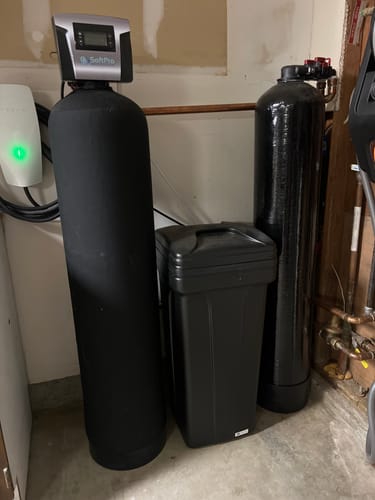
Pinpointing where hydrogen sulfide originates makes all the difference in choosing the right fix. Start with a simple smell test: run only cold water and note whether the odor appears. If it does, the problem likely stems from your well or supply water itself.
If cold water smells fine but hot water reeks, your water heater is probably harboring sulfur bacteria that activate during heating.
Also inspect your fixtures for black stains or corrosion—these signal hydrogen sulfide exposure your iron filter isn't catching.
For deeper confirmation, test water directly from the well and at multiple plumbing points. This systematic approach tells you whether you're dealing with contaminated source water or an isolated plumbing issue, which completely changes your treatment strategy.
Is Your Iron Filter Actually Rated for Hydrogen Sulfide Removal?
Many homeowners assume their iron filter handles hydrogen sulfide simply because it's labeled for "iron and odor removal"—but that's not always the case.
Filters use different media, and not all of them oxidize H₂S effectively. Here's what to verify:
- Check the media type — Manganese dioxide or catalytic media are specifically engineered for H₂S oxidation; standard media often isn't.
- Confirm the H₂S concentration rating — Many filters only handle up to 1 ppm of hydrogen sulfide; anything higher overwhelms the system.
- Review the product specifications directly — "Odor removal" marketing language doesn't guarantee H₂S capability.
If your filter isn't rated for hydrogen sulfide, you've likely found your culprit.
Iron and H₂S also compete within filtration systems, compounding inefficiency when the wrong filter's installed.
Could Your Well, Pipes, or Softener Be Reintroducing the Sulfur Smell?
Even if your iron filter is properly rated for hydrogen sulfide, the smell can persist if the source of contamination lies somewhere else entirely.
Your well itself may be reintroducing the problem—deteriorating casings let H₂S seep back in, and sulfur bacteria thriving in your water source keep producing it continuously.
Don't overlook your plumbing either.
Existing bacterial slime inside pipes harbors hydrogen sulfide long after filtration begins, creating a persistent odor cycle. Your water softener could also be a culprit—poorly maintained units or certain internal materials allow sulfur compounds to slip through untreated.
The fix? Shock chlorinate your entire system—well, pipes, and softener—to eliminate bacterial colonies at every stage.
Treating only the filter while ignoring upstream and downstream contamination sources guarantees ongoing frustration.
What Actually Fixes Sulfur Odor When an Iron Filter Falls Short
When an iron filter isn't cutting it, the fix depends on why it's falling short in the first place. High hydrogen sulfide levels, bacterial activity, or residual contamination each demand a targeted response.
Here's what actually works:
- Aeration systems — Install upstream to let hydrogen sulfide escape before water hits the filter, reducing the load your system must handle.
- Shock chlorination — Eliminates sulfur-reducing bacteria causing hydrogen sulfide production, delivering immediate relief when biology is the culprit.
- Catalytic carbon filtration — Add this downstream from your iron filter to capture residual sulfur odors and elevate overall water quality.
None of these solutions run themselves, though.
Consistent maintenance and monitoring keep every layer of your treatment system performing at its peak.
Frequently Asked Questions
Will an Iron Filter Remove Sulfur Smell?
Iron filters don't reliably remove sulfur smell. They're designed to target oxidized iron, not dissolved hydrogen sulfide gas. If your water exceeds 2 mg/L of hydrogen sulfide, you'll need aeration, activated carbon, or chlorination instead.
What Happens if You Smell Sulfur for Too Long?
If you're exposed to sulfur odors too long, you'll experience headaches, dizziness, and respiratory irritation. Worse, your nose adapts through olfactory fatigue, masking dangerous concentration levels—making proper ventilation and water treatment absolutely essential.
Does Iron Bacteria Smell Like Rotten Eggs?
Iron bacteria don't typically smell like rotten eggs. They create musty or swampy odors instead. However, their slime can harbor sulfate-reducing bacteria that do produce hydrogen sulfide, indirectly causing that distinctive rotten egg smell you're experiencing.
Why Can't I Stop Smelling Rotten Eggs?
We can't stop smelling rotten eggs because hydrogen sulfide gas persists despite iron filtration—sulfur bacteria keep producing it, especially in water heaters and anaerobic plumbing environments. Let's test water quality to pinpoint the source.






