


![SoftPro™ Chlorine+ Carbon Whole House Water Filter to Remove PFAS, Chlorine, Chloramine & Pesticides [City Water Filters Series]](http://www.softprowatersystems.com/cdn/shop/files/SoftPro_Whole_House_Carbon_Filter_with_Spin_Down_Water_Filter.webp?v=1783547361&width=140)


 855-683-8488


Rusty Water After Iron Filter Backwash Cycle: The Real Causes and Exactly What You Should Do

Rusty water after a backwash cycle usually means iron particles got stirred up in your filter bed, pH shifted during the process, or your media is oversaturated with iron buildup. The good news is it's fixable. Run your cold water for 10-15 minutes, check your injector for clogs, and test iron levels afterward to confirm things are clear. Stick around, because we've got everything you need to solve this for good.
Key Takeaways
- Rusty water after backwash occurs when iron particles trapped in filter media get dislodged and enter your water supply.
- Iron levels above 5 ppm overwhelm standard backwash cycles, allowing untreated iron to bypass filtration entirely.
- Run cold water for 10-15 minutes after backwash to flush disturbed iron particles from your system.
- Maintain pH between 7.5 and 8.0 to ensure optimal iron oxidation and prevent solubility fluctuations during backwashing.
- Backwash filter media every 4-6 weeks and consider pre-oxidation treatments to prevent iron saturation and rusty water.
Why Your Water Turns Rusty After a Backwash Cycle

When your iron filter finishes a backwash cycle and you turn on the tap to find rusty water, it's a frustrating experience that leaves you wondering what went wrong. Several culprits are typically responsible.
Dissolved iron that wasn't fully re-oxidized during treatment slips past the system and enters your supply. Iron particles trapped inside the filter media get dislodged and released during subsequent water use. Heavy iron build-up clogs the media, forcing high iron concentrations to bypass filtration entirely.
pH fluctuations during backwashing also alter iron solubility, making oxidation and staining more likely once water hits oxygen. Understanding these root causes isn't just academic—it's your first step toward diagnosing exactly what's happening inside your system and fixing it permanently.
What's Actually in That Rusty Water After Backwash?
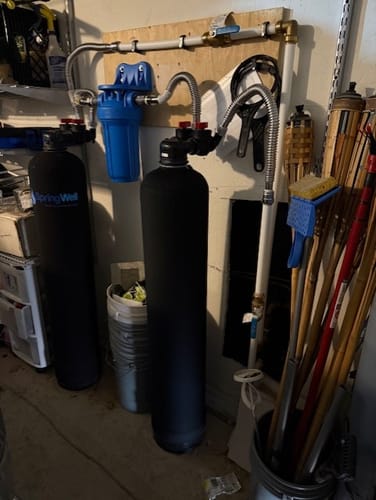
It's not just rust. That discolored water typically contains a cocktail of disturbed iron particles, accumulated minerals, and potentially iron bacteria — all dislodged from your filter media during the backwash cycle.
Here's what matters most: if your water exceeds 0.3 ppm of iron, you'll notice staining on fixtures almost immediately after a backwash.
Iron levels above 0.3 ppm mean fixture stains appear almost instantly after every backwash cycle.
Iron bacteria make things worse, creating murky, cloudy water that looks almost muddy.
Think of your filter bed like a sponge that's been wrung out — everything it captured gets temporarily stirred up.
Understanding exactly what's in that water helps us tackle the problem with precision, not guesswork.
How to Flush Rusty Water Out Fast After Backwash
After a backwash cycle, we've got a narrow window to flush that rusty water out before it causes staining or settles back into your system.
Run cold water through for at least 10-15 minutes — this pushes disturbed iron particles completely out rather than letting them resettle.
While that's running, check your water pressure. A pressure drop slows the flow you need to clear impurities effectively, so confirm everything's holding steady.
Next, inspect your injector assembly. Clogged injectors are a surprisingly common reason rust lingers longer than it should.
If rusty water still won't quit, trigger a manual regeneration cycle. This engages the full filtration process and handles contaminants that a standard backwash missed.
Test your iron levels afterward to confirm the flush actually worked.
When Iron Levels Are Too High for Your Backwash Cycle to Handle
Sometimes your backwash cycle simply can't keep up — and iron levels above 5 ppm are usually the culprit.
At that concentration, standard backwash cycles struggle to flush accumulated iron effectively, leaving rusty water behind even after regeneration completes.
Here's what's actually happening: your filtration media gets overwhelmed.
Once saturated, untreated iron bypasses the system entirely, staining fixtures and discoloring your water supply.
Frequent regeneration cycles signal the same problem — your filter's undersized for the iron load it's carrying.
The fix starts with testing.
Regular iron level monitoring tells you exactly how often you need to backwash and whether your current system can realistically handle the demand.
If it can't, you'll need a larger capacity filter or supplemental treatment — there's no workaround.
Which Maintenance Fixes Stop Rusty Backwash From Recurring?
Once we grasp our system's overwhelmed, the next move is locking in a maintenance routine that keeps rusty backwash from coming back.
Start by backwashing the filter media every 4-6 weeks — saturation builds faster than most people expect.
Every 2-3 years, pull apart the injector assembly and clean it thoroughly; clogging there quietly sabotages everything downstream.
We also need to match regeneration cycles to actual water usage, not factory defaults. Oversaturation happens when cycles run too infrequently for real demand.
Keep pH between 7.5 and 8.0 — that range is where iron oxidizes most efficiently.
Finally, consider pre-oxidation with chlorine or potassium permanganate. It gives the media a head start, dramatically reducing the iron load before filtration even begins.
Frequently Asked Questions
How to Get Iron Bacteria Out of Water?
We'll tackle iron bacteria by shock chlorinating your system, cleaning your filter media regularly, and adding oxidizing agents like ozone or hydrogen peroxide. A continuous chlorination setup with a retention tank guarantees lasting results.
Why Is My Water Rusty After Softener Regenerates?
Rusty water after regeneration usually means iron particles weren't fully flushed during backwash and dispersed back into your supply. We've also seen exhausted resin and clogged media let iron slip through unfiltered.
How Long to Backwash an Iron Filter?
We recommend backwashing your iron filter for at least 10 minutes. This guarantees you're effectively dislodging trapped iron particles and debris while preserving your media's integrity for consistently clean, rust-free water.
Can Iron Rust in Water?
Yes, iron can rust in water. When dissolved iron meets oxygen, it oxidizes, creating that familiar reddish-brown staining you'll find coating your fixtures, pipes, and appliances—especially when levels exceed 0.3 ppm.






