


![SoftPro™ Chlorine+ Carbon Whole House Water Filter to Remove PFAS, Chlorine, Chloramine & Pesticides [City Water Filters Series]](http://www.softprowatersystems.com/cdn/shop/files/SoftPro_Whole_House_Carbon_Filter_with_Spin_Down_Water_Filter.webp?v=1783547361&width=140)


 855-683-8488


Shock Chlorination vs. Continuous Chlorine Feed for Well Water Iron Bacteria: Which Works Better?

Shock chlorination works fast by flooding your well with high chlorine concentration, but it's a temporary fix — iron bacteria often return. Continuous chlorine feed is the stronger long-term solution, maintaining steady low-level chlorine that prevents bacteria from regaining a foothold. If iron bacteria keeps coming back after shock treatments, that's a signal of a deeper problem. Stick with us, and we'll walk you through everything you need to know.
Key Takeaways
- Shock chlorination provides immediate relief by flooding wells with high chlorine, but bacteria often return under recurring conditions.
- Continuous chlorine feed maintains steady, low-level chlorine, preventing iron bacteria from establishing colonies long-term.
- Continuous feed generates fewer harmful disinfection byproducts compared to repeated shock chlorination treatments.
- Recurring iron bacteria after shock chlorination signals deeper well issues requiring a permanent continuous feed solution.
- Continuous chlorine feed shifts treatment from reactive to proactive, reducing slime, odors, and long-term maintenance costs.
When Iron Bacteria Signals a Serious Well Problem

While iron bacteria won't make you sick directly, they're telling you something important about your well's health. Those slimy pipe coatings and foul odors aren't just nuisances—they're warning signs of deeper issues.
Iron bacteria thrive alongside organic matter, meaning fecal or pathogenic bacteria could also be present. They also signal anaerobic conditions developing in your well, which creates an environment where water quality deteriorates rapidly if left unchecked.
Iron bacteria don't just signal themselves—they signal what else might be lurking in your well water.
Here's what we recommend inspecting immediately: your well casing for cracks and your well cap for damage. Compromised infrastructure accelerates iron bacteria growth and invites broader contamination.
This matters because shock chlorination alone won't solve recurring problems rooted in structural or construction deficiencies.
You'll need a more thorough approach.
Shock Chlorination vs. Continuous Feed: Which Treats Iron Bacteria Better?
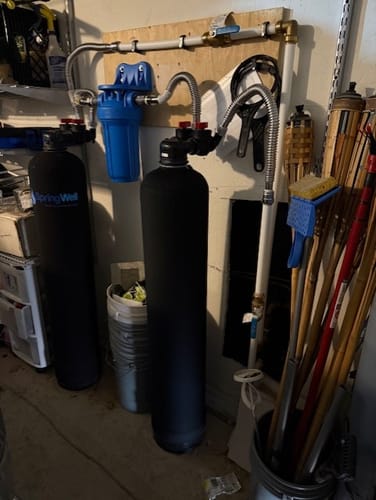
Now that you understand the warning signs iron bacteria send, let's tackle the bigger question: should you shock chlorinate your well or invest in a continuous feed system?
Shock chlorination works fast, hitting iron bacteria with high chlorine concentrations for immediate results.
But here's the catch—it's a temporary fix. If the underlying conditions favoring iron bacteria remain, they'll return.
Continuous chlorine feed systems take a smarter long-term approach. By maintaining consistent, low chlorine levels, they actively prevent iron bacteria from reestablishing colonies.
You'll also generate fewer harmful disinfection byproducts compared to repeated shock treatments.
For recurring iron bacteria problems, continuous feed wins on both effectiveness and convenience.
You're not repeatedly treating symptoms—you're eliminating the condition that allows iron bacteria to thrive.
How Shock Chlorination Eliminates Iron Bacteria Colonies
Shock chlorination works like a chemical siege on iron bacteria colonies—flooding the well system with a high concentration of chlorine that overwhelms and kills bacteria while breaking down the slimy biofilm they've built inside your pipes.
Here's what the process targets at each stage:
| Stage | Action | Result |
|---|---|---|
| Initial dose | 3 pints bleach per 100 gallons | Overwhelms bacteria colonies |
| Contact period | Chlorine penetrates biofilm | Kills embedded bacteria |
| Flush cycle | Removes residual chlorine | Restores safe water flow |
After flushing, decomposed bacterial material exits the system, leaving cleaner pipes. Recurring contamination means we'll need to repeat this process—shock chlorination isn't always a one-time fix, but its precision makes it remarkably effective when applied correctly.
How Continuous Chlorine Feed Prevents Iron Bacteria From Returning
Continuous chlorine feed takes a fundamentally different approach—instead of periodically overwhelming bacteria with high doses, it keeps a steady, low-level chlorine concentration flowing through the system that stops iron bacteria from gaining any foothold in the first place.
Here's what makes it so effective:
it prevents iron bacteria from ever gaining a foothold.
- Immediately inactivates any new iron bacteria before they can proliferate
- Suppresses growth consistently, eliminating conditions for recurrence
- Adjusts dosage to match your specific water chemistry and contaminant levels
- Reduces slime formation and odors, lowering long-term maintenance costs
- Provides ongoing protection through regularly monitored chlorine levels
We're essentially shifting from reactive treatment to proactive prevention.
Rather than waiting for colonies to establish and then shocking them out, continuous feed keeps contamination from ever becoming a problem worth solving.
When Iron Bacteria Requires a Permanent Treatment System
For some wells, continuous chlorine feed isn't just the smarter option—it's the only practical one. When iron bacteria keep returning despite repeated shock chlorination, that pattern signals something deeper—a chronic contamination problem that one-time treatments simply can't resolve.
Here's what that looks like in practice: slimy pipe coatings, persistent odors, and unpleasant tastes that keep coming back.
At that point, we're no longer dealing with an occasional nuisance—we're managing an ongoing condition that demands a permanent solution.
A continuous chlorine feed system maintains residual chlorine levels that prevent bacterial regrowth before it starts. Combined with routine water quality testing to confirm effectiveness, it becomes a reliable, long-term defense.
If shock chlorination hasn't solved the problem, it's telling us something—and we should listen.
Frequently Asked Questions
What Is the Best Water Treatment for Iron Bacteria?
We've found that continuous chlorine feed systems work best for iron bacteria, maintaining consistent low chlorine levels that prevent regrowth. Shock chlorination helps initially, but you'll need ongoing treatment for lasting results.
Is It Better to Use Shock or Chlorine?
For persistent iron bacteria, we recommend continuous chlorine feed—it's more effective long-term. Shock chlorination works for one-time treatment but won't prevent recurrence if underlying issues remain. Your choice depends on how chronic your iron bacteria problem is.
What Form of Chlorine Is Most Effective for Killing Bacteria?
Sodium hypochlorite's our top pick for killing bacteria in well water. It's the active ingredient in household bleach, offering a reliable 5-6% concentration that's easy to handle and highly effective against pathogens like E. coli.
Will Shocking a Well Get Rid of Iron Bacteria?
Shocking a well can temporarily eliminate iron bacteria, but it's not a permanent fix. The bacteria often regrow if underlying conditions persist, so we'll likely need continuous chlorination or repeated treatments for lasting control.






