


![SoftPro Chlorine+ Carbon Whole House Water Filter to Remove PFAS, Chlorine, Chloramine & Pesticides [City Water Filters Series]](http://www.softprowatersystems.com/cdn/shop/files/SoftPro_Whole_House_Carbon_Filter_with_Spin_Down_Water_Filter.webp?v=1780515157&width=140)
![SoftPro Iron Filter - Iron Master AIO - Best Iron Filter for Well Water [Air Injected Water Filter / Katalox]](http://www.softprowatersystems.com/cdn/shop/files/SoftPro_AIO_Iron_Master_Iron_Filter_Main.webp?v=1772123747&width=140)


 855-683-8488


SoftPro Auto Backwash Carbon Filter Review - Installation & Performance

Hi, I'm Jeffery I.. I live in California. Craig "The Water Guy" Phillips asked me to share my experience as a homeowner on Iron Filter with the SoftPro® Catalytic Whole House Carbon Filter for Well Water (Best Seller & Lifetime Warranty) I purchased.
This is how my adventures played out. I hope this helps you in your decision.
When I first started researching whole house water filtration systems, I never imagined how much one installation would teach me about plumbing, drainage, and the importance of proper documentation. After dealing with hard water issues for years, I decided to tackle both problems simultaneously by installing a SoftPro eco water softener alongside their Auto Backwash Centaur Carbon Filter.
What started as a straightforward weekend project turned into a learning experience that ultimately delivered the soft, clean water I'd been craving. Six months later, I'm enjoying crystal-clear, soft water throughout my home, though the journey had a few unexpected challenges that every potential buyer should know about.
The Hard Water Problem That Pushed Me Over the Edge
Living in California, I'd grown accustomed to the telltale signs of hard water - the white spots on glassware, the soap scum buildup in showers, and that peculiar feeling of never quite getting clean after a shower. But it was the premature failure of my third coffee maker in two years that finally convinced me to take action.
The mineral buildup in our municipal water supply was wreaking havoc on every appliance that used water. My dishwasher had developed a persistent film on dishes, despite using rinse aid and premium detergents. The showerheads required monthly vinegar soaks to maintain decent flow, and my wife constantly complained about how her hair felt after washing.
What really opened my eyes was when I tested our water and discovered we had 18 grains per gallon of hardness - well above the 7 GPG threshold considered "very hard." The calcium and magnesium levels were so high that I calculated we were essentially pouring liquid limestone through our plumbing system daily.
Beyond the inconvenience, the financial impact was becoming substantial. Between replacing appliances, using extra soap and detergent, and the ongoing maintenance costs, I estimated we were spending an additional $800 annually just dealing with hard water effects. The final straw came when our plumber showed me the mineral buildup choking our water heater - a replacement would cost $1,200, but proper water treatment could prevent future damage.
Research Phase: Understanding My Options
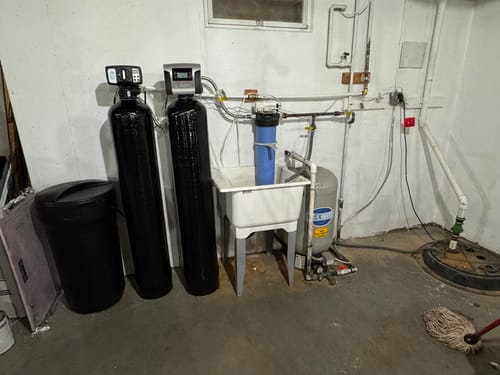
My research journey began with understanding the difference between water softening and carbon filtration. While I knew I needed a softener to address the mineral content, I learned that carbon filtration could simultaneously remove chlorine, volatile organic compounds, and improve taste and odor.
The SoftPro Auto Backwash Centaur Carbon Filter caught my attention because of its automatic regeneration cycle. Traditional carbon filters require manual monitoring and replacement, but this system uses a time-based backwash cycle to extend media life and maintain consistent performance. The Centaur carbon media is specifically designed for catalytic reduction of chlorine and chloramines, which our municipal water system uses for disinfection.
The system's 1.0 cubic foot capacity seemed ideal for our household of four, with a service flow rate of 7 GPM ensuring adequate pressure during peak usage times. Unlike granular activated carbon filters that can channel and lose effectiveness, the backwash design ensures even media utilization and prevents channeling.
What sealed the decision was learning about the system's NSF certification for chlorine removal and the automatic operation that would eliminate the guesswork of maintenance timing. The prospect of installing both systems simultaneously appealed to my efficiency-minded approach, even though I knew it would complicate the plumbing connections.
Unboxing and First Impressions
The SoftPro carbon filter arrived in a sturdy cardboard box with adequate foam protection around the control valve and tank. The mineral tank itself felt substantial - much heavier than I expected for an "empty" vessel, which spoke to the thickness of the fiberglass construction.
Opening the box revealed the main components: a 10-inch diameter by 54-inch tall mineral tank, the SoftPro control head, and bags of Centaur carbon media. The control valve appeared well-built with clear markings and solid brass fittings. The carbon media came in sealed bags, and I was surprised by how much lighter it felt compared to the resin media for my softener.
The first red flag appeared immediately - there was no installation manual included with the system. I found a basic specification sheet and a programming guide for the control valve, but nothing approaching a comprehensive installation guide. For a system of this complexity, especially one that homeowners might install themselves, this seemed like a significant oversight.
The component quality impressed me overall. The tank construction appeared robust, and the control valve moved smoothly through its positions. However, I quickly realized that successful installation would depend heavily on online resources and my own problem-solving skills.
Installation Experience and Unexpected Challenges

Installing the carbon filter alongside my water softener required careful planning of the plumbing sequence. I decided to place the carbon filter first in the line, followed by the softener, reasoning that removing chlorine before the ion exchange resin would protect the softener media from premature degradation.
The actual plumbing connections went smoothly thanks to the standard 1-inch NPT fittings. I used SharkBite connectors for the main connections and traditional copper fittings where permanence mattered. The system fit perfectly in my utility room with adequate clearance for future maintenance.
Programming the SoftPro control valve required patience and multiple trips to online forums to decipher the proper settings. Without a proper manual, I relied on SoftPro's website and YouTube videos to understand the regeneration timing and flow rates. The control valve offers extensive customization, but this flexibility becomes overwhelming without clear documentation.
The most significant challenge emerged during the first regeneration cycle. I discovered water pooling on my utility room floor, and after investigation, traced it to the brine outlet on the control valve. This outlet discharges wastewater during the backwash and rinse cycles, and I hadn't anticipated the volume of water involved.
Unlike salt-based softeners that use brine, this carbon filter system uses raw water for backwashing. During regeneration, approximately 100 gallons of water flows through the system over 45 minutes. The brine outlet was simply dripping this onto the floor - clearly not the intended design, but without documentation, I had no guidance on proper drainage.
Solving the Drainage Dilemma
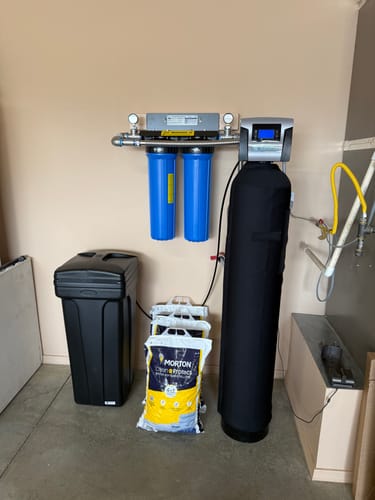
The water discharge issue required immediate attention before I could properly evaluate the system's performance. My first instinct was to simply cap the brine outlet, but research revealed this would create dangerous back-pressure that could damage the control valve.
I solved the problem by running a 1/2-inch vinyl tube from the brine outlet to my floor drain. This required drilling a small hole through my utility room wall, but it provided a permanent solution for wastewater disposal. The tube drops into the same drain that handles my water heater's temperature relief valve, so it's designed for occasional water discharge.
The drainage solution worked perfectly, but it highlighted the importance of understanding system requirements before installation. A proper manual would have explained the drainage needs upfront, potentially saving other DIY installers from similar surprises.
Watching the first complete regeneration cycle was educational. The system automatically backwashes every three days (adjustable based on water usage), and the process is quite thorough. Water flows upward through the carbon bed to lift and clean the media, then rinses downward to resettle everything properly. The entire cycle takes about 45 minutes and uses roughly 100 gallons of water - a significant consideration for well users or areas with water restrictions.
Performance Testing and Water Quality Results
After the drainage issue resolution, I could finally evaluate the system's water treatment performance. I tested chlorine levels before and after installation using both test strips and a digital TDS meter to establish baseline measurements.
Our municipal water typically contains 1.5-2.0 PPM of free chlorine, which creates the characteristic "swimming pool" smell and taste. Post-filtration testing showed virtually zero detectable chlorine - the system immediately eliminated the taste and odor issues that had plagued our drinking water.
The improvement in water taste was dramatic and immediate. Coffee tasted cleaner, ice cubes no longer had an off-flavor, and my wife noticed the difference in her morning tea within the first day. The chlorine removal also eliminated the chemical smell that used to linger in our bathrooms after long showers.
I also tested for chloramines, which our water district uses seasonally. The Centaur carbon media effectively reduced chloramine levels from 3.5 PPM to undetectable levels, maintaining performance that many standard carbon filters struggle with. This catalytic reduction capability justified the premium over basic granular activated carbon systems.
Flow rate remained excellent throughout normal usage. Even with both the carbon filter and softener in series, I measured 6.5 GPM at my kitchen faucet during peak evening usage when multiple fixtures were running simultaneously. The pressure drop was negligible for practical purposes.
Six-Month Performance and Maintenance Reality
After six months of operation, the system continues performing exactly as expected. The automatic regeneration cycles occur every three days as programmed, always during the 2 AM timeframe I selected to avoid disruption. I've never experienced any reduction in flow rate or treatment effectiveness.
Maintenance has been essentially nonexistent - exactly what I hoped for with an automatic system. The Centaur carbon media is rated for 1-3 years depending on water quality and usage, and I see no signs of degradation yet. The backwash cycles keep the media clean and prevent the channeling issues that plague other carbon filter designs.
The only ongoing cost is the increased water usage from regeneration cycles. At 100 gallons every three days, the system uses approximately 12,000 gallons annually for regeneration. At our local water rates, this adds about $25 to our annual utility bill - a reasonable cost for the convenience and performance.
I did discover that power outages reset the control valve clock, requiring manual adjustment to maintain the desired regeneration schedule. This isn't a major issue, but it's something to monitor if your area experiences frequent outages. The system continues filtering normally without power, but automatic regeneration depends on the electronic timer.
Final Assessment and Buying Recommendations
Despite the initial documentation frustrations and drainage challenges, the SoftPro Auto Backwash Centaur Carbon Filter has delivered exactly the water quality improvements I was seeking. The combination with my water softener provides comprehensive treatment that addresses both hardness and chemical contaminants.
Would I purchase this system again knowing what I know now? Absolutely, but with better preparation for the installation requirements. The performance and convenience justify the investment, especially for households dealing with chlorinated municipal water.
This system is perfect for homeowners who want comprehensive water treatment without ongoing filter replacement hassles. The automatic operation and robust construction make it ideal for "set it and forget it" operation. However, buyers should be prepared for the drainage requirements and consider professional installation if they're uncomfortable with plumbing modifications.
I'd strongly recommend this carbon filter for anyone installing a water softener, as the chlorine removal protects the softener resin and improves overall water quality. The taste and odor improvements alone make the investment worthwhile, and the automatic operation eliminates the maintenance burden of traditional carbon filters.
For well water users, the chloramine reduction capability is particularly valuable, as many private systems struggle with these more complex chemical disinfectants. Just ensure you have adequate drainage and understand the regeneration water requirements before installation.
Six months later, I'm thoroughly enjoying my soft, clean, great-tasting water - and I'm confident this system will continue delivering these benefits for years to come.





