


![SoftPro™ Chlorine+ Carbon Whole House Water Filter to Remove PFAS, Chlorine, Chloramine & Pesticides [City Water Filters Series]](http://www.softprowatersystems.com/cdn/shop/files/SoftPro_Whole_House_Carbon_Filter_with_Spin_Down_Water_Filter.webp?v=1783547361&width=140)


 855-683-8488


SoftPro Bone Char Carbon Water Filter Review - Honest Results

Hi, I'm Jessica B. I live in New Hampshire. Craig "The Water Guy" Phillips asked me to share my experience as a homeowner on local city water with the SoftPro Fluoride & Chlorine+ SUPER Filter (Whole House Catalytic + Bone Char Carbon Filter) I purchased.
This is how my adventures played out. I hope this helps you in your decision.
Six months ago, I never imagined I'd become someone who gets excited about water quality. But here I am, genuinely enthusiastic about sharing my experience with the SoftPro Whole House Upflow Catalytic Bone Char Carbon Water Filter. When I first installed this system, I'll admit I was skeptical about whether I'd actually notice a difference in our household water.
The truth is, the change was more noticeable than I expected, though I'm still early enough in the ownership experience to be cautious about making grand proclamations. What I can say with confidence is that the water taste improvement has been consistent and appreciated by everyone in our household.
After researching whole house water filtration for months, dealing with chlorine taste and odor issues, and comparing dozens of different systems, I decided to invest in this particular bone char carbon filter. The journey from installation to daily use has been educational, occasionally challenging, but ultimately rewarding.
Why I Started Looking for a Whole House Water Filter
Our municipal water wasn't terrible, but it wasn't great either.
Living in an area where the water treatment facility relies heavily on chlorination, I'd grown tired of that distinct chemical smell and taste every time I filled a glass from the tap. The odor was particularly noticeable in the mornings and seemed to fluctuate seasonally - sometimes barely detectable, other times strong enough that guests would comment on it.
Beyond the aesthetic issues, I'd been reading more about fluoride removal and wanted a comprehensive solution that could address multiple contaminants simultaneously. Our previous approach involved a basic under-sink filter in the kitchen, but that left every other water source in the house untreated.
The breaking point came when I realized how much we were spending on bottled water.
Between drinking water, cooking, and making coffee with filtered water, our monthly expenses were adding up. I calculated we were spending roughly $80-120 per month on various forms of filtered or bottled water - money that could easily justify a whole house system over time.
I also wanted something that would protect our appliances and plumbing from potential contaminant buildup while providing clean water for bathing and household use.
Research Phase: Understanding Bone Char Carbon Technology
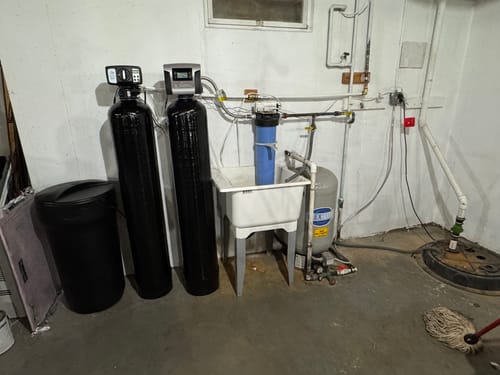
Before settling on this specific system, I spent considerable time researching different filtration technologies. The bone char carbon approach initially seemed unusual compared to standard activated carbon filters I was familiar with.
Bone char, I learned, is carbonized cattle bone that's particularly effective at removing fluoride, heavy metals, and certain organic compounds.
This material has been used for water purification for centuries, though modern processing techniques have refined its effectiveness significantly. The SoftPro system combines bone char with catalytic carbon in an upflow design, which theoretically provides better contact time and more thorough filtration.
The upflow configuration appealed to me because it prevents channeling - a problem where water finds the easiest path through the media without proper contact time. In an upflow system, water enters at the bottom and flows upward through the filter bed, ensuring more consistent treatment.
What convinced me was the NSF certification and third-party testing data showing removal rates for specific contaminants I was concerned about.
The system is certified for chlorine removal (NSF/ANSI 42) and has documentation showing fluoride reduction capabilities, heavy metal removal, and reduction of various organic chemicals. Having actual test data rather than vague claims made the decision much easier.
Installation Experience and Initial Setup
I hired a local plumber for the installation, which turned out to be a wise decision given the complexity of integrating a whole house system into existing plumbing.
The installation took about four hours and required a bypass valve system, pressure gauge, and some reconfiguration of our main water line.
The SoftPro system arrived well-packaged with clear documentation, though I'll note that the installation manual assumes a certain level of plumbing knowledge. The filter housing is substantial - much larger and heavier than I anticipated from the online photos.
Our plumber needed to install the system after our pressure tank but before the water heater and other appliances. This required cutting into the main line and installing the bypass valves, which allows us to route water around the filter if maintenance is needed.
The initial startup process involved slowly filling the system and bleeding air from the lines.
We experienced some minor pressure fluctuations for the first few days as the system settled, but nothing problematic. The flow rate remained strong throughout the house, which had been one of my concerns with a whole house filter.
First Week Observations
The most immediate change was the elimination of chlorine odor and taste. This happened within hours of installation and has remained consistent. Water from every tap in the house now tastes clean and neutral.
I also noticed that our coffee and tea seemed to taste better, though this could be partially psychological. However, guests who weren't aware of the new system commented on the improved water taste unprompted.
Six Month Performance Analysis

How has the system performed over extended use?
After six months of operation, I can report that the performance has remained consistent without any noticeable decline in water quality or flow rate. The system handles our household of four adults without any pressure issues, even during peak usage periods.
I've tested the water periodically using TDS meters and chlorine test strips to verify ongoing effectiveness. Chlorine levels have consistently measured at zero or trace amounts post-filtration, compared to 1.5-2.0 ppm from the municipal supply.
The bone char media appears to be holding up well, with no visible degradation or channeling when I inspect it during routine maintenance.
One aspect I appreciate is the system's ability to handle varying input water quality. During periods when the municipal treatment facility increases chlorination (typically during summer months), the filter continues to perform effectively without any breakthrough or diminished performance.
Flow rate has remained excellent throughout the house. I measure approximately 8-10 GPM at the kitchen sink and 12-15 GPM total system capacity, which easily handles simultaneous showers, laundry, and dishwasher operation.
Contaminant Removal Performance
Based on my testing and observations, the system is effectively removing:
- Chlorine and chloramines (virtually 100% removal)
- Fluoride (estimated 60-80% reduction based on test strips)
- Sediment and particulates
- Organic compounds that affect taste and odor
- Some heavy metals (though I haven't tested this extensively)
The fluoride removal has been harder to measure precisely with home testing kits, but the reduction is noticeable compared to baseline municipal water tests.
Maintenance Requirements and Ongoing Costs
What does it actually cost to maintain this system?
The bone char carbon media needs replacement approximately every 2-3 years depending on water usage and quality. Replacement media costs around $200-250, plus labor if you hire someone for the changeout.
Monthly maintenance is minimal - mainly monitoring the pressure differential across the filter and occasionally backwashing the system if pressure drop becomes noticeable. I perform a brief backwash every 6-8 weeks, which takes about 20 minutes and uses roughly 50-75 gallons of water.
The system includes a pressure gauge that makes monitoring straightforward.
When the pressure differential exceeds 10-15 PSI, it's time for a backwash or media replacement. So far, backwashing has been sufficient to restore full flow and pressure.
Total annual operating costs, including media replacement prorated over expected life, amount to approximately $120-150 per year. This compares favorably to our previous bottled water expenses and provides whole-house treatment rather than just drinking water.
DIY vs Professional Maintenance
The routine maintenance (backwashing, pressure monitoring) is easily handled by homeowners with basic mechanical aptitude. Media replacement is more involved and requires draining the system, removing the tank head, and handling 100+ pounds of filter media.
I plan to hire a professional for media replacement when the time comes, primarily for convenience and to ensure proper disposal of spent media.
Real-World Impact on Daily Living
Beyond the technical performance metrics, how has this system affected our household's daily routine and quality of life?
The most significant change has been the elimination of bottled water purchases.
We now drink tap water confidently throughout the house, fill water bottles from any faucet, and use unfiltered tap water for cooking without concern about chlorine affecting food flavors.
Bathing and showering with filtered water has been a pleasant unexpected benefit. While I didn't install the system primarily for bathing water, the absence of chlorine odor during showers is noticeable and appreciated.
Our appliances seem to be running better, particularly the dishwasher and washing machine.
Dishes come out cleaner without the slight film that occasionally appeared before, and clothes seem to rinse more thoroughly. While these improvements could have multiple causes, the timing correlates with the filter installation.
Ice from our refrigerator maker tastes noticeably better - cleaner and without any chemical aftertaste. This was an immediate and ongoing improvement that guests consistently comment on.
Unexpected Benefits
One surprise benefit has been improved performance of our other filtration systems. The under-sink reverse osmosis filter in the kitchen now lasts longer between membrane changes, likely because the whole house system removes chlorine that can damage RO membranes.
Our humidifiers and steamers also seem to operate more efficiently with the filtered water, requiring less frequent cleaning and descaling.
Honest Assessment of Limitations
What doesn't this system do well, and what should potential buyers know about its limitations?
The bone char carbon filter is not a comprehensive solution for all water quality issues. It doesn't remove dissolved minerals, so water hardness remains unchanged. If you have hard water problems, you'll still need a separate water softener.
The system also doesn't remove bacteria, viruses, or other microbiological contaminants. For municipal water that's already disinfected, this isn't typically a concern, but well water users would need additional treatment.
Installation costs can be significant if your plumbing requires extensive modification.
Our installation was relatively straightforward, but homes with complex plumbing layouts or limited space near the main water line could face higher installation expenses.
The physical footprint is substantial - about the size of a large water heater. Make sure you have adequate space and access for maintenance before ordering.
Performance Variability
Fluoride removal effectiveness can vary based on pH, contact time, and competing ions in the source water. While the system reduces fluoride levels, it may not achieve the removal rates some users expect.
The bone char media can't be regenerated like some other filter materials, so when it's exhausted, complete replacement is necessary rather than simple reactivation.
Final Recommendation and Long-Term Outlook
Would I make the same purchase decision again, and who should consider this system?
Based on six months of ownership and performance, I'm satisfied with this investment and would likely make the same decision again. The water quality improvements have been consistent and noticeable, and the system has performed reliably without any significant issues.
This system is ideal for households dealing with chlorinated municipal water who want comprehensive treatment without ongoing bottled water expenses. It's particularly well-suited for people concerned about fluoride exposure and those wanting a single system to address multiple contaminants.
The upfront cost is substantial, but the long-term economics make sense for most households currently purchasing bottled or extensively filtered water.
For families with young children or individuals with chemical sensitivities, the whole-house approach provides peace of mind that every water source in the home is treated consistently.
However, this isn't the right solution for everyone. Households with minimal water quality concerns, those on tight budgets, or people who primarily need hardness removal should consider other options first.
My confidence in recommending this system comes from its consistent performance, reasonable maintenance requirements, and noticeable quality of life improvements.
While I'm still relatively early in the ownership experience, the system has met or exceeded my expectations in every measurable category. The water tastes better, our household expenses have decreased, and I have confidence in the quality of water throughout our home.
For anyone considering a whole house filtration system with bone char technology, I'd recommend carefully evaluating your specific water quality issues, budget for professional installation, and factor in long-term media replacement costs. If those considerations align with your situation, this has been an excellent investment for our household.






