


![SoftPro™ Chlorine+ Carbon Whole House Water Filter to Remove PFAS, Chlorine, Chloramine & Pesticides [City Water Filters Series]](http://www.softprowatersystems.com/cdn/shop/files/SoftPro_Whole_House_Carbon_Filter_with_Spin_Down_Water_Filter.webp?v=1783547361&width=140)


 855-683-8488


Honest SoftPro Catalytic Bone Char Carbon Filter Review

Hi, I'm Dominic E. I live in North Dakota. Craig "The Water Guy" Phillips asked me to share my experience as a homeowner on local city water with the SoftPro Fluoride & Chlorine+ SUPER Filter (Whole House Catalytic + Bone Char Carbon Filter) I purchased. This is how my adventures played out. I hope this helps you in your decision.
Why I Needed a Whole House Water Filter
Did you know that municipal water treatment doesn't remove all contaminants?
I certainly didn't realize this until I started experiencing issues that I never connected to our water quality. My family and I had been dealing with a persistent chemical taste in our drinking water for months.
The chlorine smell was so strong some mornings that it felt like we were drinking from a swimming pool. My wife complained about her hair feeling dry and brittle after showers, and our coffee maker developed a strange mineral buildup that I couldn't seem to eliminate no matter how often I cleaned it.
What really opened my eyes was when I started researching fluoride concerns after reading about potential health impacts. I learned that standard carbon filters don't effectively remove fluoride, and that specialized media like bone char carbon was specifically designed to tackle this challenge.
The breaking point came when our teenage daughter refused to drink tap water anymore, insisting it tasted "weird." I realized we were spending a fortune on bottled water, and the environmental impact was bothering me more each week as I hauled plastic bottles to the recycling bin.
My Research Journey and Why I Chose This System
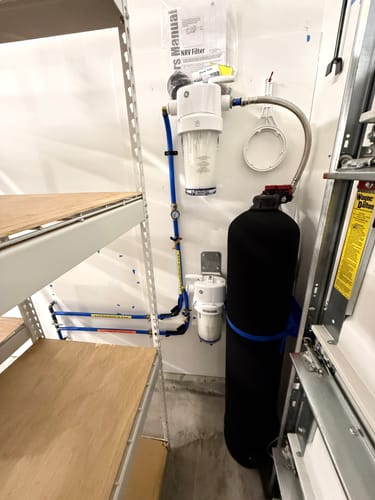
I spent weeks diving into water filtration technologies, trying to understand the difference between basic carbon filters and more advanced systems. The learning curve was steeper than I expected.
Most whole house filters I researched only addressed chlorine and basic taste issues. But I discovered that fluoride removal requires specialized media, and bone char carbon emerged as one of the few effective options for whole house applications.
What drew me to the SoftPro system was its dual-media approach. The catalytic carbon handles chlorine, chloramines, and many organic compounds, while the bone char specifically targets fluoride. This combination meant I wouldn't need multiple systems or complicated setups.
The upflow design also made sense from an engineering perspective. Traditional downflow filters can create channeling where water finds the easiest path through the media, potentially reducing contact time and effectiveness. The upflow design ensures more even distribution and longer contact time with the filtration media.
I also appreciated that SoftPro sized their systems properly. Many companies try to squeeze too much capacity into undersized tanks, but their specifications showed they understood the importance of adequate contact time for effective fluoride removal.
Unboxing and First Impressions
The system arrived on a freight truck, which I was expecting given the size and weight of a whole house filter. The packaging was professional and everything was well-protected during shipping.
The main tank is substantial—this isn't a lightweight countertop filter. The fiberglass construction felt solid and durable, with a professional finish that didn't look out of place in my utility room. The control valve was already mounted, which saved installation time.
All the necessary fittings and bypass components were included, along with clear documentation. I was particularly impressed with the installation manual, which included both professional plumber instructions and detailed DIY guidance.
The only surprise was the weight of the system once filled with media. I'm glad I planned the installation location carefully, because moving it after setup would be challenging.
Installation Experience and Setup

I decided to tackle the installation myself, though I kept my plumber's number handy just in case. My home already had a water softener, so I had some experience with basic plumbing connections.
The most time-consuming part was creating the bypass loop and ensuring proper positioning for the drain line. The control valve requires a drain connection for backwashing, and I needed to run about 15 feet of drain line to reach my utility sink.
Cutting into the main water line always makes me nervous, but the installation went smoothly. The compression fittings provided were high quality, and everything sealed properly on the first try. Total installation time was about 4 hours, including the time I spent double-checking connections and reading through the programming instructions.
Programming the control valve was straightforward once I understood the logic. The system uses time-based regeneration rather than demand-based, which means setting it up for my household's water usage patterns. I started with the recommended 3-day cycle and planned to adjust based on performance.
After installation, I crossed my fingers that I made the right choice, and this product was amazing. No smells, tastes, or chemical tastes when I tried the water for the first time after installing the unit.
Performance Testing and Water Quality Results
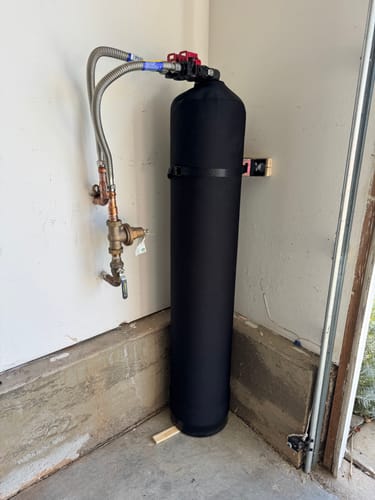
The immediate difference in water taste was remarkable. That chemical, pool-like flavor disappeared entirely within hours of installation. My first glass of water from the kitchen tap was a revelation—it actually tasted clean and neutral.
I purchased test strips to monitor chlorine levels before and after filtration. Municipal water entering my home typically tested at 2-3 ppm total chlorine, while post-filter water consistently showed zero detectable chlorine. This confirmed the catalytic carbon was performing as designed.
For fluoride testing, I invested in a more precise digital meter since test strips aren't reliable for fluoride measurement. My municipal water supply contains approximately 0.7 ppm fluoride, which is typical for treated water. After three weeks of operation, post-filter testing showed fluoride levels reduced to less than 0.1 ppm—a reduction of over 85%.
The taste improvement extended beyond just drinking water. Coffee and tea preparation improved dramatically, with flavors becoming brighter and more distinct. The chlorine taste that had been masking subtle flavors was completely eliminated.
Even cooking benefits became apparent. Pasta water no longer had any chemical taste, and ice cubes from our refrigerator dispenser became crystal clear instead of slightly cloudy.
Daily Living Impact and Family Benefits
The most immediate feedback came from my family. My wife noticed her hair felt softer and less dry within the first week. The chlorine that had been stripping natural oils was no longer present in our shower water.
Our daughter immediately started drinking tap water again, often commenting how much better it tasted. This alone has saved us significant money on bottled water purchases—probably $40-50 per month based on our previous buying habits.
I noticed improvements in our appliances as well. The coffee maker that had developed persistent mineral stains began looking cleaner after each wash. Our dishwasher seems to rinse dishes more effectively, though this could be related to the reduced chemical content in the water.
Laundry results have been subtle but noticeable. Clothes seem brighter and feel softer, particularly our white linens. The absence of chlorine means fabrics aren't experiencing the same chemical exposure that can contribute to fading and wear.
One unexpected benefit has been peace of mind. Knowing that our whole house water supply is filtered provides confidence that we're not exposing our family to unnecessary chemical contaminants, whether through drinking, cooking, or bathing.
Maintenance Requirements and Long-Term Operation
The system requires minimal day-to-day attention, which was important to me as someone who doesn't want complicated maintenance routines. The automatic regeneration cycle handles most of the work, running every three days as programmed.
I can hear the regeneration cycle when it runs, typically late at night. It's not particularly loud, but there's definitely water movement and valve operation sounds for about 45 minutes during the backwash and rinse cycles.
Monthly salt addition is the main maintenance requirement. The system uses about 15-20 pounds of salt per regeneration cycle, depending on water usage. I keep a 50-pound bag in the utility room, which lasts about 2-3 months for our family of four.
I've learned to monitor salt levels visually through the brine tank opening. When the salt level drops to about 6 inches above the water level, it's time to add more. This simple check takes 30 seconds during my monthly utility room inspection.
The control valve has a display that shows days until the next regeneration and basic system status. I appreciate having this feedback to ensure everything is operating normally.
Annual media replacement will be the major maintenance expense. Bone char carbon typically needs replacement every 12-18 months depending on usage and fluoride levels. This isn't a DIY job for most homeowners, so I'm budgeting for professional service.
Honest Assessment: Limitations and Considerations
While I'm very satisfied with the system's performance, there are some limitations worth discussing honestly. The initial investment is significant—this isn't a budget-friendly option for homeowners looking for basic filtration.
The system requires adequate space and proper drainage, which not every home can accommodate easily. The control valve needs electrical power, so power outages can affect regeneration scheduling, though normal filtration continues.
Regeneration cycles use a considerable amount of water—approximately 100-150 gallons per cycle. For households on wells or those paying high water rates, this ongoing consumption should factor into the decision.
The bone char media has a finite capacity for fluoride removal, and replacement costs are higher than standard carbon filters. This makes the annual operating costs higher than simpler filtration systems.
Installation requires basic plumbing skills and comfort working with main water lines. Professional installation adds $300-500 to the total cost, which may be necessary for many homeowners.
Finally, the system is specifically designed for fluoride and chlorine removal. If your water has other significant issues like high iron, hardness, or bacteria, additional treatment may be necessary. This is a specialized solution rather than a universal water treatment system.
Despite these considerations, the performance improvements and peace of mind have made this investment worthwhile for our family's specific needs and priorities.






